
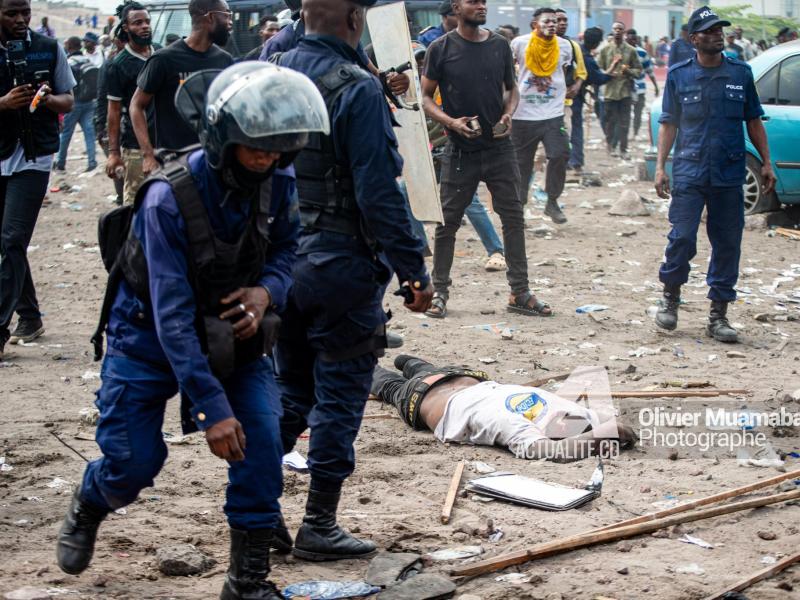
The National Episcopal Conference of Congo (CENCO) has strongly condemned what it calls a coordinated effort between the national police and the Force du Progrès militia in violently suppressing opposition protests against the proposed constitutional amendment.
In a scathing statement released on Saturday, June 20, 2026, following an extraordinary session in Kinshasa, CENCO’s executive secretary, Monseigneur Donatien Nshole, outlined grave concerns over the escalating repression targeting dissenting voices both within the ruling majority and the opposition.
Police and militia collaboration under scrutiny
The Catholic Church’s statement specifically highlighted the joint role of the national police and the Force du Progrès—a youth wing linked to the UDPS party—in dispersing opposition demonstrations, particularly the C64 Coalition sit-in on June 12, 2026. Eyewitness accounts and video footage from the scene near the Palais du Peuple in Kinshasa confirmed the use of tear gas and aggressive tactics against protesters, including opposition leaders.
The CENCO statement read in part: « While we observe with deep concern the growing climate of terror against voices of dissent within the ruling majority, who are silenced by fear of reprisals, the campaign to amend the 2006 Constitution is being pushed forward using state resources under conditions of intimidation. »
Constitutional reform triggers alarm
The proposed constitutional amendment, spearheaded by National Assembly member Paul-Gaspard Ngondakoy, has drawn widespread criticism. The C64 Coalition, a loose alliance of opposition groups, had organized the June 12 sit-in to oppose the referendum bill, which they argue would pave the way for President Félix Tshisekedi to seek an unconstitutional third term.
International and local human rights organizations have previously condemned the violence used against protesters, with many pointing to the involvement of the Force du Progrès as evidence of state-sponsored intimidation. The CENCO statement echoes these concerns, calling the repression a « dangerous precedent » that undermines democratic principles and threatens national stability.
Call for dialogue and restraint
CENCO reiterated its appeal to President Tshisekedi to uphold the oath he swore before God and the nation, urging him to prioritize national unity and dialogue over political confrontation. The bishops’ conference also announced it would soon unveil a detailed action plan in response to the ongoing crisis, signaling potential escalation in civil society mobilization.
Opposition protest in Kinshasa on June 12, 2026
As political tensions continue to rise, the CENCO statement serves as a stark reminder of the fragile state of democracy in the Democratic Republic of Congo and the urgent need for peaceful resolution.