
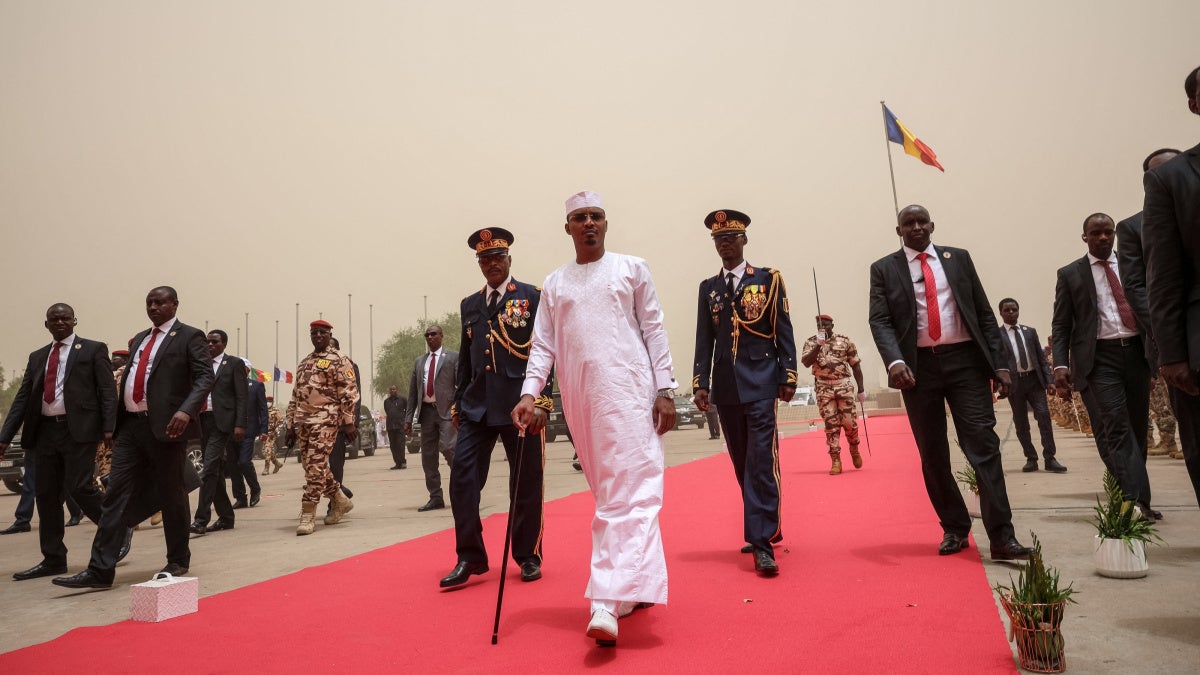
The recent amendments to Chad’s constitution, which abolish presidential term limits, represent a significant setback for the rule of law and democratic governance, warns a leading human rights organization. These changes pave the way for President Mahamat Idriss Déby to remain in power indefinitely, undermining prospects for meaningful democratic change in line with international standards for elections and political participation.
Constitutional overhaul raises concerns over democratic erosion
On October 3, the president finalized constitutional amendments that were fast-tracked and approved by both chambers of Parliament following mid-September votes. The ruling Mouvement patriotique du salut (MPS) overwhelmingly endorsed critical constitutional changes, removing presidential term limits and extending each term from five to seven years. Some opposition lawmakers boycotted the vote, denouncing the process as unconstitutional and illegitimate.
« By eliminating presidential term limits, Chadian authorities have dismantled a vital safeguard against authoritarianism, » stated Lewis Mudge, Central Africa Director at Human Rights Watch. « Instead of strengthening democratic norms that enable periodic, free, and fair political competition, the government has entrenched a system dominated by a single leader. »
The government defended the constitutional revision as a « technical » adjustment, but these changes effectively legalize an indefinite rule by Mahamat Idriss Déby, who has held power since 2021 following the death of his father, former President Idriss Déby Itno, who ruled Chad for three decades.
Chad’s democratic backsliding mirrors regional trends
The removal of term limits eliminates a crucial constitutional check that ensures peaceful power transitions. Without this safeguard, a single party could dominate the presidency indefinitely. This move aligns with a broader trend of democratic regression in Central Africa, where governments increasingly use constitutional amendments to consolidate power—a phenomenon some experts describe as « constitutional coups. »
Despite Chad’s adherence to the African Charter on Democracy, Elections, and Governance, which prohibits amendments that undermine democratic alternation, the changes proceed unchecked. Opposition parties and civil society in Chad already face harassment and intimidation, and this amendment further entrenches the MPS’s grip on power.
From military takeover to authoritarian consolidation
Following the death of Idriss Déby Itno in April 2021, the military, led by Mahamat Idriss Déby, seized control of the country. While authorities had pledged a democratic transition, they instead pursued a familiar pattern of power consolidation and political repression, Human Rights Watch reports. According to Chad’s then-active 2018 Constitution, the President of the National Assembly should have temporarily led the country for 45 to 90 days before organizing new elections.
Violence peaked in October 2022 when protesters demanded a transition to civilian rule. Security forces responded with live ammunition, killing several demonstrators and arresting hundreds, many of whom were sent to the notorious Koro Toro high-security prison in northern Chad.
In May 2025, opposition leader and former Prime Minister Succès Masra was arrested in N’Djamena on charges including incitement to hatred and violence. After a politically motivated trial, he was sentenced to 20 years in prison and fined one billion CFA francs. He remains incarcerated.
A pattern of constitutional manipulation
This is not the first time Chad has removed presidential term limits. Idriss Déby Itno abolished them in 2005, allowing him to remain in power until his death. In 2018, a two-term limit was reinstated—but with terms extended from five to six years, permitting him to serve two additional terms. The current amendment, just seven years later, underscores how constitutional manipulation has become a tool for perpetuating power.
Chadian authorities are urged to reinstate presidential term limits and ensure that any constitutional reform process is transparent and inclusive. Opposition leaders, who boycotted the parliamentary vote, have called for a referendum to gauge public support for these changes. A similar referendum was held in 2023 to approve a new constitution, ending the military regime.
Additionally, authorities must immediately halt politically motivated prosecutions, release detained opposition leaders like Succès Masra, and uphold freedoms of expression and assembly.
« Repression has become commonplace in Chad, and now, the Constitution itself is being rewritten to further restrict citizens’ rights, » concluded Lewis Mudge. « Without credible mechanisms for democratic power transitions, institutions like Parliament, the judiciary, and the press lose their ability to effectively check executive power. »