
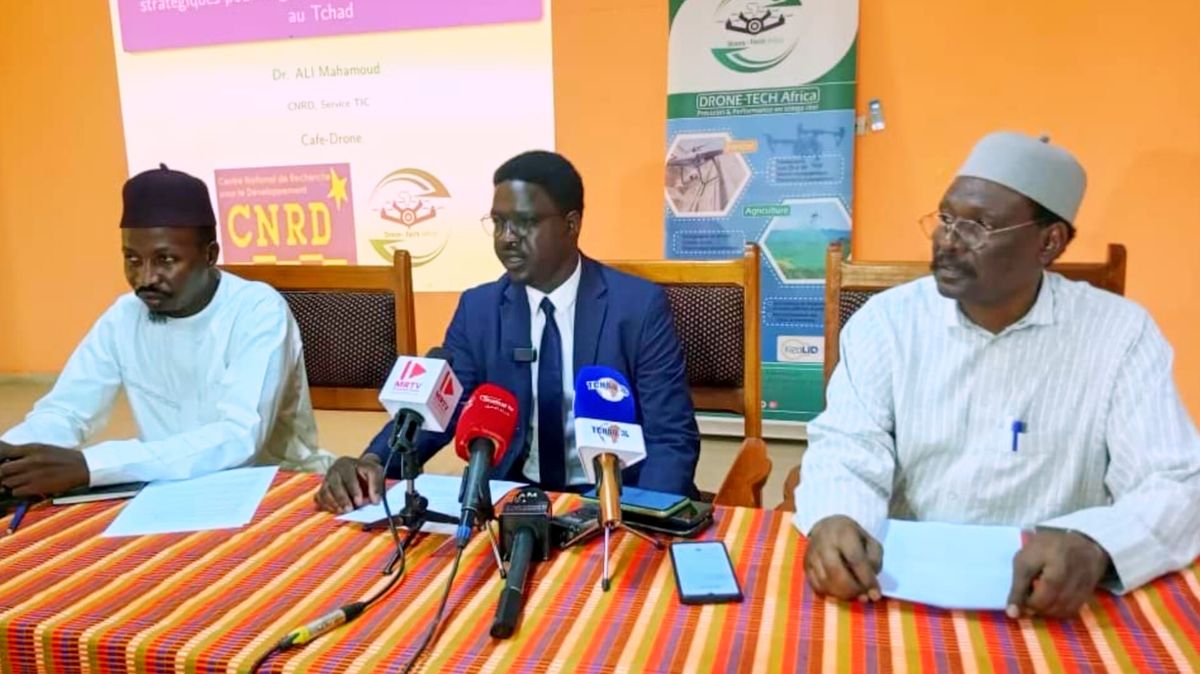
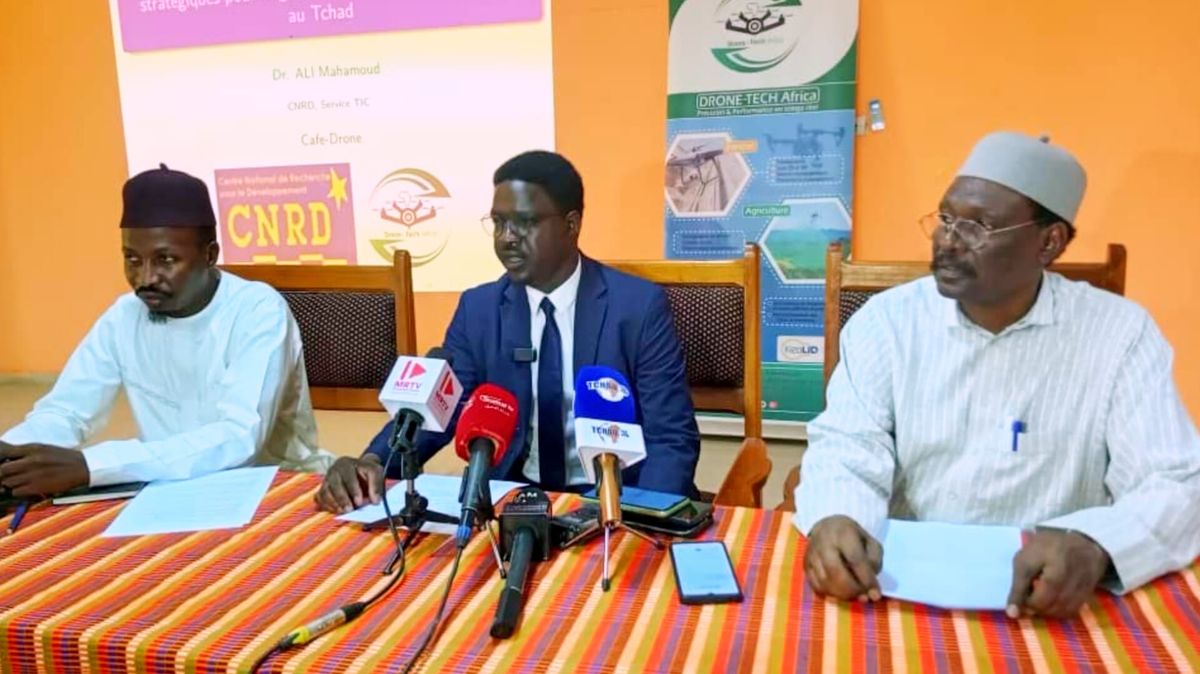
The landscape of technological innovation in Tchad reached a new milestone as the capital hosted the inaugural edition of Café Drone. This event, centered on the diverse opportunities presented by civil unmanned aerial vehicles, brought together key players to discuss how these tools can transform agriculture, livestock management, and environmental conservation across the nation.
This gathering was the result of a collaborative effort between Tech Africa, Tchad FlyingLabs, and WeRobotics, in partnership with the Centre National de Recherche pour le Développement (CNRD). Held at the CNRD facilities in N’Djamena, the forum served as a platform to highlight the practical utility of drone technology in solving local challenges.
A present-day solution for national challenges
During the proceedings, Pr. Mahamoud Youssouf Khayal, the Director General of the CNRD, emphasized that drones are no longer a futuristic concept but a vital tool for today’s development. He noted that for a country as vast as Tchad, drones provide essential solutions for logistics, geospatial data collection, and emergency response. However, to fully harness this potential, the Director General identified three primary hurdles that must be addressed:
- Regulatory Framework: Establishing rules that ensure safety while encouraging technological advancement.
- Professional Training: Preparing the younger generation for specialized careers in the drone industry.
- Institutional Integration: Creating a synergy between government bodies, private enterprises, and the scientific community.
The CNRD leadership expressed gratitude to the technical and financial partners who made this initiative possible, urging participants to use the event as a foundation for a national strategic roadmap.
Transforming agriculture and environmental monitoring
The impact of drones on food security was a central theme. Mahamat Issa Abakar, representing Drone Tech Africa, shared insights from research conducted in Burkina Faso and the Guéra province of Tchad. Specifically, studies in Mongo, Baro, and Tabo demonstrated how aerial monitoring of women’s agricultural projects could lead to a 30% increase in crop yields by optimizing farming practices.
Further discussions led by Ali Mahamoud from the CNRD focused on the intersection of artificial intelligence and drone technology. He highlighted how these tools can help prevent conflicts between farmers and herders by monitoring water points and transhumance routes, which are increasingly strained by climate change. Additionally, drones are proving indispensable for wildlife surveillance in Zakouma National Park and for geological mapping in the mining sector.
Complementing these aerial views, Dr. Djimassal, a senior researcher, detailed the use of satellite imagery to map Tchad‘s diverse ecosystems. By comparing high-altitude data with drone-captured images, researchers can better interpret the health of forests, river systems, and grazing lands, particularly in the northern regions. The event concluded with an interactive panel where experts debated the long-term integration of these technologies into the country’s development sectors.