
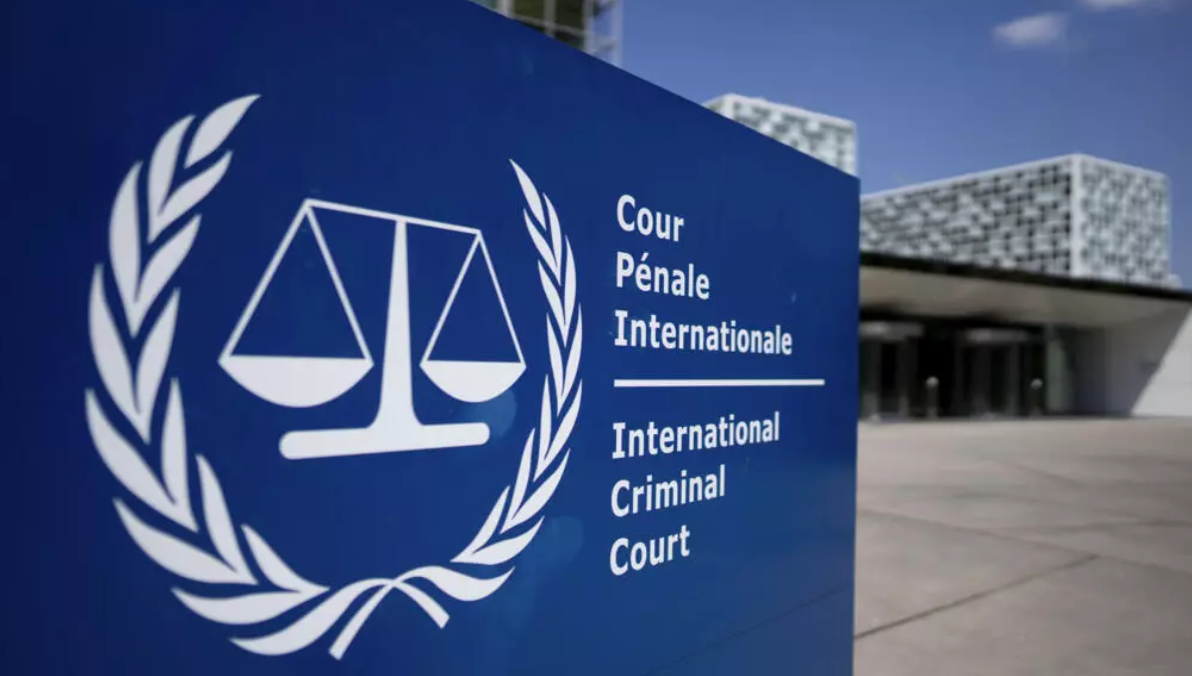
N’Djamena has taken a bold diplomatic step by formally announcing its withdrawal from the International Criminal Court (ICC), sending an official notification to the United Nations Secretary-General this past Monday, July 27. The decision underscores a growing discontent among African nations with the court’s perceived geopolitical imbalances and selective prosecution, raising critical questions about the future of human rights protection and judicial sovereignty in the region.
A decisive break from The Hague
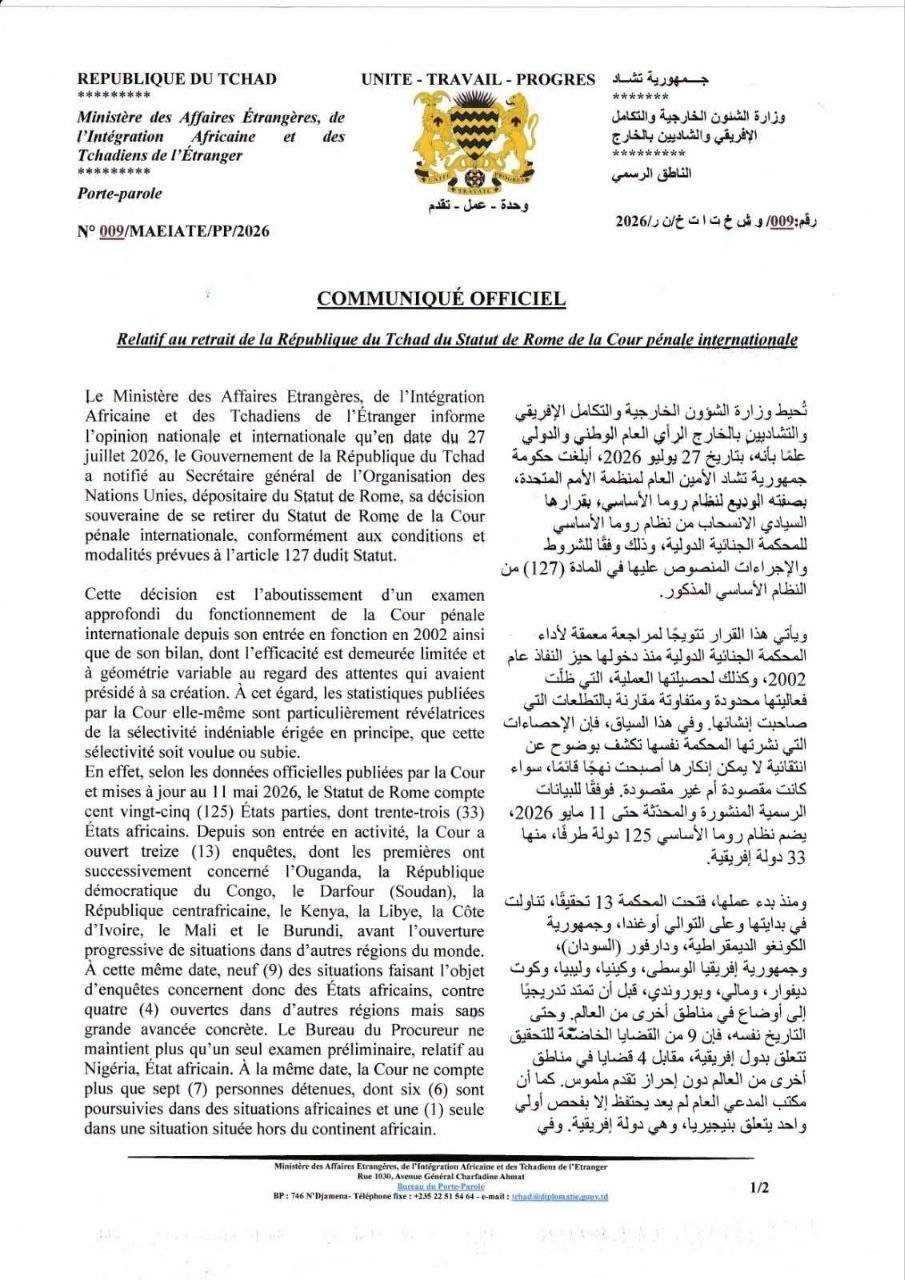
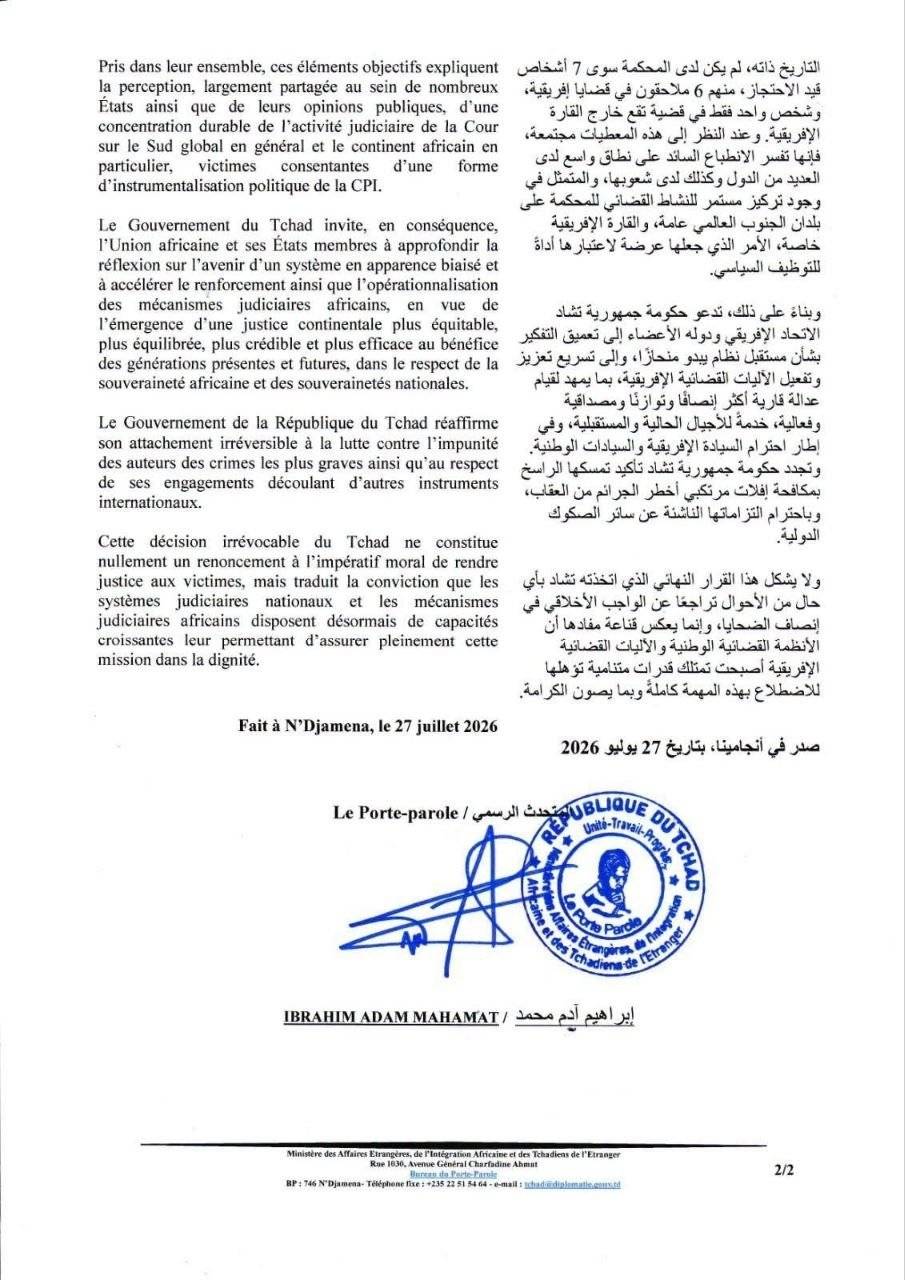
With this move, Chad has initiated the formal process of exiting the Rome Statute, the treaty that established the ICC. The government’s reasoning is unambiguous: it argues that the court suffers from structural inefficiencies and a geographical bias, with investigations overwhelmingly targeting African leaders while ignoring atrocities in other regions. This withdrawal reflects a broader trend among African states, many of which view the ICC as an extension of Western geopolitical interests rather than an impartial judicial body.
Immediate implications for Chadian citizens
While the decision carries significant diplomatic weight, its most profound effects will be felt domestically. For ordinary citizens, the withdrawal eliminates a vital safeguard against grave human rights violations.
Closing the door on international justice
The ICC operates under the principle of complementarity, meaning it only intervenes when national courts fail to prosecute crimes like war crimes, crimes against humanity, or genocide. By leaving the Rome Statute, Chad removes its citizens’ last recourse to an independent international tribunal in cases of large-scale abuses or state-sponsored violence.
Can local courts fill the void?
The burden now falls entirely on Chad’s judicial system to ensure justice for victims. Yet, concerns abound regarding the independence of domestic courts, particularly in cases involving state actors or armed groups. Civil society organizations warn that without external oversight, the risk of impunity could rise, leaving victims with little hope for accountability.
Documenting abuses and protecting witnesses—already fraught with challenges—may become even harder without the ICC’s protective framework. The absence of an international fallback option could deter victims from coming forward, further entrenching a culture of silence.
Sovereignty vs. isolation: the diplomatic tightrope
The move sends a clear message about Chad’s commitment to judicial sovereignty, aligning with a broader regional trend where African nations reject perceived foreign interference in domestic affairs. However, this stance carries risks. Western partners and international donors often tie development aid to human rights compliance and rule-of-law standards. Additionally, foreign investors prioritize countries with credible legal systems, making judicial independence a key factor in economic stability.
The African Union has historically criticized the ICC but remains divided on the best path forward. Chad’s radical departure from the court sets a precedent that could either strengthen continental solidarity or deepen divisions among member states.
Will Chad’s judicial system rise to the challenge?
Government officials argue that Chad’s courts are fully capable of handling domestic cases and upholding justice. Yet, this claim hinges on substantial reforms: increased funding for the judiciary, stronger protections for judges from political interference, and robust mechanisms for witness and victim protection.
The 12-month transition period outlined in Article 127 of the Rome Statute offers a critical window for reflection. During this time, the ICC retains jurisdiction over crimes committed before the withdrawal notice. However, Chad’s cooperation—already strained—may dwindle further, complicating efforts to bring perpetrators to justice.
A defining moment for African justice
The July 27 announcement marks a pivotal shift in Africa’s relationship with global governance institutions. While the critique of the ICC’s double standards resonates widely, the practical consequences of this withdrawal remain uncertain. The true test will not be played out in international courts or diplomatic salons, but in the everyday lives of Chadian citizens. Will they find justice within their own courts, or will the promise of accountability fade into the shadows?
For now, all eyes are on N’Djamena—and the reforms it must deliver to prove that sovereignty and justice can coexist.