
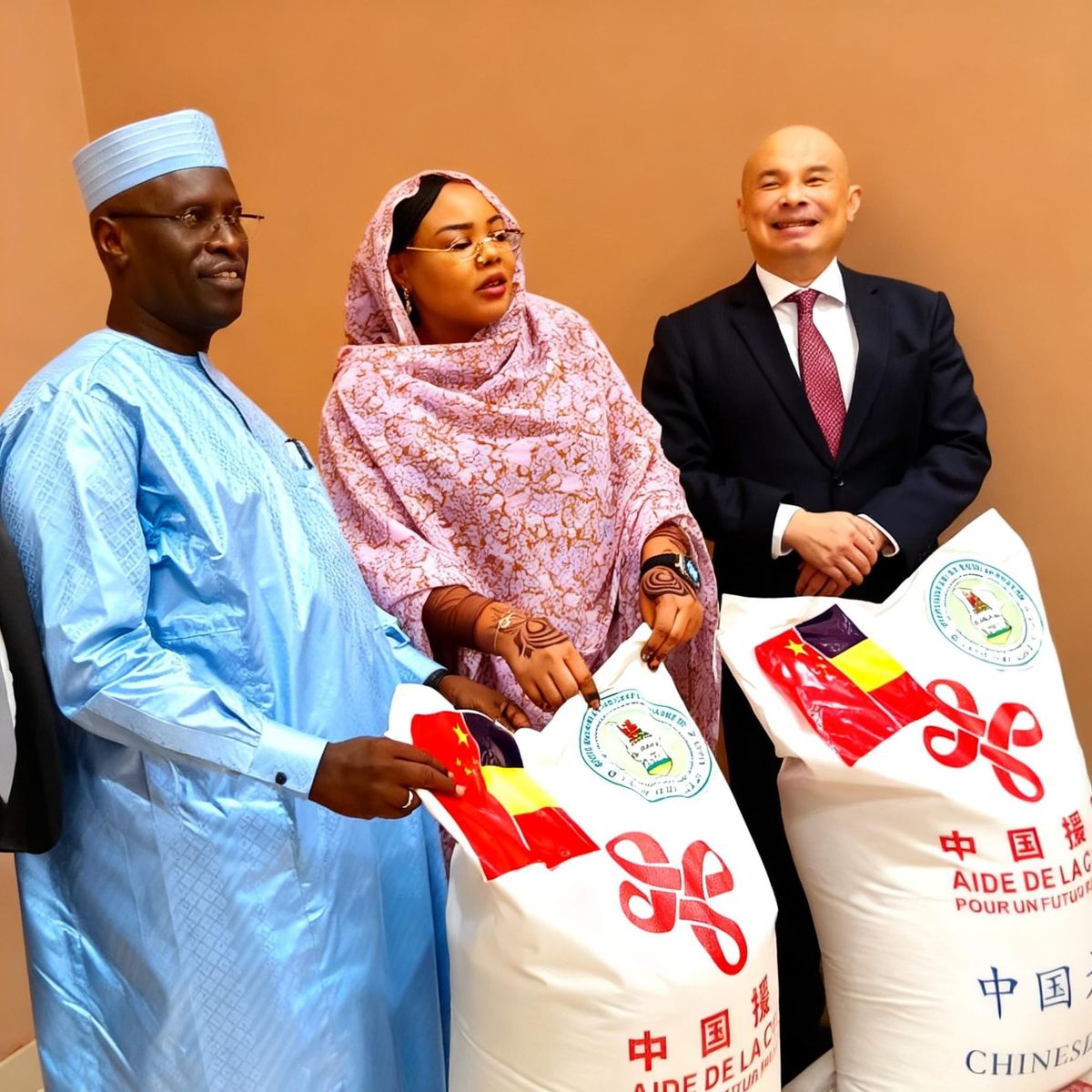
N’Djamena, June 16, 2026 — In a gesture underscoring enduring friendship, the People’s Republic of China has donated 1 770 metric tonnes of rice to Chad, reinforcing efforts to combat food insecurity amid escalating climate and economic pressures.
An act of solidarity with lasting impact
During the official handover ceremony at the Radisson Blu hotel, Chad’s Minister of Social Action, Zara Mahamat Issa, emphasized that this donation symbolizes more than just material support. It reflects the deep-rooted partnership between the two nations, built on mutual respect and shared commitment to uplifting communities in need. Quoting the Chinese proverb, “In times of crisis, a single grain of rice is worth its weight in gold,” she highlighted how this aid would directly benefit displaced families, refugees, and households grappling with the fallout of recurring crises.
Ahmad Mahamat Kossei, Director-General of Chad’s National Food Security Office (ONASA), expressed profound appreciation for the timely assistance. He noted that this contribution aligns with the government’s broader strategy, led by President Mahamat Idriss Déby Itno, to tackle food insecurity through sustainable solutions. The donation arrives at a critical juncture, he added, offering immediate relief while complementing ongoing resilience-building initiatives.
Transparent distribution and long-standing cooperation
The ONASA has pledged to oversee the equitable and efficient distribution of the rice stock. This latest contribution follows a series of previous donations from China, including 5 000 tonnes in 2014 and 2017, 5 966 tonnes in 2019, and additional shipments of wheat and rice in 2022 and 2025. Each delivery reinforces the collaborative vision of both countries to strengthen community resilience and foster long-term stability.
Wang Xining, China’s Ambassador to Chad, underscored the gravity of the challenges facing the country. Widespread regional conflicts and extreme weather events have placed immense strain on local food systems, disproportionately affecting vulnerable populations. In response, China has consistently provided cereal aid valued at nearly two billion Central African francs annually, alongside technical and community-focused support.
“While we recognize that material aid addresses only immediate needs,” the Ambassador noted, “our approach goes beyond donations. We believe in empowering local communities through agricultural innovation.” This year, Chinese agricultural experts are collaborating with Chadian counterparts to introduce high-yield crop varieties and modern farming techniques, aiming to enhance productivity sustainably.
Wang Xining pointed to Chad’s untapped agricultural potential, citing abundant water resources, favorable climate conditions, fertile land, and a diligent workforce. The synergy between Chad’s national development plans and China’s strategic investments in agriculture marks a pivotal moment for the country’s food sovereignty. Additionally, he highlighted China’s recent decision to eliminate import tariffs on goods from African nations with diplomatic ties, a move set to further boost trade and economic ties in the region.
The ceremony concluded with a visit to the Chagoua FDAR warehouse in the 7th arrondissement of N’Djamena, where the rice shipment is being stored ahead of distribution.