

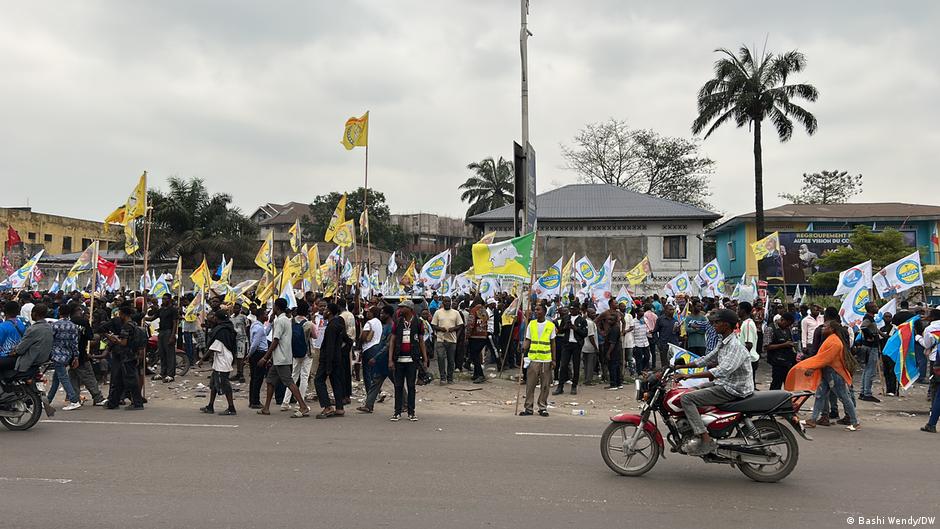
Rising tensions in Democratic Republic of Congo over constitutional changes
The recent validation of the referendum organization law by the Constitutional Court has reignited fierce political debates in the Democratic Republic of Congo. While authorities view this as a necessary legal step, opposition groups perceive it as a dangerous move toward constitutional amendments that could enable prolonged leadership.
The coalition Article 64, a leading opposition force, has vowed to intensify resistance against what they describe as an unconstitutional power grab. Speaking to local media, spokesperson Prince Epenge declared, “We will not back down. Our people will unite all our strength to ensure this law never takes effect in our nation.”
Epenge emphasized the public’s growing anger, urging citizens to remain steadfast: “The people are furious. They must stand tall, mobilize, and firmly reject any attempt at a third term or the fragmentation of our country.”
Kinshasa residents voice concerns over escalating unrest
As opposition leaders gathered to strategize, residents of Kinshasa expressed anxiety about the potential consequences of renewed protests. Many fear that demonstrations could spiral into violence, disrupt daily life, and lead to tragic losses.
One resident questioned the opposition’s approach, asking, “Will their protests remain peaceful? We must avoid any scenario where lives are lost.”
Another resident expressed worries about the broader political climate: “The decision risks pushing the country into deeper turmoil. The government’s actions are fueling instability, not resolving it.”
A third citizen pointed to the government’s role in escalating tensions, stating, “Those sowing chaos today are the ones in power. They constantly undermine opposition marches and provoke unnecessary confrontations.”
Political dialogue at risk of collapse
Political analyst Timo Roujean of the Konrad Adenauer Foundation warned that a swift presidential endorsement of the new law could derail ongoing efforts to foster dialogue. He cautioned, “If the president signs this law before August 15, all prospects for meaningful political discussion will vanish.”
Roujean highlighted the growing rhetoric of a constitutional coup, stressing that the court’s decision could embolden factions advocating for armed resistance. “The political discourse is becoming increasingly volatile. This ruling only plays into the hands of those who believe confrontation—not negotiation—is the only solution.”
The Constitutional Court’s decision has deepened the divide between the ruling camp, which now has a legal framework to push reforms, and the opposition, which remains resolute in blocking any constitutional changes. The coming weeks will be critical in determining whether the crisis escalates or de-escalates in the Democratic Republic of Congo.