
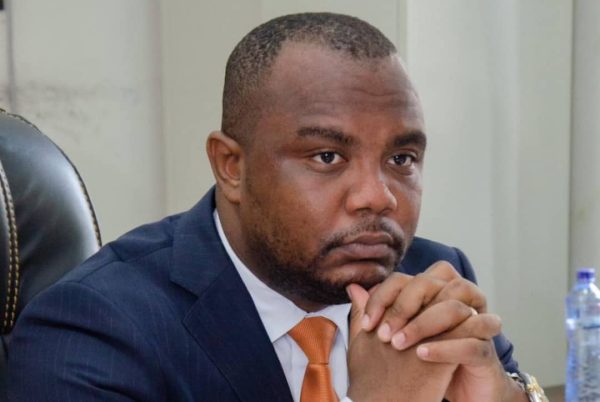
The head of the Democratic Republic of the Congo’s Higher Council for Audiovisual and Communication (CSAC), Christian Bosembe, has taken decisive action. His agency is preparing to shut down TikTok accounts that spread propaganda for the AFC-M23 rebel group. Negotiations with the social media platform’s leadership are already underway to enforce the ban.
Bosembe condemns the presence of accounts linked to Corneille Nangaa, an individual accused of terrorism, on Congolese digital platforms. The regulator argues that such content undermines national security and fuels instability in a nation already grappling with conflict.
Why the urgency to act?
The CSAC’s move follows mounting concerns over the platform’s role in amplifying rebel narratives. Bosembe points out hypocrisy in global digital policies, asking, “Would a Hezbollah account operate in France? Would an Al-Qaeda page be allowed in the United States?” He stresses that no nation tolerates extremist propaganda—yet TikTok continues to host such content in the DRC.
In his view, the platform’s inaction is unacceptable. The regulator has warned TikTok repeatedly, but with no tangible results, prompting Kinshasa to enforce a ban. This decision aligns with measures taken by other African nations, such as Gabon, which has already restricted TikTok access.
Rebel violence and digital warfare
The AFC-M23 rebels stand accused of widespread atrocities, including civilian massacres in eastern DRC. The group’s actions have triggered mass displacements and deepened community trauma. Kinshasa alleges that these operations are orchestrated with external support, particularly from Rwanda, to exploit the DRC’s mineral wealth. For Bosembe, cutting off digital channels used by the rebels is not just necessary—it’s overdue.
He asserts, “The Congolese state must reclaim its authority. To do so, it must silence these platforms that serve as megaphones for terrorism.”
The CSAC’s announcement also highlights a broader debate: digital sovereignty in times of war. As Kinshasa battles both military and informational threats, the move signals a potential shift in how the country regulates social media during conflicts.