
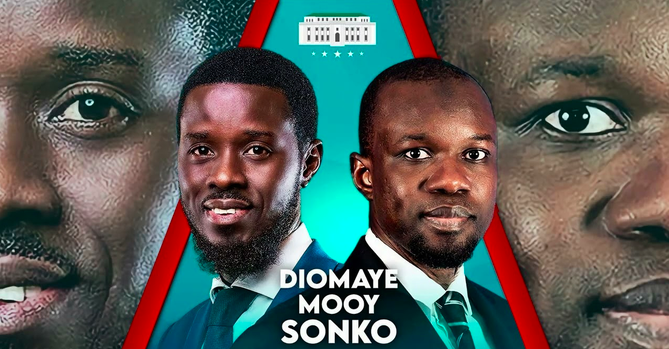
Building a loyalist network: the hidden agenda behind recent administrative changes
The wave of dismissals sweeping through public administrations in Senegal is no mere routine housecleaning. Behind these moves lies a calculated effort by President Bassirou Diomaye Faye to construct a deep bench of political allies—what insiders now call the « vivier Diomaye compatible »—a reservoir of officials pledged to his vision. The long-term goal? To embed his coalition and the ruling party across every corner of the country, while gradually sidelining the movement that brought him to power.
Yet this strategy carries a steep political price. By systematically replacing officials tied to Ousmane Sonko, the administration risks draining Pastef of its most valuable assets—those who fought hardest to win the state apparatus. What begins as a reshuffle could end with the party’s founders finding themselves locked out of the institutions they helped create.
Tensions rise as loyalty divides the patriotic camp
The refusal to include Sonko’s allies in the new government sparked sharp disagreement even within his inner circle. Reports indicate that former minister Birame Souleye Diop, long regarded as a pillar of the party, publicly advocated for keeping key patriots in executive roles. His stance reflected a broader fear: that once installed, ministers might drift toward presidential influence rather than remaining anchored in the movement.
Analysts describe Sonko’s decision as a preemptive strike. By distancing himself from potential rivals, he may have sought to prevent his own appointees from being absorbed into the president’s orbit—a fate that has undone many a political alliance. The move underscores a growing rift between two former allies, one that deepens amid disputes over constitutional reform and the future direction of the country.
Can the ‘Diomaye-compatible’ bench survive the fractures?
As the president consolidates his network of loyalists, the risk of further defections looms large. Will the strategy succeed in solidifying his political base, or will it instead accelerate the unraveling of a coalition already strained by internal rivalries? With each dismissal and appointment, the stakes grow higher—and the question of who truly controls the state becomes harder to answer.