
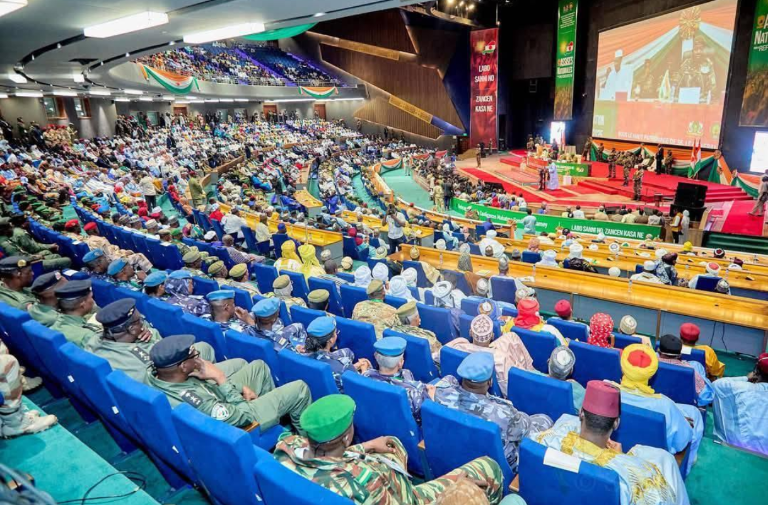
When Algeria’s Parliament approved the deployment of troops to Niger on October 25, 2026, a critical question emerged in Niamey: did the Nigerien authorities consult the public as mandated by the Refoundation Charter before allowing foreign forces on national soil? This decision, framed as a security cooperation initiative, now sits at the crossroads of legal obligations, national sovereignty, and democratic legitimacy.
Why the refoundation charter matters for foreign troop deployments
Enacted on March 26, 2025, the Refoundation Charter serves as the cornerstone of Niger’s transitional governance framework. Among its key provisions is Article 45, which stipulates that foreign military presence—whether temporary or permanent—must be authorized by the President, after consultation with the people through a referendum.
However, the Charter includes an exception for urgent situations. In such cases, the President may issue a decree allowing foreign forces to operate, but only after seeking the advice of the Consultative Council of the Refoundation. Crucially, any such authorization must be limited to the duration necessary to stabilize the emergency.
The approval of Algeria’s military deployment raises a pressing issue: did Niger follow the standard referendum procedure, or did it invoke the urgency clause? Without clarity, the legality of the decision remains uncertain.
Public consultation: a procedural requirement or an optional step?
While Algeria’s Parliament endorsed the troop deployment, this approval pertains only to the sending country’s internal procedures. It does not fulfill Niger’s constitutional obligations under the Refoundation Charter.
At present, there is no publicly available evidence confirming whether a referendum was held on the Algerian military presence. Equally, it remains unverified whether the President issued an emergency decree following the Consultative Council’s advice. This ambiguity demands official clarification, especially given the Charter’s distinction between standard and exceptional procedures.
Sovereignty beyond territorial control
Niger’s sovereignty is not merely about controlling its borders—it also involves adhering to its own legal and democratic frameworks. The Refoundation Charter elevates the referendum requirement to constitutional status, reflecting a commitment to popular participation in decisions that shape the nation’s future.
Since the July 26, 2023, military-led transition under General Abdourahamane Tiani, the Charter has gained constitutional weight. In this context, compliance with its provisions on foreign troop presence is not just a legal formality—it is a test of institutional credibility.
The question remains: outside of explicitly defined emergencies, what justification could justify bypassing the referendum process?
The risks of unchecked foreign military engagement
Beyond legal concerns, the presence of foreign troops carries several potential risks for Niger:
- Security dependency: Over-reliance on foreign forces may weaken Niger’s long-term capacity to protect its territory and citizens, undermining self-sufficiency in security matters.
- Misaligned priorities: While Algeria’s interests—such as protecting energy infrastructure—may align with Niger’s, the public deserves transparency on whether civilian protection, counterterrorism, or economic security is the primary objective.
- Mission creep: A deployment initially intended for specific infrastructure could expand in response to attacks or deteriorating security conditions, potentially leading to an open-ended military presence.
- Erosion of public trust: Decisions made without clear explanations risk fueling public skepticism, particularly in a nation where national sovereignty is a central pillar of public discourse.
What should Niger’s government do now?
The authorities must clarify the legal basis for the Algerian troop presence. If a referendum was not held, they should justify why the urgency clause was applied, including details of the Consultative Council’s advisory role and the timeframe for the authorization.
Additionally, publishing key terms of the military agreement—while respecting legitimate security concerns—would enhance transparency. Engagement with civil society, political actors, and advisory bodies could help validate the decision’s legitimacy.
Ultimately, Niger’s strategic partnerships must coexist with its democratic principles. The Charter does not exist merely as a legal formality—it is a framework designed to ensure that sovereignty is exercised not just in defense of the nation, but also in partnership with its people.
Conclusion: Legitimacy hinges on adherence to the Charter
The decision to welcome Algerian troops cannot be judged solely on its strategic merits. Its legitimacy depends on whether Niger respected the procedures outlined in its own foundational document.
Without definitive answers, speculation will persist, and public confidence may erode. The government’s next steps will reveal whether it prioritizes constitutional compliance or navigates the edges of procedural flexibility.
One thing is clear: in matters of national security and sovereignty, the people’s voice, as enshrined in the Refoundation Charter, is not optional.