
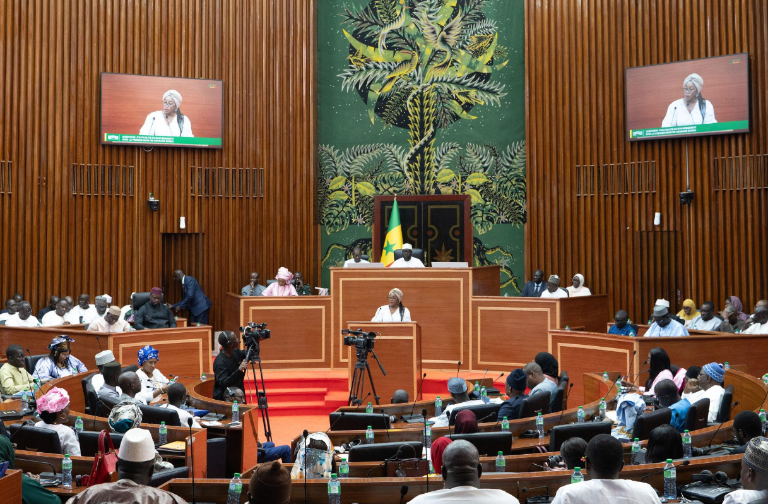
As Senegal braces for a pivotal parliamentary vote, the government faces an unprecedented challenge: winning over its own lawmakers to salvage the revised budget. The stakes could not be higher—for the economy, public finances, and the stability of the administration.
Why the revised budget is hanging in the balance
With the revised finance bill now scheduled for a plenary vote, the government must navigate a treacherous political landscape. A recent setback in committee—where deputies from the ruling Pastef coalition rejected the draft—has exposed deep divisions within the majority.
Prime Minister Ahmadou Al Aminou Lô finds himself in a delicate position: defending fiscal decisions that prioritize economic stability while attempting to reconcile opposing views within his own ranks. The vote in committee was not just procedural; it was a clear signal that the government’s budgetary choices face serious opposition.
What’s driving the parliamentary rebellion?
The rejection of the revised budget by Pastef deputies raises critical questions. Are lawmakers opposing the government’s priorities? Rejecting specific spending cuts? Or signaling broader dissatisfaction with how fiscal decisions are being made?
Without clear explanations from the opposition, the motivations remain speculative. Yet one thing is certain: the government’s ability to govern is now tested not by the opposition, but by its own supporters in parliament.
Key concerns behind the parliamentary objection
- Spending priorities: Are lawmakers unconvinced by the allocation of funds across sectors?
- Tax and revenue measures: Could new levies or adjustments be viewed as unfair or misguided?
- Transparency in budgeting: Is there a demand for clearer justification of fiscal choices?
The Prime Minister’s high-stakes strategy
Faced with mounting pressure, Ahmadou Al Aminou Lô has shifted from confrontation to negotiation. The government is now engaged in last-minute talks with Pastef deputies to salvage the bill before the plenary vote.
This approach reflects a calculated risk: avoiding a forced passage of the budget that could deepen fractures in the ruling coalition. But time is running out. A failure to secure support could not only derail the revised budget but also weaken the government’s political standing.
What’s next? Compromise or confrontation?
The plenary vote on October 27 looms as a decisive moment. If the government cannot secure the necessary backing, the consequences extend far beyond numbers on a spreadsheet.
For the executive: A defeat would undermine its authority and ability to implement economic policy.
For the deputies: Continuing opposition could reinforce their role as a check on executive power—but at the risk of institutional paralysis.
The bigger question: Can governing and opposition coexist in the same coalition?
This episode reveals a deeper tension in Senegal’s political landscape: the balance between party discipline and parliamentary independence. As the government seeks to restore fiscal credibility, it must also preserve the unity of its majority—without stifling dissent.
In the coming days, the outcome will hinge on whether dialogue can bridge divides—or whether the push for compromise will give way to a more confrontational path. Either way, the revised budget vote will shape not just the country’s finances, but the future of its political cohesion.