
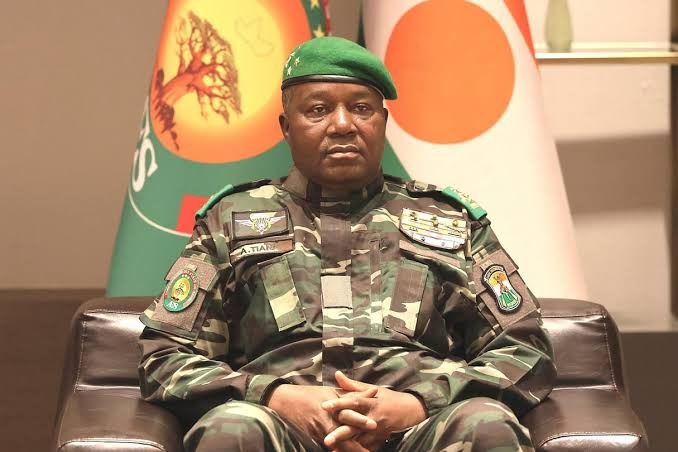
From protest to power: did the CNSP’s coup promise stability or sow new seeds of instability?
When the National Council for the Safeguarding of the Homeland (CNSP) seized power in Niger on July 26, 2023, it framed its coup as a necessary intervention to restore security, end poor governance, and reclaim national sovereignty lost under democratically elected president Mohamed Bazoum. Yet, more than three years later, the reality unfolding across the country tells a starkly different story. Instead of fixing the issues it condemned, the military regime has deepened them, creating new challenges that threaten peace, development, and the very sovereignty it vowed to protect.
Sovereignty claimed, but what price? The cost of opaque alliances
The departure of French and American troops was hailed as a triumph of regained independence. But Niamey’s embrace of new partners has come with hidden costs. Within months, the arrival of Russian forces and the quiet deployment of Algerian troops to the remote Madama outpost—over 200 kilometers inside Niger’s border—raised more questions than answers.
These agreements, made without parliamentary oversight or public debate, raise serious concerns about who truly benefits from these arrangements. Far from ending external dependence, the regime has simply exchanged one set of foreign actors for another, all under the banner of sovereignty. What was once condemned as subservience under civilian rule now risks becoming a carte blanche for new regional and international players to shape Niger’s future from the shadows.
Where are the borders being defended? The paradox of security partnerships
Beyond the headlines of foreign troop movements, the most glaring paradox lies in the country’s security situation. Despite the regime’s heavy rhetoric and increased military operations, attacks by armed groups such as ISIS in the Greater Sahara (EIGS) and the Group for the Support of Islam and Muslims (JNIM) continue to devastate communities. In Diffa, Maradi, Tahoua, and Tillabéri, villages remain under siege, schools and clinics shut down indefinitely, and families displaced with no end in sight.
Each aerial strike or military communiqué is followed by promises of progress, yet the cycle of violence only intensifies. The idea that foreign military support would stabilize the region now feels increasingly hollow, as local civilians bear the brunt of a conflict that refuses to abate.
A failing economy: stalled progress and broken promises
Economic development was another cornerstone of the CNSP’s legitimacy. Yet the record since 2023 reveals a landscape of stagnation and missed opportunities. Key energy projects, including the Kafra oil field, have stalled under regulatory uncertainty. Similarly, the proposed Trans-Saharan Gas Pipeline, once touted as a game-changer for regional energy independence, now faces repeated delays and strategic hesitation.
These setbacks are not minor inconveniences—they represent the collapse of the very economic sovereignty the regime claims to champion. Without reliable infrastructure or investor confidence, Niger’s economy remains trapped in a cycle of underdevelopment, leaving millions of citizens in a cycle of poverty and disillusionment.
The silence of allies: why supporters are turning a blind eye
As contradictions mount, so does the internal critique. Opposition voices and civil society activists who once rallied against the excesses of civilian rule now find themselves sidelined or silenced. The once-vibrant public sphere has narrowed to a space where dissent is met with repression rather than debate.
What was once a chorus of reform is now a chorus of appeasement. Supporters who hailed the coup as a fresh start now watch as the regime repeats the very failures it swore to end. The double standard is glaring: actions that would have sparked outrage under Bazoum are now met with silence or even justification under the military government.
The human cost: who pays the price of endless transition?
Three years after the coup, the biggest losers are not the politicians in Niamey—they are the people. Families in rural areas live under constant threat. Students in Diffa and Tillabéri have spent years without access to education. Farmers in Maradi face disrupted markets and reduced incomes. The promise of a brighter future has faded into a reality of unmet needs and unanswered questions.
As the regime clings to power under the guise of patriotism, it risks transforming Niger from a beacon of democratic hope into a cautionary tale of how coups, no matter their intent, can deepen instability when power replaces accountability.