
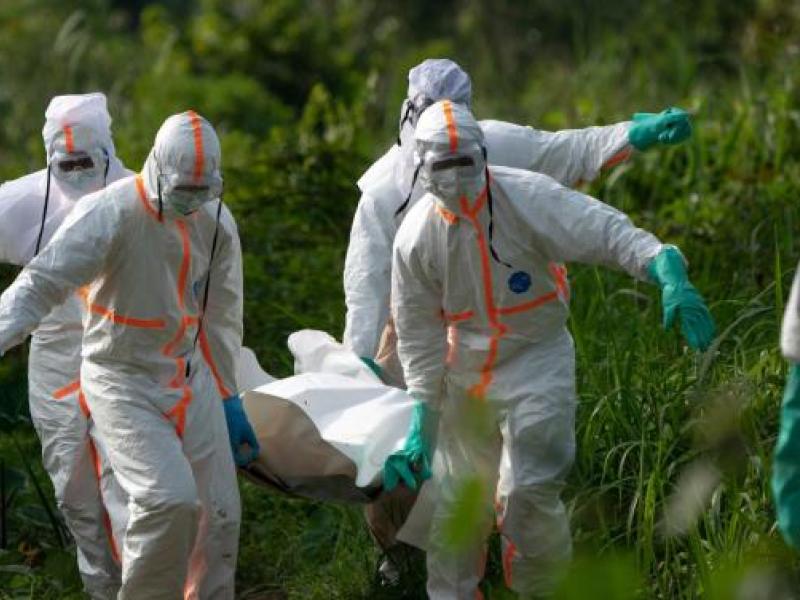
The Bundibugyo strain of the Ebola virus continues its progression across the eastern regions of the République démocratique du Congo. Recent data reveals that the provinces of Ituri, Nord-Kivu, and Sud-Kivu have now recorded a cumulative total of 550 confirmed cases, leading to 101 deaths.
Statistics compiled as of June 6 show that 27 new infections were identified in just 24 hours, a clear sign that transmission remains active in several districts. Currently, 283 patients are being treated in hospitals or kept in isolation units to prevent further spread.
With 91 of the deaths occurring among confirmed cases, the overall fatality rate is estimated at 17.7%. Health officials note that some figures are still being harmonized as the situation evolves.
Ituri at the center of the health emergency
Geographical tracking of the outbreak confirms that Ituri is the primary epicenter of this sanitary crisis. Of the 25 health zones currently affected by the virus, 17 are located within this province, accounting for nearly half of Ituri’s 36 total health zones.
The impacted areas include Aru, Aungba, Bambu, Bunia, Damas, Gety, Kilo, Komanda, Lita, Logo, Mambasa, Mangala, Mongbwalu, Nizi, Nyankunde, Rimba, and Rwampara.
The broad geographical reach of the disease highlights how the virus is circulating through various territories, despite the surveillance and awareness efforts managed by response teams on the ground.
Active clusters in Nord-Kivu and Sud-Kivu
While Ituri faces the brunt of the epidemic, several zones in Nord-Kivu and Sud-Kivu are also reporting cases. The health zone of Katwa has emerged as a significant active cluster, with 11 confirmed cases and 8 deaths. Other affected areas include Beni (5 cases, 3 deaths), Butembo (4 cases, 2 deaths), Miti-Murhesa (3 cases, 1 death), Oïcha (2 cases, 2 deaths), and Kalunguta (1 case, 1 death). Single cases have also been noted in Kyondo and Goma, though no fatalities have been reported in those specific locations yet.
Despite the rising numbers, medical teams have observed some positive developments. Three patients who had tested positive for the virus were recently declared cured. Two individuals were discharged from treatment centers in Bunia, while a third was able to return home in the Katwa health zone.
Response operations are ongoing across all affected regions, with a heavy focus on preventing infections within medical facilities, tracing contacts, and educating local communities. Strengthening public confidence and ensuring the early detection of symptoms remain the most critical tools for breaking the chains of transmission in the coming weeks.