
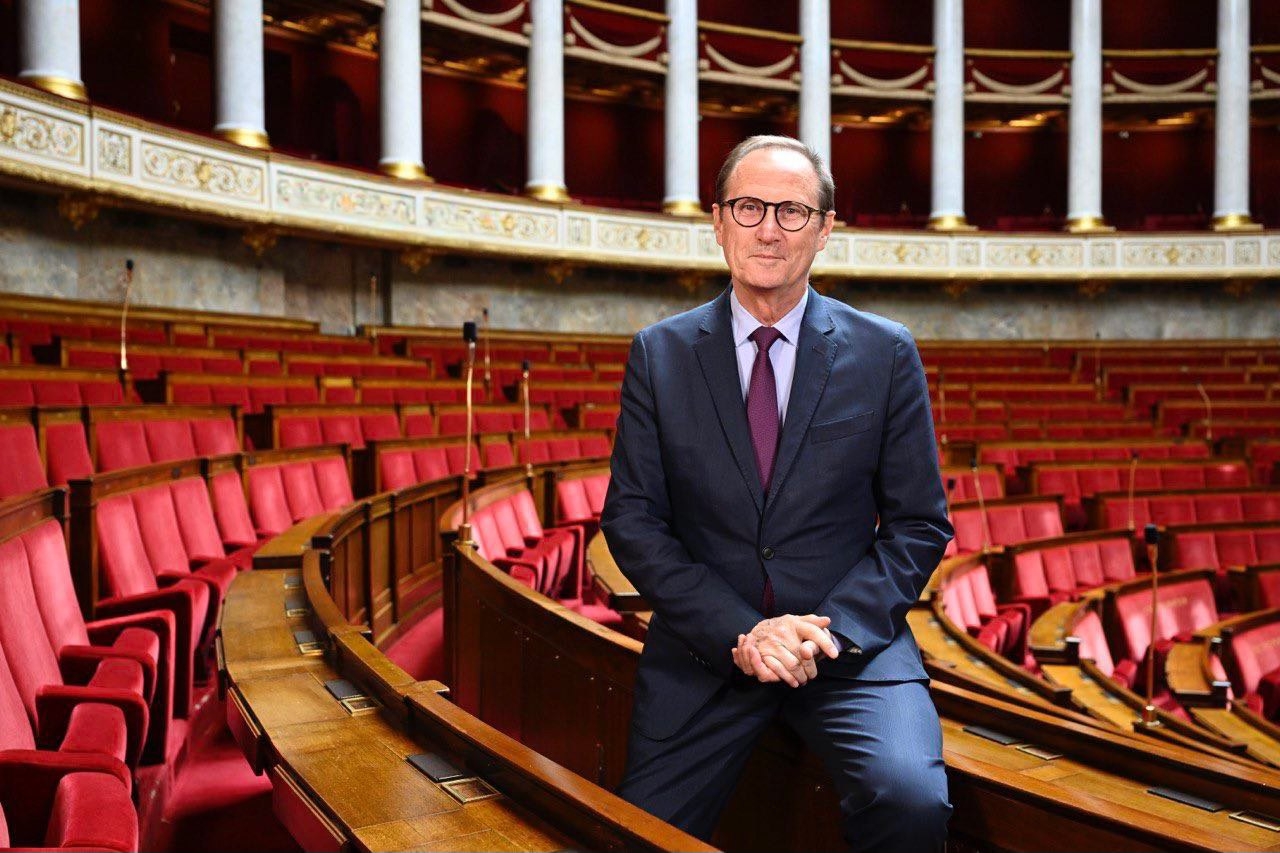
The stance of France regarding Mali’s deepening crisis is becoming increasingly apparent. Bruno Fuchs, chairman of the Foreign Affairs Committee of the French National Assembly and a close associate of President Emmanuel Macron, recently shared his views on Mali’s political impasse during an interview.
France’s evolving strategy in Mali
While French officials continue to express optimism about restoring influence in Africa by addressing longstanding issues such as the CFA franc and visa policies, Fuchs’ remarks reveal a stark contradiction. His statements reflect France’s struggle between abandoning its colonial-era approach and resisting the growing influence of rival powers in the Sahel.
Controversial claims about Mali’s future
Fuchs’ assertions about Mali’s political trajectory were particularly striking. He predicted that the military junta in Bamako would collapse within weeks or months, despite ongoing security operations. His comments included the claim that «Russian forces are negotiating their withdrawal from Mali, contrary to their public statements.»
When pressed on whether France welcomed Russia’s military setbacks in northern Mali, Fuchs sidestepped the question, merely repeating President Macron’s earlier statement that «the departure of French partners has proven counterproductive for Mali.»
the dilemma of negotiating with armed groups
Fuchs then outlined two possible scenarios for Mali’s future. In the first, the junta agrees to negotiations, leading to a transitional government and elections within three to six months. However, he raised a critical question: «How can the Jama’at Nusrat al-Islam wal-Muslimin (JNIM), an al-Qaeda-affiliated group, be integrated into Mali’s governance?»
Surprisingly, Fuchs claimed that JNIM is prepared to lay down arms and participate in politics, provided it gains a role in the country’s governance. He did not explain why a group that has fought French forces for years would settle for a secondary position. He framed this as a «moral and political dilemma for Europe», ignoring the primary concern: the impact on Malians themselves.
contradictions in France’s approach
Fuchs also suggested that Mali could adopt a federal system, similar to Nigeria, where some regions enforce Sharia law while others do not. Alternatively, he warned of the «ultimate scenario»—an Afghanistan-style takeover by extremist groups, which he claimed would destabilize the entire Sahel region.
When asked about Russia’s role, Fuchs insisted that Moscow is negotiating its exit from Mali, though the terms remain unclear. He added that Russia may seek guarantees for its economic interests, such as gold mining operations, before withdrawing.
Legitimacy and double standards
Fuchs’ comments also highlighted France’s perceived superiority in determining who should control Mali’s resources. He argued that France, unlike Russia or the U.S., is «reliable in its commitments», despite acknowledging Russia’s presence in neighboring countries like the Central African Republic.
His statements reflect a persistent French policy of prioritizing its own strategic and economic interests, even as it claims to support Mali’s sovereignty and democratic future.