
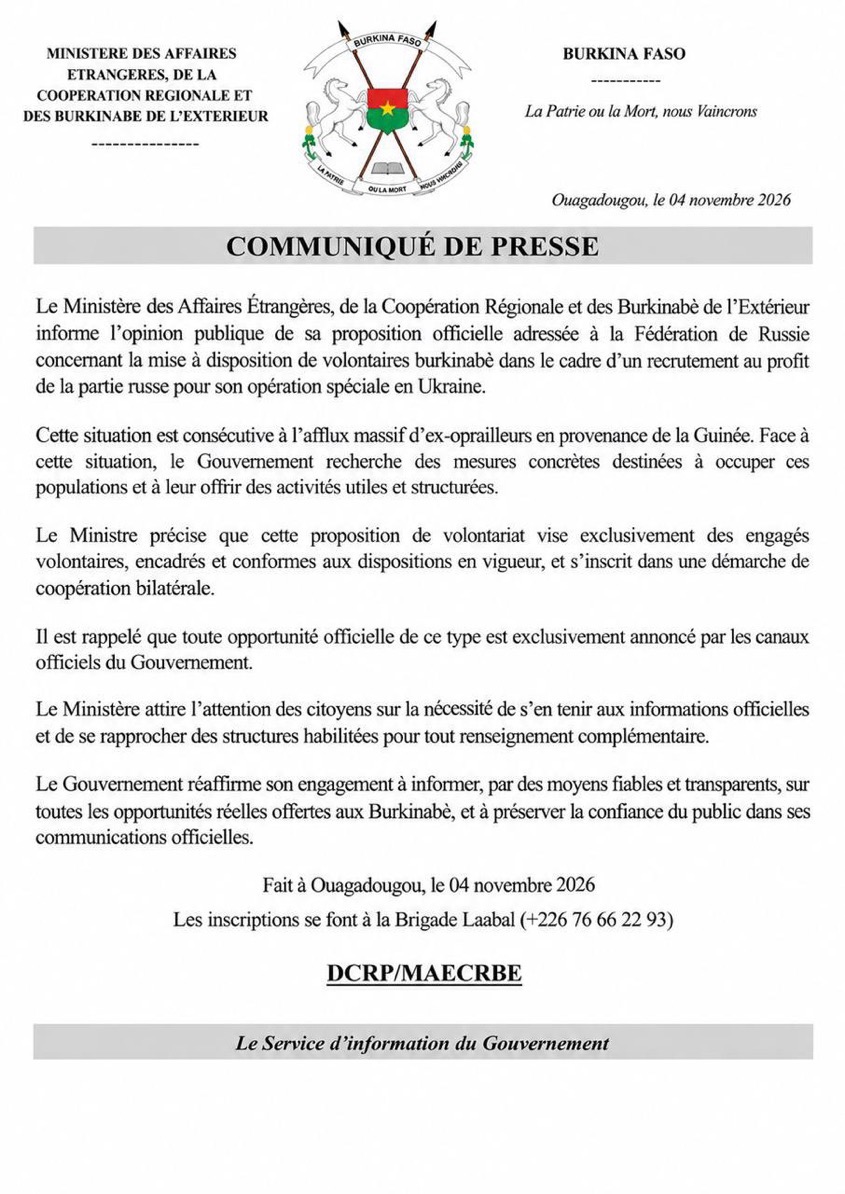
As Burkina Faso deepens its ties with Moscow, a controversial proposal has emerged that could turn expelled gold miners into unwilling participants in a distant war. Reports suggest that Ouagadougou may have facilitated the transfer of Burkinabè miners, forcibly removed from Guinea, with the explicit intention of recruiting them for Russia’s campaign in Ukraine. But why would a government gather displaced citizens only to redirect them toward a foreign conflict?
From gold pits to geopolitical pawns: the journey of Burkina Faso’s expelled miners
The individuals at the center of this controversy are Burkinabè nationals who had been working in Guinea’s informal gold mines before being expelled. Their precarious situation stripped of livelihoods and facing economic hardship raises serious ethical questions about how their vulnerability might be exploited. Rather than offering a path to stability, could their relocation to Ouagadougou be the first step toward a far more dangerous destination?
Publicly, Burkina Faso frames this as a humanitarian effort to reunite expelled citizens with their home country. Privately, however, reports indicate that their movement may serve a far more strategic and sinister purpose. If these miners are being funneled into a recruitment pipeline for Russia’s war effort, their journey from Guinean mines to potential Ukrainian frontlines would mark a disturbing evolution in Ouagadougou’s cooperation with Moscow.
Moscow’s war machine and Burkina Faso’s strategic gamble
Russia’s military needs in Ukraine are no secret. With heavy casualties and ongoing conscription efforts, Moscow has actively sought foreign fighters to bolster its ranks. Burkina Faso’s alleged proposal to supply these men many of whom face uncertain futures poses a stark ethical dilemma. Are these individuals being offered a choice, or are they being steered toward a conflict they neither understand nor may survive?
Since the 2023 coup that brought Ibrahim Traoré to power, Burkina Faso has increasingly pivoted toward Russia, embracing its military support as an alternative to Western alliances. The presence of Russian paramilitary advisors in the country underscores this shift. But while military cooperation may strengthen Burkina Faso’s security posture, the suggestion that it could also facilitate human recruitment for a foreign war introduces a new layer of complexity one that tests the limits of national sovereignty.
What do these men know about their destination?
The critical question remains: Have the expelled miners been informed of their potential final destination? Beyond the risks of combat, they may face coercion, misinformation, or outright deception regarding their roles and the conditions of their service. Without transparent communication, their consent if given at all cannot be considered fully informed.
Moreover, the logistics of their transfer raise further concerns. Why consolidate these men in Ouagadougou unless for centralized processing? The answer may lie in a systematic approach to recruitment, where vulnerability becomes leverage.
Sovereignty vs. exploitation: the burden on Burkina Faso’s government
Burkina Faso has long justified its pivot to Russia as a move toward independence. But true sovereignty extends beyond political declarations it requires the protection of citizens and the prevention of their exploitation in foreign wars. If these men are indeed being prepared for deployment to Ukraine, their government bears direct responsibility for their fate.
Questions abound: Who greenlit this proposal? Who organizes the transfers, and under what pretext? What legal protections would these recruits have? And most importantly was their consent truly voluntary, or a product of circumstance?
When economic desperation intersects with geopolitical strategy, the line between opportunity and coercion blurs. Burkina Faso must confront whether it is upholding its citizens’ rights or sacrificing them in the name of a broader alliance.
Human lives in the crossfire of diplomacy
Behind the policy debates and security calculations lie real people former miners, fathers, sons whose lives hang in the balance. Their expulsion from Guinea stripped them of stability. A potential deployment to Ukraine could strip them of everything else. This is not merely a question of military strategy; it is a humanitarian crisis in the making.
As Burkina Faso navigates its relationship with Moscow, it must reckon with the human cost of its decisions. Will these men be treated as citizens to be protected, or as tools to be deployed? The answer will define not only Burkina Faso’s moral standing but also the true meaning of its sovereignty in an increasingly complex world.
What’s next for Burkina Faso’s expelled miners?
Until transparent answers emerge, speculation will persist. Are these individuals being given a second chance, or are they being sent into harm’s way without adequate safeguards? One thing is clear: if their fate is entangled in a foreign war, Burkina Faso’s government will face scrutiny not just as a strategic partner of Russia, but as an enabler or even architect of their perilous journey.
By Henri Nkeng — Journalist