
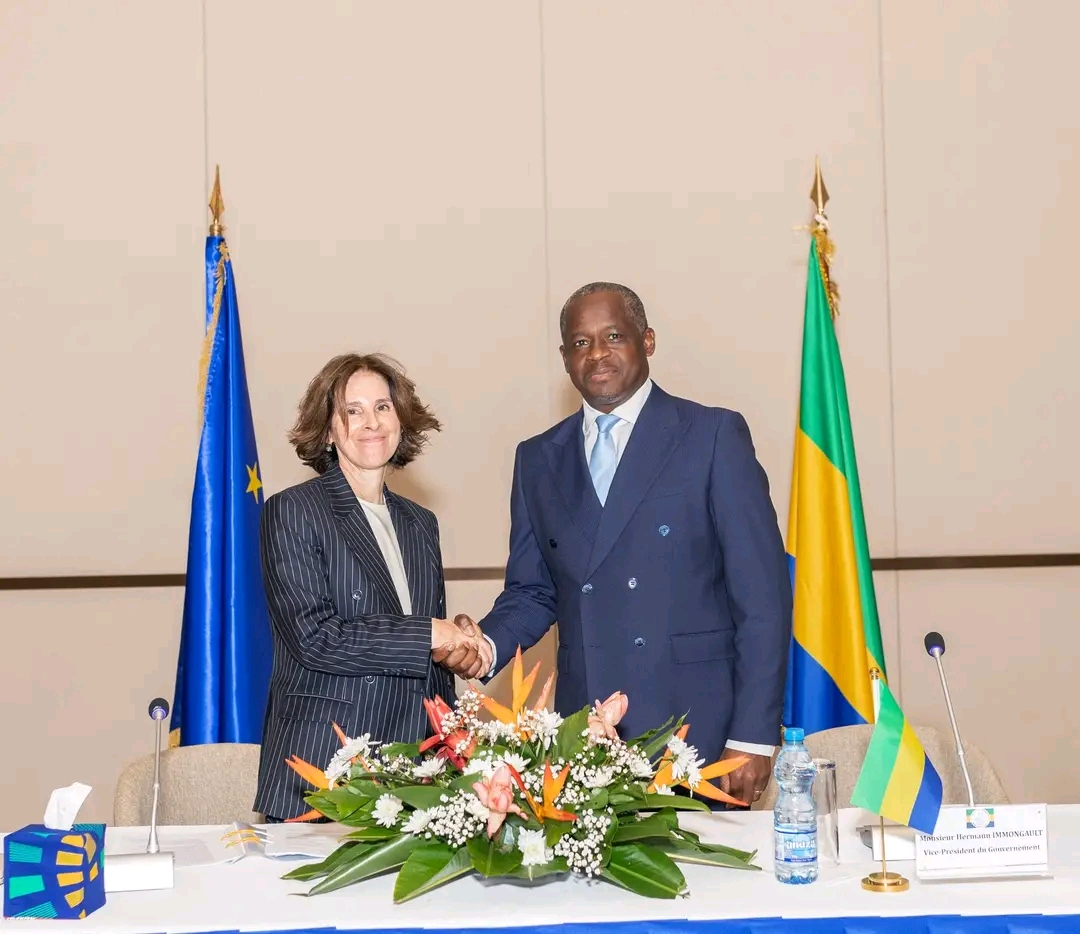
Libreville recently hosted a pivotal partnership dialogue session between Gabon and the European Union, co-chaired by the Gabonese Vice-President, Hermann Immongault, and the European Union Ambassador, Cécile Abadie. The high-level talks focused on accelerating political reforms, exploring economic prospects, and addressing environmental and multilateral challenges. This meeting underscored the European Union’s commitment to fostering a relationship centered on mutual investment and strategic consultation.
The assembly brought together several members of the Gabonese government alongside ambassadors from European Union member states. The agenda was comprehensive, covering the national economic landscape, the business environment, and the implementation of the Global Gateway strategy. Additional discussions highlighted cooperation in forest management, sustainable fisheries, maritime safety, and various regional security concerns.
During the proceedings, Ambassador Cécile Abadie emphasized the importance of evolving Africa-Europe relations within an increasingly competitive global market. She noted that today’s world requires more transactional and agile cooperation tools to navigate aggressive international competition. Abadie advocated for a partnership rooted in shared interests, while reinforcing the European Union’s dedication to peace, governance, and human rights.
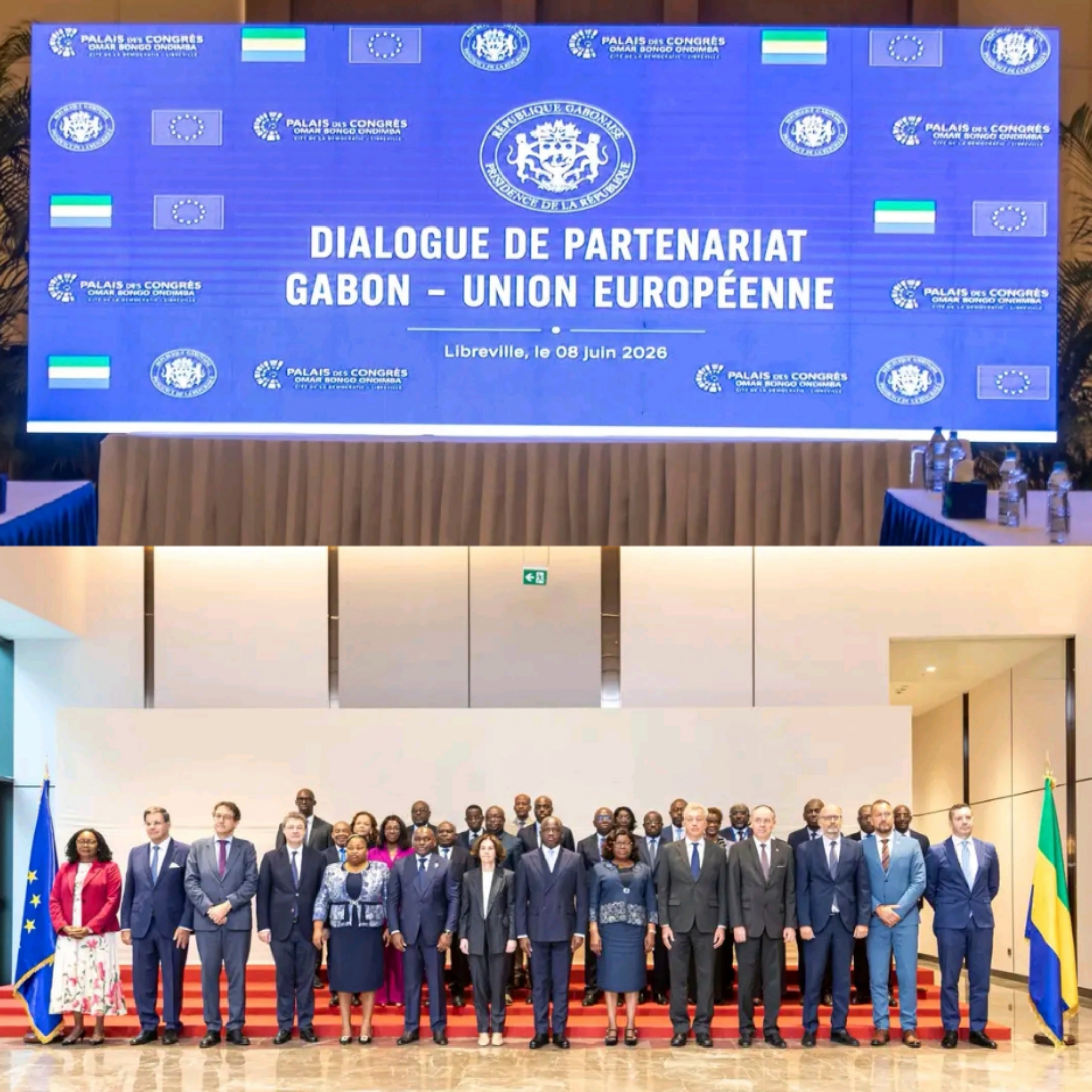
Addressing the new political chapter in Gabon following its transition period, the European diplomat called for a long-term collaborative framework. This dialogue serves as a vital platform to align common goals and revitalize working methods through shared data and joint analysis. The objective is to build a unified vision for future priorities through constant engagement.
This strengthening of ties follows significant milestones, including the Gabonese President’s visit to Brussels in late 2024 and participation in the 2025 European Union-African Union summit. The momentum reflects a deepening of bilateral engagement on multiple fronts.
The session also provided a forum for discussing global crises, such as the conflict in Ukraine, tensions in the Middle East, and security threats across the African continent. To conclude the meeting, both delegations reaffirmed their intent to maintain active communication on joint priorities and establish a practical framework for monitoring ongoing cooperation projects.
