
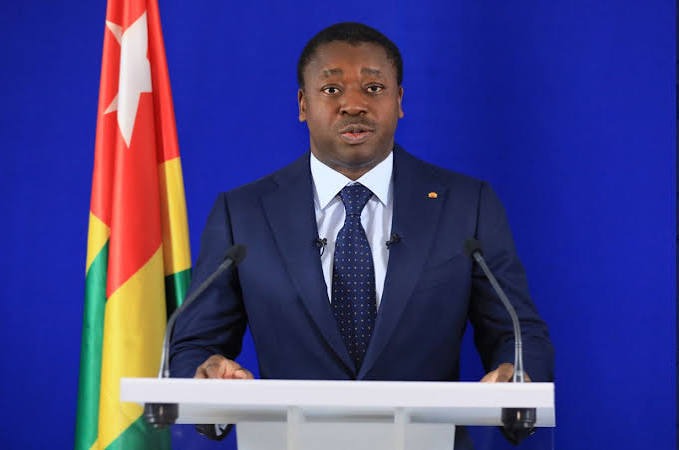
As Lomé’s political elite hails the transition to a tailor-made fifth republic—one that has sparked unprecedented public skepticism—the country’s economic landscape paints a far grimmer picture. While officials tout infrastructure upgrades and macroeconomic stability, the harsh reality of Togo’s financial health reveals a deepening crisis. Under President Faure Gnassingbé’s leadership, the nation has become a bottomless pit of debt and mismanagement, with little to show for billions in foreign aid and development loans.
Empty promises of economic revival
The official narrative of progress has long relied on flashy infrastructure projects and promises of economic renewal. Yet, beneath the surface, the numbers tell a different story. For over two decades, regional development banks and international donors have poured hundreds of billions of francs CFA into repeated modernization schemes. However, tangible returns—such as boosted state revenues or reduced public debt—remain conspicuously absent.
The Port of Lomé, often showcased as a symbol of national advancement, has done little to fulfill its economic potential. Despite its strategic importance, the port’s contributions to state coffers and debt reduction fall far short of expectations. Meanwhile, the country’s mounting debt continues to devour a disproportionate share of national resources, leaving little room for productive investments or sustainable growth.
Illusions of development
The relentless parade of infrastructure announcements rarely translates into real-world benefits. Job creation stagnates, industrialization remains a distant dream, and the benefits of these projects rarely trickle down to ordinary citizens. As one regional economist observed, “donors keep pouring money into Lomé more out of geopolitical and security concerns than financial prudence. The lack of accountability and efficiency in public spending is glaring.”
The widening social divide
While state funds vanish into bureaucratic inefficiencies, the population bears the brunt of the crisis. The cost of living has surged, wages stagnate, and the informal sector faces relentless tax pressures. From the bustling markets of Lomé to the remote villages of the Savanes region, access to essential goods, healthcare, and electricity is increasingly out of reach for many households.
The shift toward a parliamentary system and institutional restructuring has done little to address these issues. Instead, it appears to be a strategic move to consolidate power within the ruling elite while evading scrutiny over past financial mismanagement.
The contrast between official rhetoric and economic reality has never been starker. As Togo’s leaders celebrate their political maneuvers, the people grapple with the harsh consequences of a system that prioritizes appearances over substance.