
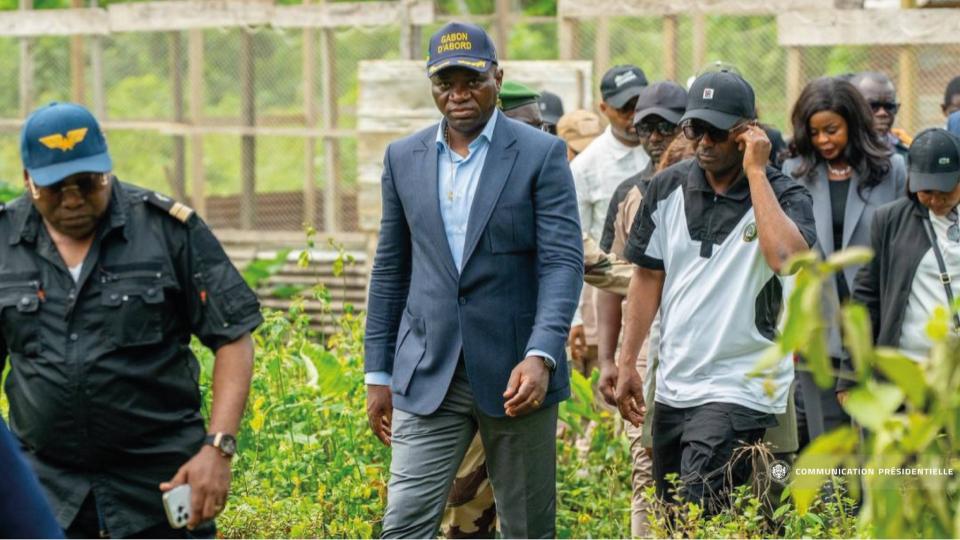
President Brice Clotaire Oligui Nguema is taking decisive action to end the heavy reliance on food imports that has long characterized the national economy. With a clear vision for the future, the Head of State has unveiled a comprehensive strategy aimed at achieving full agricultural autonomy by the year 2030.
The current reality is challenging: approximately 80% of the food consumed within the country is sourced from abroad. Brice Clotaire Oligui Nguema has labeled this dependence an “aberration,” especially considering the nation’s 270,000 km² of territory and its vast, underutilized fertile land. The new approach seeks to replace years of stagnation with bold political will and massive financial injections.
The 2027 roadmap: local poultry and livestock expansion
To turn this vision into reality, the government is launching an immediate offensive. A key part of the plan involves revitalizing the livestock sector by introducing 12,000 cattle to stimulate domestic meat and dairy production.
The poultry sector is also set for a major transformation. A total ban on the importation of broiler chickens will take effect on January 1, 2027. To ensure a smooth transition, a dedicated support program will be established to help local poultry farmers meet the nation’s demand. Furthermore, the administration is encouraging the systematic development of food crops across every province, ensuring that each region contributes to national food security.
A 25 billion FCFA investment in the farming sector
Recognizing that policy alone is not enough, the transition will be supported by education in modern farming techniques and unprecedented financial backing. A specialized fund of 25 billion FCFA has been established within the Banque pour le commerce et l’entrepreneuriat du Gabon (BCEG). This capital is reserved exclusively for the benefit of farmers, livestock breeders, and fishermen.
The President emphasized that the nation possesses the necessary resources to feed its population, noting that the missing components—political commitment and investment—are now being prioritized. The overarching objective is to reduce food import dependency by 50% by 2030, a move that would fundamentally strengthen the country’s economic sovereignty.