
Gabon rejects Trump’s migrant transfer proposal
Libreville, June 4, 2026 – By rejecting a proposal to host migrants expelled from the United States, Gabonese President Brice Clotaire Oligui Nguema has sent a powerful political message that extends far beyond migration policy.
This decision underscores a bold assertion of national sovereignty and reflects a new diplomatic doctrine in Gabon. The country is prioritizing its own interests while maintaining balanced relations with global powers.
During an international media appearance, the Head of State left no room for doubt. Addressing a potential agreement with Washington to accept expelled migrants, he made his stance unequivocally clear.
« On this matter, we did not reach an agreement. I did not accept them in my country. I say this honestly. Gabon is not ready to sign an agreement that does not benefit us. It’s crystal clear, » Brice Clotaire Oligui Nguema declared.
This position comes at a time when Western nations, particularly the United States under Donald Trump’s administration, are tightening migration policies and seeking partner countries to host certain categories of expelled migrants.
Migration: A global challenge
For years, migration has emerged as one of the most pressing geopolitical challenges worldwide. Europe, North America, and several emerging economies are increasingly looking to outsource migration management to third-party states.
In this context, some African nations have agreed to cooperate with Western powers. Rwanda, for instance, has signed agreements to host migrants transferred from the United Kingdom, with similar discussions underway in other African states.
Gabon’s refusal carries particular significance in this landscape. It is not a rejection of cooperation with the United States but rather an assertion of strategic autonomy.
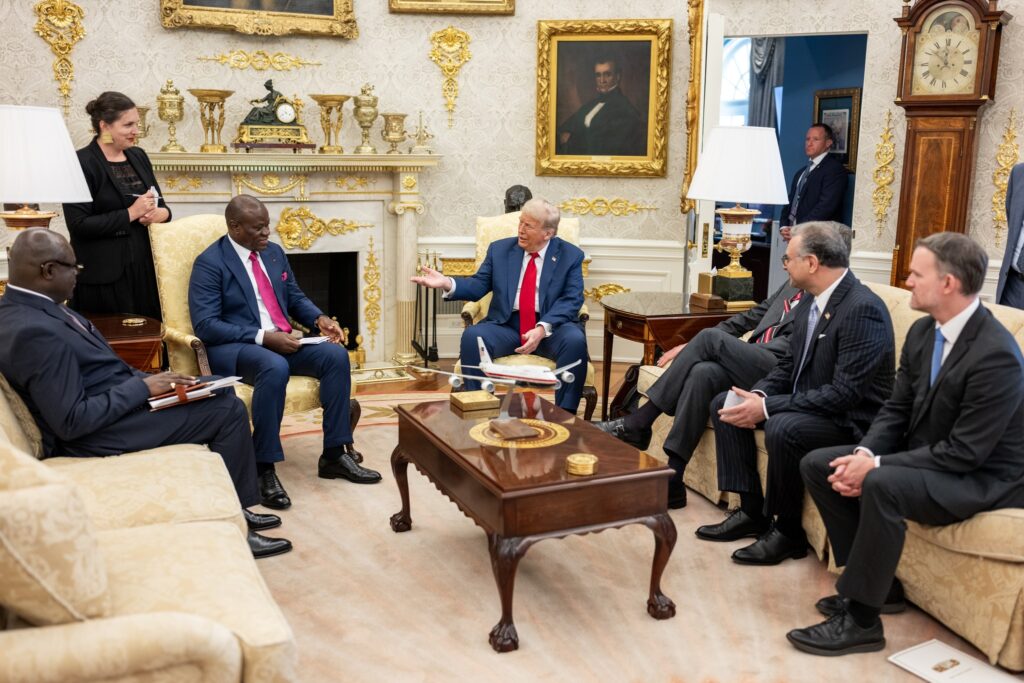
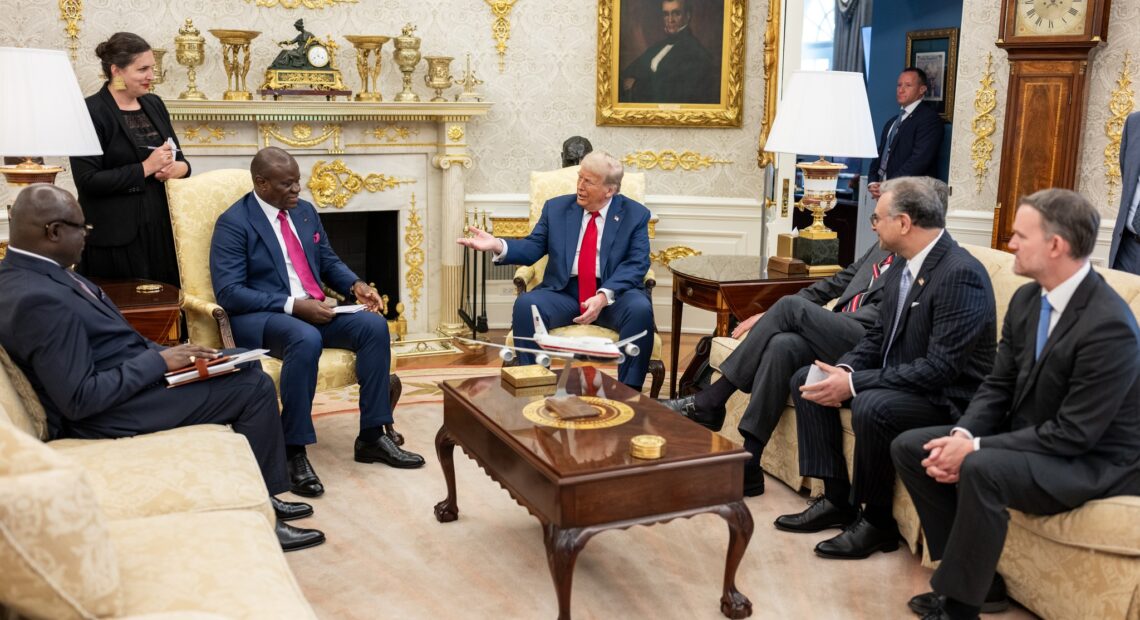
Throughout the discussion, Brice Clotaire Oligui Nguema emphasized the strength of Gabon’s ties with Washington, even playfully referring to Donald Trump as « my red-tie friend. »
The message is clear: partnerships matter, but Gabon’s national interests come first.
Sovereignty as a guiding principle
This decision aligns with a series of recent moves that highlight Gabon’s growing emphasis on national sovereignty. From local manganese processing to renegotiating economic agreements with foreign partners and reclaiming the de Gaulle military camp, Libreville is crafting a narrative centered on self-determination.
In this framework, migration becomes a symbolic issue. Accepting expelled migrants would have brought administrative, social, security, and financial challenges whose long-term impacts would be difficult to predict. For a nation focused on economic and social modernization, the priority remains addressing domestic needs.
This stance also resonates with widespread sentiments across Africa. Many on the continent view the idea of becoming a relocation zone for Western migration problems as unacceptable.
A diplomacy of balance
The true significance of this move may lie in Gabon’s ability to reject a major power’s proposal without triggering diplomatic confrontation. This approach contrasts sharply with the tensions seen elsewhere when migration disputes escalate into open political conflicts.
By publicly refusing while maintaining a respectful tone toward Washington, Brice Clotaire Oligui Nguema projects an image of a sovereign state that defends its interests without resorting to confrontation. For international observers, this decision reflects a broader shift in Africa’s relations with global powers: partnerships are still valued, but African states now demand greater agency in negotiations.
Beyond migration, the message from Libreville is unambiguous. Gabon remains open to the world but refuses to let external actors dictate decisions that shape its future. In an increasingly fragmented international environment, this assertion of sovereignty could become a defining feature of Gabonese diplomacy in the years ahead.