
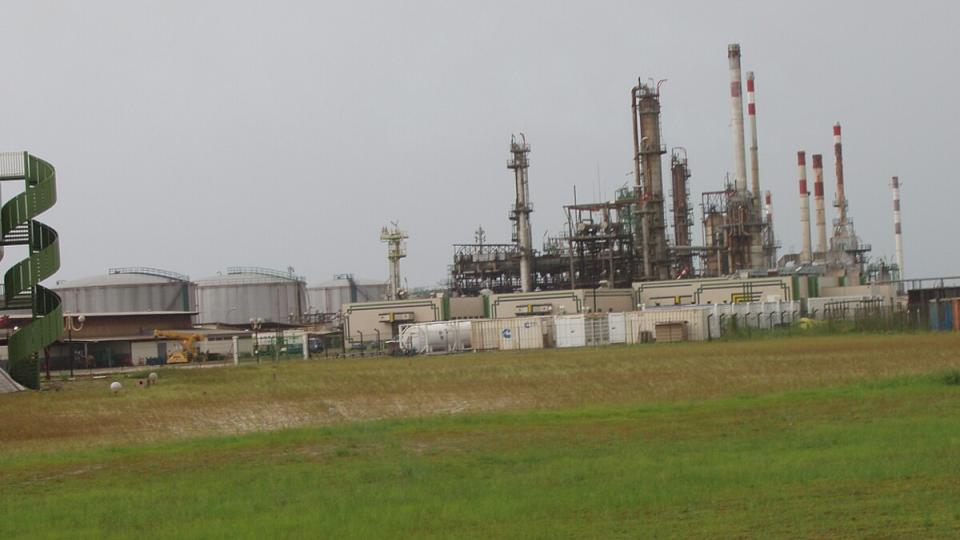
As a key oil producer in Central Africa, Gabon faces a persistent economic challenge: its heavy reliance on imported refined petroleum products. To address this vulnerability, the Bank of Central African States (BEAC) is urging Libreville’s authorities to fast-track the modernization of the Gabonese Refining Company (SOGARA), a move seen as essential to alleviate public finances and safeguard regional foreign exchange reserves.
The warning was issued in the BEAC’s latest report on inflation trends and economic prospects across the CEMAC zone. Despite producing substantial daily volumes of crude oil, Gabon’s limited refining capacity and aging infrastructure force the government to purchase significant quantities of gasoline and diesel from international markets.
This dependency exposes Gabon’s economy to global market fluctuations. Geopolitical tensions and volatile crude prices drive up fuel costs, straining the country’s trade balance and putting additional pressure on foreign exchange reserves managed by the central bank.
Why upgrading SOGARA is a national priority
To break free from this cycle, the BEAC is advocating for targeted investments to modernize the Port-Gentil refinery. Key recommendations include acquiring advanced technological equipment, such as a hydrocracker, to boost the production of refined fuels and convert more domestic crude into usable products.
Upgrading SOGARA would not only strengthen local fuel supply but also help reduce costly energy subsidies that weigh heavily on the national budget.
Budget decisions will shape Gabon’s energy future
The BEAC’s call places the responsibility squarely on Gabon’s government. Beyond technical improvements, this is a strategic decision with implications for economic sovereignty and energy security.
Financial analysts and market stakeholders will closely monitor the next budgetary allocations in the draft Finance Law to see if this critical recommendation translates into concrete funding. For Gabon, successfully transitioning to local refining could be a major step toward macroeconomic stability in the coming years.