
Gabon’s president outlines vision for economic and political sovereignty
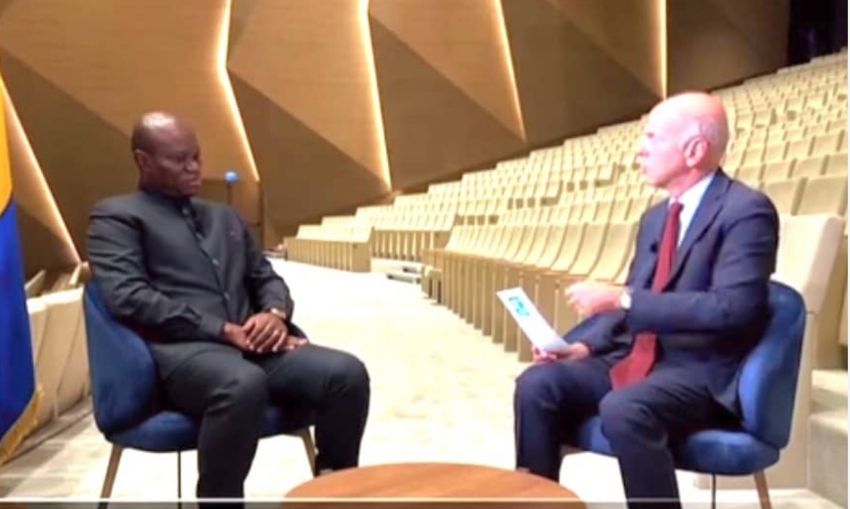
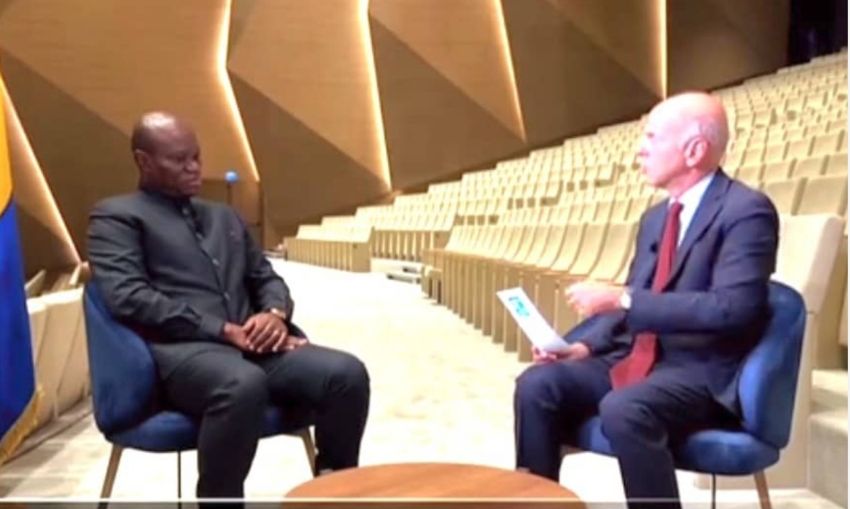
Libreville, June 3, 2026 – In a rare international interview, Gabonese President Brice Clotaire Oligui Nguema has outlined his vision for a sovereign Gabon, defended his economic policies, and reaffirmed his commitment to democratic principles.
Three years after taking office and one year following his election with over 94% of the vote, President Oligui Nguema used an exclusive interview with an international news outlet to present his administration’s strategy. Speaking from the Congress Hall of the Cité de la Démocratie in Libreville, he addressed pressing national and international issues, clarified his policies, and reaffirmed his administration’s direction.
The interview revealed a clear political roadmap: a government committed to long-term reforms, economic self-reliance, and a recalibration of Gabon’s international partnerships without severing existing ties.
Progressive reforms take center stage
When questioned about delays in critical infrastructure projects, including access to clean water and reliable electricity, the President acknowledged the challenges but emphasized the scale of his seven-year mandate. He highlighted investments exceeding 800 billion CFA francs in energy infrastructure, stressing that transformative change cannot be measured in short-term milestones.
His message underscored a commitment to sustainable progress, rejecting the notion of quick fixes in favor of systematic, long-term development.
Economic sovereignty as a guiding principle
The most significant policy announcements centered on economic sovereignty. President Oligui Nguema confirmed plans to engage with the International Monetary Fund (IMF) but only after a comprehensive audit of the country’s financial health. This cautious approach reflects a broader strategy to regain control over Gabon’s financial commitments before entering new international agreements.
In the mining sector, a major shift is underway. Starting in 2029, Gabon will prohibit the export of raw manganese, a move aimed at increasing local processing of the country’s natural resources. This decision sends a clear message to international mining giants, including French group Eramet, which must establish local processing facilities by the deadline or face export restrictions.
The policy signals a fundamental shift from exporting raw materials to creating value-added industries within Gabon, rebalancing the relationship between the state and foreign investors in favor of national development.
Balancing diplomacy on the global stage
On the international front, President Oligui Nguema emphasized that asserting Gabon’s sovereignty does not equate to isolation. He confirmed a state visit to France scheduled for July 20, highlighting the strong, cooperative relationship between Libreville and Paris. The recent handover of Camp de Gaulle to Gabonese authorities was framed as a collaborative gesture rather than a confrontational one, contrasting with dynamics seen in other African regions.
Regarding a U.S. proposal to host deportees, the President firmly declined, stating that such an arrangement would not serve Gabon’s interests. His responses reflected a diplomatic approach rooted in pragmatism and national interest.
Rejecting dynastic rule and committing to democratic alternation
The interview also addressed the legacy of former President Ali Bongo Ondimba, with the current leader noting his predecessor’s health without further elaboration. However, the most notable declaration came on the future of power in Gabon. In a region often criticized for extended mandates and hereditary succession, President Oligui Nguema unequivocally ruled out the establishment of a political dynasty bearing his name. He affirmed that the seven-year term, renewable once, is a permanent fixture of Gabon’s institutional framework, reinforcing his commitment to democratic alternation.
A president under scrutiny
Beyond the rhetoric, the interview laid bare the pillars of President Oligui Nguema’s governance: economic sovereignty, local resource transformation, recalibrated international partnerships, incremental infrastructure reforms, and a stated dedication to democratic principles. The true test, however, lies in implementation. While the President retains significant political capital, public expectations remain high. Gabonese citizens are likely to judge his administration less on intentions and more on tangible results.
One year into his presidency, Brice Clotaire Oligui Nguema has articulated a vision of a Gabon reclaiming control over its economic and political destiny. Whether this ambition translates into lasting progress will define his legacy and the future of the country.