
Gabon’s scientific path to achieving food sovereignty
The goal is ambitious, yet it has become the cornerstone of Gabon’s modern economic roadmap.
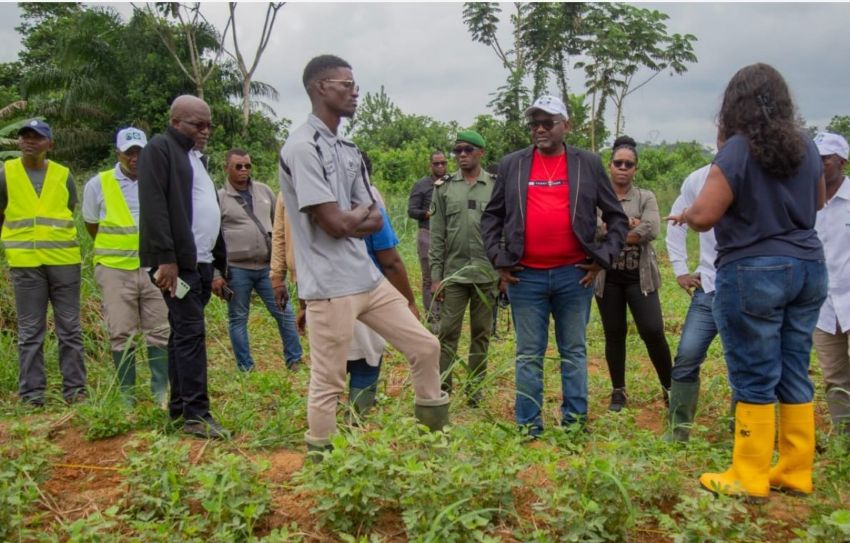
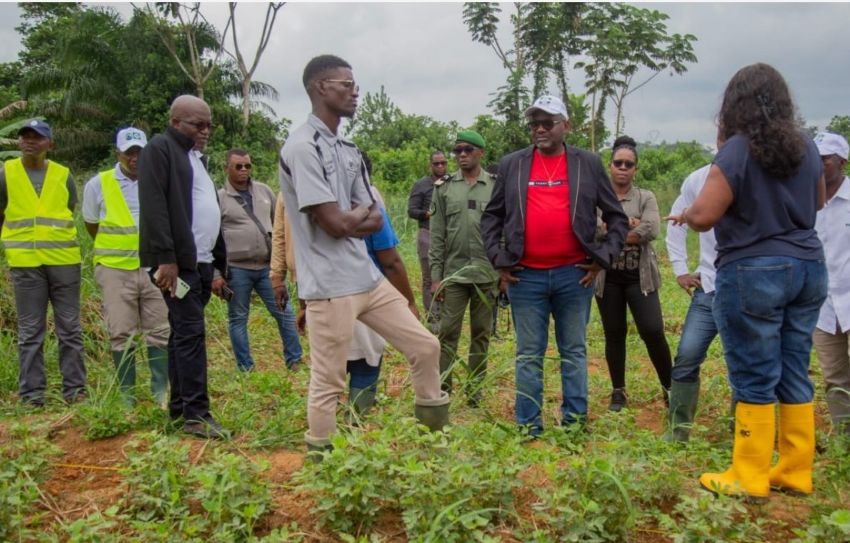
As the nation strives to drastically lower its reliance on foreign food supplies and halt the massive influx of imported poultry by 2027, the real struggle is taking place far from the commercial ports. The front line of this battle is found within the experimental agricultural plots of the Centre National de la Recherche Scientifique et Technologique located in Kougouleu.
A recent visit to this vital facility by Charles Edgar Mombo, the Minister of Higher Education, Scientific Research, and government spokesperson, represents more than a routine administrative check. It highlights a strategic pivot where scientific inquiry is being utilized as a primary engine for economic change and a tool for national independence.
In a country where food imports consume a significant portion of foreign reserves, the ability to cultivate the raw materials needed for livestock locally is now viewed with the same strategic importance as the mining or energy sectors.
Scientific research at the heart of national development
The government’s objective is precise: to establish a poultry industry that can satisfy domestic needs while phasing out international imports.
To realize this vision, the production of animal feed is the most critical hurdle. Maize and soybeans are the fundamental ingredients in the feed used for industrial poultry farming. As long as these crops are sourced from abroad, the sector’s independence remains tenuous.
At the Kougouleu site, researchers from CENAREST are focused on solving this problem. Currently, eleven different varieties of maize are undergoing rigorous testing to determine which seeds are best suited to the specific soil and climate conditions of Gabon.
This initiative is about more than just agricultural output; it is about identifying crops that can provide high enough yields to support a rapidly growing domestic poultry industry on a long-term basis.
Furthermore, scientific teams have launched trials on eleven soybean varieties, introduced through an international partnership with research centers in Malawi. Additional tests are being carried out in the Nyanga province, specifically in Tchibanga, to monitor performance across the country’s diverse ecosystems.
This approach marks a significant shift. Research, once seen as disconnected from immediate economic needs, has now become a functional pillar of national progress.
Building an integrated agricultural industry
The state’s strategy follows a clear logic: produce the necessary agricultural inputs locally to lower costs and boost the competitiveness of Gabonese farmers.
This perspective aligns with a broader trend across Africa, where many nations are struggling with rising food costs. International analysts often cite import dependency as a major source of economic instability for the continent.
Gabon, however, possesses significant natural advantages, including fertile land, abundant water, and a climate that supports various types of cultivation.
According to Charles Edgar Mombo, the progress seen on the ground already illustrates the country’s immense potential. The minister praised the dedication of the scientists and noted that the national higher education system is fully capable of supporting the strategic goals established by President Brice Clotaire Oligui Nguema.
Beyond the agricultural technicalities, the message is inherently political. Science is no longer just for academic knowledge; it is now expected to serve national priorities directly.
The ongoing construction of food independence
While the current progress is promising, significant hurdles still lie ahead.
Researchers have pointed out the need to expand experimental zones to improve trial quality and scale up production volumes. Moving from the controlled environment of a lab to large-scale industrial output is often the most difficult transition in the process.
Financial requirements also remain a major factor. Modernizing the agricultural sector demands heavy investment, proper infrastructure, accessible financing for local producers, and more efficient supply chain management.
Nevertheless, for the first time in many years, Gabon is implementing a unified strategy that connects research, farming, industry, and economic sovereignty.
The ministerial visit to Kougouleu marks a fundamental change in perspective. Under the current leadership, food independence will not result from administrative orders alone; it will be forged in laboratories, research centers, and through scientific innovation.
By 2027, if these targets are met, Gabon may prove that food sovereignty in Africa is built through the combined efforts of researchers and farmers. This quiet transformation could be the defining factor for the nation’s economic future.