
- Diplomacy
How digital innovation and women’s leadership are reshaping Benin’s future
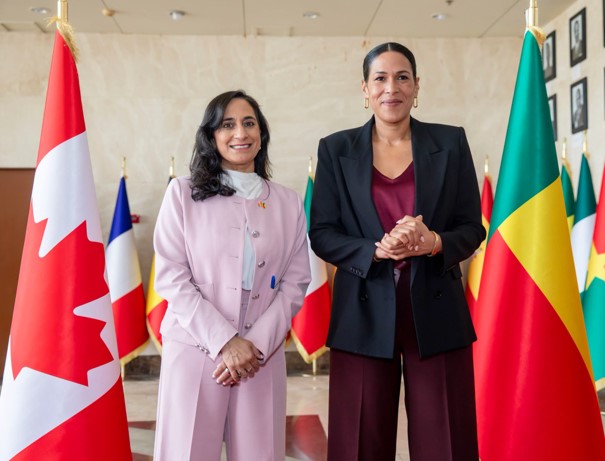
Beyond diplomatic handshakes and investment pledges, the recent visit to Cotonou by Canadian Minister Anita Anand on August 5 carried a quieter yet transformative agenda: a partnership built on social inclusion and female leadership. This cooperation isn’t just symbolic—it’s backed by concrete funding and strategic decisions from both governments.
Financial backing turns women’s inclusion from promise to progress
With approximately 11.5 million Canadian dollars—equivalent to 4.68 billion West African CFA francs—allocated toward women’s economic empowerment, digital inclusion, and resilience, this initiative moves beyond rhetoric. The funds target both female entrepreneurship and port economy development, signaling a shift from lofty declarations to actionable policies.
“Too often, gender equality remains a slogan,” notes a leader from a women’s entrepreneurship organization in Cotonou. “Here, we’re talking about access to credit, market opportunities, and training. This isn’t just talk—it’s measurable inclusion.”
The partnership rests on a shared belief: empowering women isn’t a side initiative but a growth engine. By equipping Beninese women with real tools to build businesses, both countries aim to unlock productivity long held back by systemic barriers.
Empowering women to drive economic growth
This strategy carries particular weight in a nation where the informal sector—dominated by women—forms the backbone of daily economic life. By focusing on female entrepreneurship, Ottawa and Cotonou are betting on a multiplier effect: every franc invested in a woman’s business ripples through families, neighborhoods, and supply chains.
“When a woman succeeds, her entire community moves forward,” explains a program beneficiary met during the visit. “For many of us, this funding is the difference between merely surviving and truly thriving.”
The partnership’s focus on the port economy deserves special attention. By linking women’s empowerment to a sector as vital as logistics, the collaboration ensures women aren’t confined to the sidelines of economic activity. Instead, they’re positioned as key players in the nation’s economic engine.