
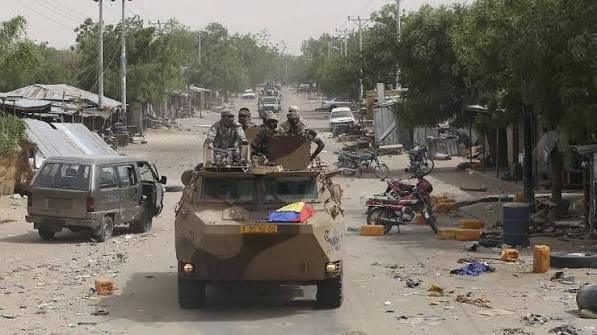
hundreds left homeless after terrorist assaults in south-west Niger
The mid-July wave of terror attacks on villages in south-western Niger has left hundreds of residents displaced, local authorities confirm. The violence erupted in areas of the Dosso region, bordering both Nigeria and Bénin, marking a troubling expansion of militant activities that had, until recently, remained concentrated elsewhere.
The escalation follows a pattern of growing insecurity along the Niger–Nigeria frontier, where armed factions linked to Al-Qaïda and the Islamic State have significantly stepped up operations since early 2025. These groups have exploited porous borders and weak local governance to intensify their campaigns, displacing entire communities and destabilising once-peaceful districts.
Survivors, many of them women and children, have sought refuge in safer areas. Footage broadcast by national television shows families arriving in Tahoua, a nearby region close to the Nigerian border. Others have made their way to Dogondoutchi, situated roughly 100 kilometres from Loga, where temporary shelters are being erected to accommodate the influx.
Internal displacement crisis deepens
United Nations figures indicate that by the end of 2025, over 450,000 people were internally displaced across Niger, with the heaviest concentrations in three regions repeatedly targeted by violent extremists: Tillabéri in the west—bordering both Burkina Faso and MaliDiffa in the south-east and Tahoua in the centre-east also shelter substantial numbers of uprooted families.
On 17 July, a pre-dawn assault on a military outpost in western Niger claimed 16 soldiers’ lives and injured 23 more, while eliminating 15 assailants. The attack underscored the persistent threat posed by the Islamic State in the Sahel and the Jama’at Nusrat al-Islam wal Muslimin (JNIM), an Al-Qaïda affiliate, which have waged a relentless campaign of violence over the past decade.
Humanitarian response lags behind growing needs
International aid organisations are struggling to match the scale of displacement. Camps set up in Tahoua and surrounding areas are already overcrowded, with shortages of food, clean water, and medical supplies reported daily. Local officials warn that without urgent intervention, the situation could spiral further, with disease and malnutrition taking an even heavier toll on vulnerable populations.
Meanwhile, security forces have launched targeted operations to dismantle militant cells and restore calm. Yet, the resurgence of attacks in previously unaffected zones suggests that the battle against terrorism in Niger remains far from over.