
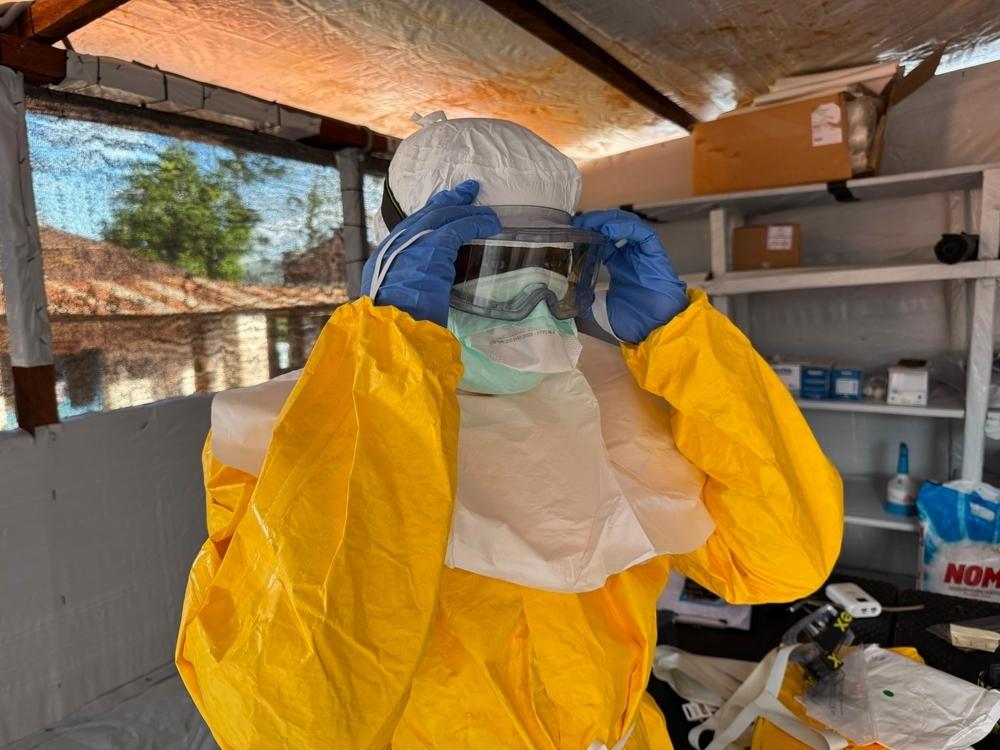
Weeks into the latest Ebola surge across the Democratic Republic of Congo and Uganda, medical teams are drastically scaling up their presence to halt the virus. I have been observing the intense operations in Goma and Bunia, the current heart of this 17th outbreak, where every resource is being mobilized to save lives.
A rising epidemiological toll
As diagnostic capabilities improved at the end of May, the health authorities in the DRC updated the situation. By June 4, 2026, official records for the Democratic Republic of Congo indicated:
- 381 confirmed cases;
- 64 confirmed fatalities;
- 233 suspected patients currently held in isolation facilities.
Meanwhile, in Uganda, the situation remains under close watch with 19 reported cases and one death as of June 5.
Expanding and restoring specialized treatment units
To combat the spread of the Bundibugyo virus and sever the chains of transmission, medical experts are tailoring their interventions to the hardest-hit regions.
Bunia: Expanding capacity to meet patient influx
The facility in Bunia is currently struggling with overcrowding. On June 5, the center was managing 37 suspected cases and 7 confirmed patients. To mitigate the risk of further contagion, the site is undergoing a rapid expansion. “We are developing a new plot of land and will double our capacity to 70 beds within days,” notes Anthony Kergosien, the emergency coordinator in Bunia. If the situation worsens, the center is prepared to increase its capacity to 100 beds.
Goma: Reviving a historic care center
In Goma, a dedicated treatment center has been brought back into service to isolate suspected cases and provide care for those confirmed to have the virus. The first patients were admitted on May 28.
“This facility has served us well in previous outbreaks. Our teams prioritize communication, speaking with patients to reassure them about the process, explaining the care plan, the typical length of stay, and the necessary testing,” explains Tathy Modjaka Nzoko, who oversees medical activities in Goma.
Safety and community trust: The foundations of the response
Protecting healthcare workers from infection
Medical staff must wear rigorous personal protective equipment (PPE) to remain safe from the Bundibugyo virus. This specific strain is highly infectious even at low doses. “Just a few viral particles entering the eyes or mouth can trigger the disease.”
The primary goal of the PPE is to keep the Ebola virus away from the skin. “The gear must be entirely waterproof because the virus is transmitted through bodily fluids. This is critical because we currently lack the vaccines and treatments we typically rely on,” says Armand Sprecher, an emergency physician and epidemiologist.
Fostering trust with local communities
For patients to agree to rapid isolation, constant dialogue and awareness campaigns are vital.
“The bond between our teams and the local population is essential. Naturally, people prefer to care for their loved ones at home. However, we need them to come to a treatment center immediately. The fact that we look like beings from another planet in our protective gear can create hesitation. We take the time to explain why we wear this equipment and remind them that the people inside the suits are often members of their own community,” Armand Sprecher adds.
Knowledge sharing and staff training
To maintain a large-scale response, the focus is on sharing specialized expertise. Intensive training sessions are held in Belgium before teams arrive on the ground.
“With every Ebola outbreak, transferring knowledge is a vital component of our strategy. We have veterans within our organization who have seen many such crises. We deploy these experts to the field because they know exactly what to do and can mentor others,” Armand Sprecher emphasizes.
Support the Emergency Fund
Understanding the Bundibugyo virus: Outbreak specifics
Unlike many previous waves in the DRC, this epidemic is fueled by the Bundibugyo type of Ebola (part of the orthoebolavirus family, alongside the Zaire and Sudan strains).
While the lethality rate of the Bundibugyo virus is lower than the Zaire strain—ranging between 25% and 40%—the medical response faces a significant hurdle: there is no approved vaccine or specific treatment for this particular virus yet.
Humanitarian efforts continue nationwide
Hundreds of professionals remain active across Ituri and North Kivu, while new treatment capacities are being established in South Kivu. Every week, several tons of medical and logistical supplies arrive in the DRC from international hubs to sustain this critical intervention.