
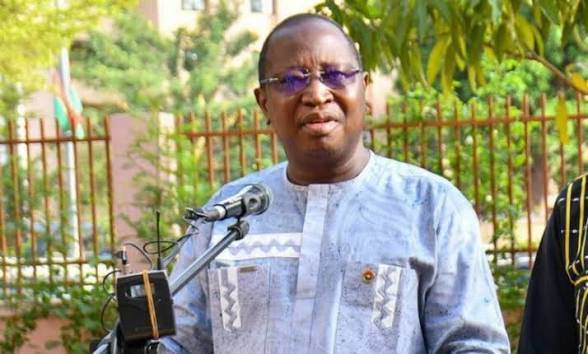
The latest authoritarian move from Burkina Faso’s leadership has sent shockwaves through the country’s academic circles and diaspora communities. During a national ceremony at the Ministry of Education, Higher Education Minister Professor Adjima Thiombiano did not just criticize—he openly targeted young graduates from the diaspora. Their alleged offense? Daring to question the nation’s education system or express frustrations about daily realities on social media.
Instead of fostering dialogue, the minister chose intimidation, issuing a stark ultimatum: « If Burkina Faso doesn’t suit them, they should go back where they came from. » This isn’t just a policy statement; it’s a declaration of war on critical thinking and academic freedom.
From criticism to persecution: How dissent became a crime
The minister’s inflammatory remarks reveal a government that views disagreement not as part of democratic debate but as a threat to national stability. Students who challenge policies or highlight shortcomings are no longer seen as engaged citizens—they’re labeled « misguided youth » and threatened with collective retaliation by « all Burkinabè. »
Worse still, Thiombiano’s call for ministry officials and educators to « stand as a bulwark against rebellious attitudes » effectively turns universities into surveillance hubs. The message is clear: dissent will be identified, reported, and suppressed. In an era where education should be a space for open inquiry, Burkina Faso’s institutions are being weaponized to enforce ideological conformity.
Expelling the diaspora: Does loyalty now come with conditions?
The minister’s ultimatum raises a disturbing question: Is Burkinabè citizenship conditional? Under this regime, does belonging to the nation depend solely on unquestioning obedience? By alienating diaspora students who dare to think independently, the government risks severing a vital bridge between Burkina Faso and the global academic community.
These young professionals—trained abroad and eager to contribute—bring invaluable perspectives shaped by diverse experiences. Dismissing them as « outsiders » unless they conform to a rigid narrative reveals a leadership that fears diversity of thought more than it values progress. True nation-building requires embracing critical voices, not exiling them.
The NEKRÉ Pact: A hollow blueprint for education ‘renaissance’
The government’s new NEKRÉ Pact promises to overhaul Burkina Faso’s education system from preschool to university. Yet how can reform succeed when its foundation is built on fear and suppression? Education thrives on debate, challenge, and the free exchange of ideas—yet the regime seems determined to turn lecture halls into indoctrination chambers.
By replacing academic rigor with jingoistic rhetoric, the authorities aren’t fostering a « renaissance »; they’re orchestrating an intellectual drought. A system that silences its own students is a system that has lost faith in its own future. The real tragedy? Burkina Faso’s brightest minds—whether at home or abroad—are the ones paying the price.
What’s at stake for Burkina Faso’s academic future?
- Freedom of expression: The crackdown on student voices sets a dangerous precedent for how dissent is treated in higher education.
- Brain drain: Alienating diaspora talent could accelerate the exodus of skilled professionals, leaving the nation’s development in peril.
- Educational decline: A university that fears criticism cannot produce the innovators and leaders Burkina Faso desperately needs.
- Social division: The government’s rhetoric deepens rifts between loyalists and critics, undermining national cohesion.
Can Burkina Faso afford to lose its critical youth?
The minister’s threats are more than empty rhetoric—they signal a deliberate shift toward authoritarian control over education. The question now is whether Burkina Faso’s leaders will realize, before it’s too late, that silencing its brightest minds is the surest way to sabotage its own future.
The cost of this ideological purge won’t just be measured in empty lecture halls. It will be measured in the dreams deferred, the innovations lost, and the generations of students forced to choose between silence and exile.