
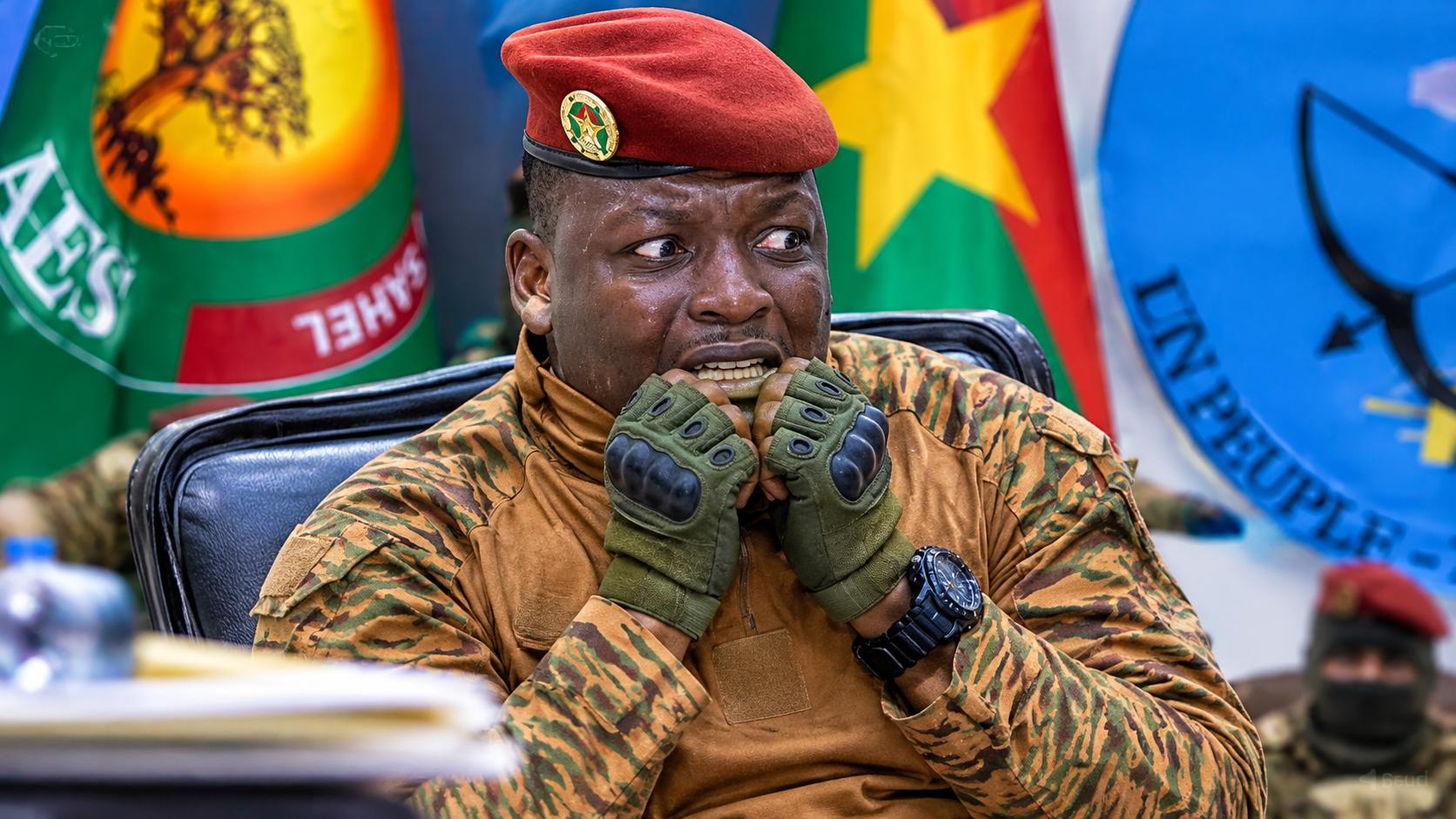
Diplomatic visibility versus leadership uncertainty
The absence of Burkina Faso’s transitional leader, Ibrahim Traoré, from the Russia-Africa summit has raised critical questions about the stability of his regime. While his administration has consistently portrayed him as a resolute figure breaking with traditional alliances to pivot toward Moscow, reports now suggest that his decision to skip the high-profile event may stem from concerns over internal security risks rather than diplomatic convenience.
The implications of this unexpected abstention extend beyond foreign policy. They may signal deeper tensions within the ruling coalition, where confidence in Traoré’s leadership is being tested by challenges to his authority from within his own circle.
Propaganda versus political reality
Since assuming power, Traoré’s administration has cultivated an image of strength through strategic messaging emphasizing sovereignty, resistance to foreign influence, and a commitment to national renewal. This narrative, heavily promoted across state-aligned media and social platforms, has positioned him as a decisive leader breaking from Burkina Faso’s historical ties to former colonial powers.
Yet critics argue that this carefully constructed image masks a widening gap between rhetoric and tangible results. Persistent security threats, humanitarian crises, and governance challenges continue to undermine public confidence, raising doubts not only among citizens but potentially within the military and political elite who initially backed his ascent.
When communications strategy backfires
An overreliance on symbolic diplomacy and centralized messaging poses inherent risks. When a government’s legitimacy hinges on an idealized portrayal of leadership, the strain becomes evident when expectations fail to align with reality. In Traoré’s case, this phenomenon could be contributing to friction among those who helped install him, particularly if their own ambitions or security concerns are not being met by the current trajectory.
Internal divisions: a silent threat to regime stability
In military-led transitions, the cohesion of the security apparatus is the cornerstone of political survival. Loyalty within the ranks is not guaranteed indefinitely personal agendas, competing visions for governance, and shifting alliances can erode the foundations of power. Traoré’s reported decision to avoid the summit may reflect a calculated move to preempt vulnerabilities rather than a display of diplomatic strength.
While the absence could simply be a precautionary measure, it also invites scrutiny into the durability of his alliances. Could internal rivalries among military elites or political allies be creating an environment where his leadership is increasingly contested?
Is this absence a symptom of something larger?
Without independent confirmation, any assessment of Traoré’s potential motives remains speculative. A summit absence alone does not constitute evidence of a coup plot or regime fracture. However, when viewed alongside broader governance challenges, it underscores a pressing dilemma: can a leader whose legitimacy is built on external posturing sustain internal cohesion without addressing the growing discontent among those who once supported him unconditionally?
Conclusion: the fragility behind the façade
The Russia-Africa summit was meant to solidify Traoré’s image as a regional player reshaping Burkina Faso’s foreign policy. Instead, his absence has injected uncertainty into both domestic and international perceptions of his leadership. Whether this reflects a strategic retreat, a personal security concern, or the first tremors of internal dissent, one truth emerges: the credibility of Traoré’s regime now depends less on its diplomatic alliances and more on its ability to reconcile internal divisions and deliver on its promises.
As the situation evolves, the central question remains: Is Ibrahim Traoré’s leadership facing a moment of reckoning or is this merely a temporary disruption in an otherwise unshaken political trajectory?
By Henri Nkeng — Journalist