
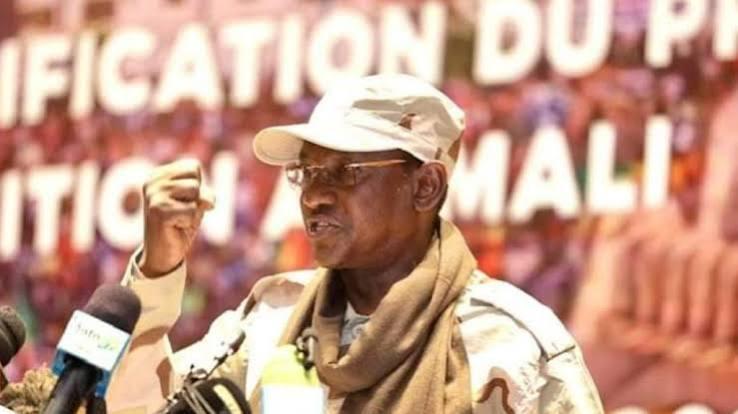
Choguel Kokalla Maïga once embodied Mali’s boldest narrative—a vocal champion of ‘reclaimed sovereignty’ who justified every military-led shift with unwavering conviction. Today, after 440 days in pretrial detention, the architect of Bamako’s defiant rhetoric finds himself a forgotten figure, a casualty of the very system he once helped build.
From revolutionary voice to political prisoner: a cautionary tale
Maïga’s dramatic fall from Mali’s most prominent civilian figure to an inmate in a high-security prison isn’t just a personal downfall—it’s a damning indictment of the junta’s growing authoritarian grip. His detention, now stretching past 14 months without resolution, sends a chilling message: allegiance to the military leadership is the only path to survival. The man who once symbolized the bridge between civilians and soldiers has become a textbook example of what happens to those who challenge the official narrative.
The paradox of a transition that devours its own leaders
The irony cuts deep. The same legal frameworks Maïga defended as pillars of accountability—military courts, emergency decrees, and indefinite pretrial detention—now serve as the machinery of his own suppression. His case lays bare a fundamental contradiction in Mali’s political transition: the harder the junta clings to power, the more it must dismantle the alliances that once legitimized its rule.
The warning to Mali’s political class is crystal clear: past contributions offer no protection against future punishment. The unprecedented duration of his detention—now a historic milestone in post-coup Mali—demonstrates that even subtle dissent faces the prospect of endless incarceration. The promise of a ‘refounded’ judicial system rings hollow when justice is wielded as a weapon against former allies.
440 Days of silence: the erosion of Mali’s democratic illusions
Observers across Mali and beyond don’t see Maïga’s ordeal as an isolated tragedy—they see it as proof of a regime that values control over consensus, coercion over conversation. The junta’s failure to advance his case—despite the absence of any formal charges—reveals a leadership paralyzed by fear of scrutiny. In a nation where the military once positioned itself as the bulwark of stability, indefinite detention without trial exposes the ultimate insecurity of its rule.
This isn’t mere political revenge—it’s a strategic playbook for power retention. Maïga’s predicament highlights a dangerous precedent: those who once shaped the transition may become its first sacrifices.
How fear reshapes Mali’s political playground
The repercussions spread far beyond a single cell. Civilian leaders, once eager to align with the junta’s agenda, now face a stark calculation: raise objections and risk the same fate, or stay silent and cling to whatever influence remains. The military’s strategy is transparent: neutralize potential rivals before they gain momentum, using the courts as a holding pen for inconvenient voices.
Maïga’s 440-day imprisonment isn’t just a countdown to a trial that may never arrive—it’s a timer on a deeper reckoning: how long can a political transition rooted in exclusion and intimidation truly claim to serve the public?
The fragile future of Mali’s unraveling transition
The junta’s gamble rests on two assumptions. First, that endless detention will suppress dissent without sparking widespread resistance. Second, that the international community, exhausted by regional turbulence, will accept this erosion of democratic norms as the necessary cost of stability.
History suggests such calculations are perilous. Regimes that turn on their founders rarely escape the consequences. While Maïga’s imprisonment may temporarily shore up control, it sows the seeds of future instability. The junta’s gravest miscalculation isn’t external opposition—it’s the slow erosion of its own legitimacy with every day of unanswered detention.
The question looms over Bamako’s corridors of power: Will the generals recognize too late that their most loyal supporter today could become their most dangerous liability tomorrow? The answer may already be etched into the walls of Maïga’s cell.