
A systemic pillaging of Cameroon’s gold, oil, and timber wealth
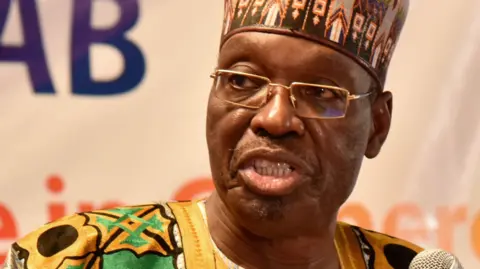
In a recent and explosive declaration, Issa Tchiroma Bakary has pulled back the curtain on the staggering level of financial mismanagement and resource theft currently paralyzing Cameroon. According to detailed figures presented, the nation has seen over 10,000 billion FCFA disappear, primarily through the fraudulent exploitation of gold, oil, and timber, alongside the illicit enrichment of those close to President Paul Biya.
The situation of public finances is described as a source of profound national indignation. After 43 years of governance, the transition from relative prosperity to absolute poverty for the Cameroonian people is attributed to a calculated system of predation. The first major pillar of this crisis involves the subsoil, specifically oil. For four decades, the SNH has managed petroleum revenues outside of any parliamentary oversight or budgetary transparency. International financial institutions have frequently flagged massive capital outflows that never appeared in official accounts. With oil sold to Glencore at less than 30% of its market value and numerous missing shipments, the financial hole is estimated in the thousands of billions.
The forestry sector has suffered a similar fate, with nearly 80% of timber being traded illegally. This open-air looting of Cameroonian land has reportedly occurred with the complicity of state actors, leading to the disappearance of over 10,000 billion FCFA across these three primary sectors.
Budgetary fraud and the scandal of ghost workers
The second dimension of this financial drain involves the direct embezzlement of public funds through fraudulent contracts. Between 2012 and 2021, budget lines 65 and 94 were essentially emptied, representing 5,400 billion FCFA in expenditures without any justification. Furthermore, the Special Criminal Court (TCS) has already convicted officials for the embezzlement of nearly 9,000 billion FCFA between 1997 and 2021.
The administrative rot extends to the payroll, where more than 20,000 ghost workers have been identified on the state’s books. This phenomenon alone costs the public treasury approximately 200 billion FCFA annually. Major infrastructure and health projects have also been used as vehicles for massive overbilling, including the Yaoundé-Douala highway, the 2021 AFCON, and the COVID-19 vaccine rollout, where documented losses exceed 500 billion FCFA.
Institutionalized tax and customs evasion
The third pillar of this crisis is found in systemic fiscal and customs fraud. Official data from anti-corruption agencies highlights 1,665 billion FCFA in suspicious financial flows in 2023 alone. Over a six-year period, documented customs fraud reached 1,246 billion FCFA, while scanning operations at the Douala port accounted for 1,745 billion FCFA in losses. This environment has fostered a public struggle between rival factions of the regime for control over these institutionalized fraudulent mechanisms.
The industrial-scale enrichment of the ruling clan
Finally, the declaration points to the personal accumulation of wealth by the Biya clan. Public funds have been diverted on an industrial scale to acquire luxury real estate in Cameroon, France, and the Middle East. Investigations have identified 744 million Euros in ill-gotten assets in France, alongside a 44 billion FCFA real estate portfolio in Dubai and an 18 billion FCFA estate in Nyom. Luxury stays at the Hotel Continental in Geneva, costing $50,000 per night for the presidential delegation, further illustrate the disconnect between the ruling elite and the struggling populace.
The total scale of this predation is estimated at a conservative 26,000 billion FCFA, though experts suggest that through the use of frontmen and tax havens, the true figure could be as high as 80,000 billion FCFA. To put this into perspective, 26,000 billion FCFA could have funded the salaries of 380,000 teachers, healthcare workers, and soldiers for 36 years, or built 2,600 district hospitals across the country’s ten regions. There will be no amnesty for these acts; every official involved in these malversations must be prepared to face national and international justice.