
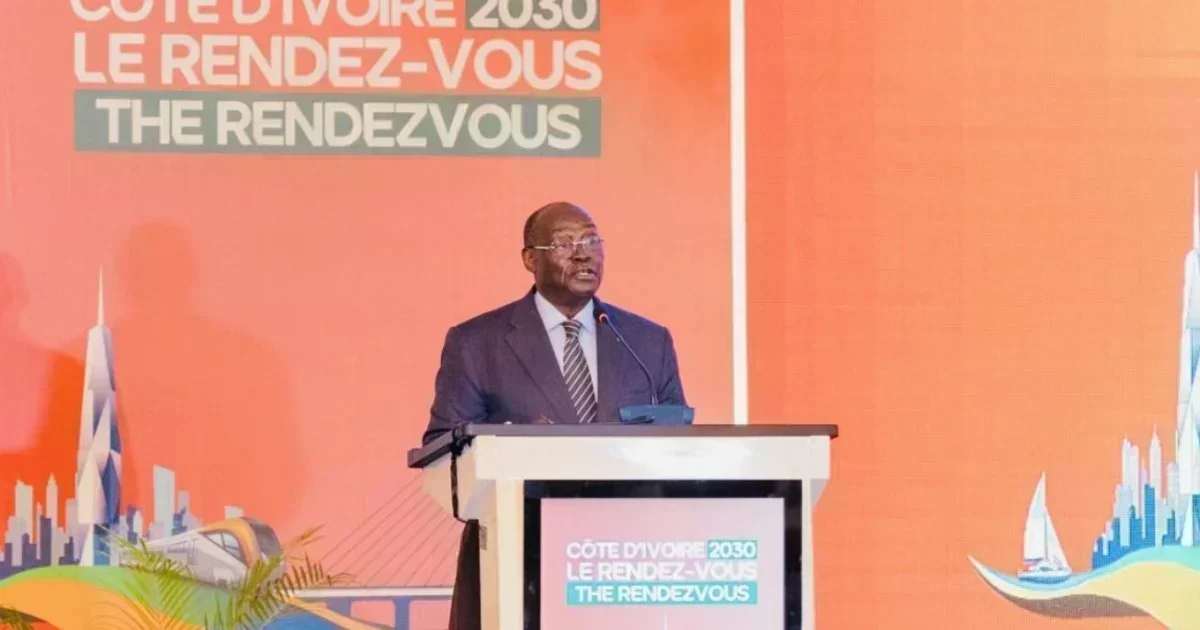
The Ivory Coast has surpassed all expectations in its quest for international financing, securing over $80 billion—four times the anticipated amount—for its 2030 National Development Plan (PND). This milestone underscores the country’s economic resilience and renewed stability, drawing unprecedented investor confidence.
a record-breaking financial commitment
During a high-profile event in Abidjan this week, government officials and hundreds of public and private investors gathered to finalize funding for the PND. The plan encompasses critical sectors including security, agricultural modernization, infrastructure development, and the creation of national champions in industry.
key financial contributions
The Minister of Planning, Souleymane Diarrassouba, confirmed that while the country initially sought approximately $20 billion in public funding, international partners—including the World Bank, African Development Bank, and European Union—committed an unprecedented $80 billion. “This demonstrates that all our economic indicators are exceptionally strong,” he stated. More than 70% of the total $209 billion PND budget is expected to come from private sector contributions, exceeding $147 billion.
The Ivory Coast’s economic appeal was further validated in February when it successfully raised $1.3 billion on international markets at favorable interest rates for an emerging economy. Earlier, the International Monetary Fund approved a disbursement of nearly $833 million under various aid programs, praising the nation’s “resilient” economy while projecting a slight growth slowdown to 6% in 2026 from 6.5% in 2025.
economic transformation and future outlook
Traditionally reliant on agriculture, the Ivory Coast is diversifying its economy through recent discoveries in mining, oil, and gas. With robust growth averaging 6.5% over recent years and stability restored after a decade of political turmoil in the early 2000s, the country is positioning itself as a leading investment destination in West Africa.
The PND’s flagship projects include a high-speed rail network, agricultural modernization initiatives accounting for 20% of GDP, and strategic industrial development to nurture homegrown corporate leaders.