
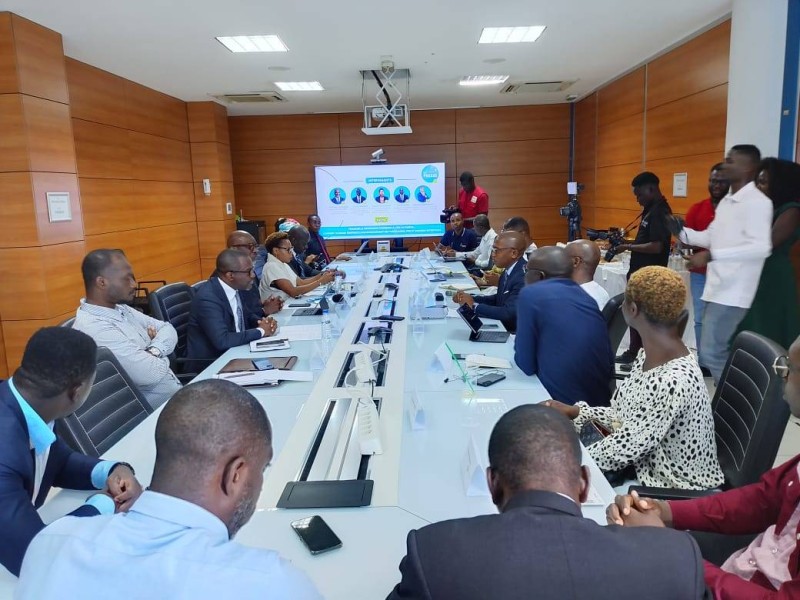
The industrialisation of Côte d’Ivoire has emerged as a critical topic in recent discussions about the country’s economic future. During a high-profile press briefing held in Abidjan-Plateau on May 8, 2026, Paul-Harry Aithnard, Regional Director of UEMOA and Managing Director of Ecobank Côte d’Ivoire, presented compelling arguments for why industrialisation is essential for the nation’s growth.
Why industrialisation is non-negotiable for Côte d’Ivoire
For Côte d’Ivoire to transition from a developing economy to a fully emerging market, Aithnard emphasizes that industrialisation isn’t just beneficial—it’s mandatory. He draws a powerful comparison with Malaysia, a country that achieved remarkable economic transformation over the past 25 years. “Malaysia’s GDP stood at $100 billion in 2000, mirroring Côte d’Ivoire’s current economic output. Today, Malaysia’s GDP has quadrupled to over $400 billion,” he notes, highlighting the potential trajectory Côte d’Ivoire could follow.
Key pillars supporting industrialisation
Aithnard outlines three essential components that Côte d’Ivoire must prioritize to achieve industrialisation:
- Financial inclusion: Expanding access to banking services for all citizens to enable savings, investments, and credit access. This would allow small-scale entrepreneurs to grow their businesses and contribute to the economy.
- Digital transformation: Leveraging technology to boost productivity while reducing operational costs. Digital tools can streamline processes, improve efficiency, and create new economic opportunities.
- Infrastructure development: The private sector—especially banks—must play a crucial role in financing large-scale infrastructure projects. These projects are vital for creating an enabling environment for industrial growth.
Government’s role in fostering industrialisation
Aithnard underscores the importance of government intervention in three critical areas:
- Energy sector: Reliable electricity supply is a prerequisite for industrialisation. Côte d’Ivoire has made significant progress in energy production, but further improvements are needed to meet growing industrial demands.
- Education reform: The education system must focus on science, technology, and management to build a skilled workforce capable of driving industrial growth. Aithnard acknowledges recent positive developments in the education sector but stresses the need for continued progress.
- Policy support: The government must create an enabling environment through policies that encourage investment, innovation, and private-sector participation in industrial projects.
A call to action for sustainable growth
By adopting these strategies, Côte d’Ivoire can position itself as a competitive player in the global economy. Industrialisation isn’t just about economic expansion—it’s about creating jobs, reducing poverty, and ensuring long-term prosperity for all citizens. As Aithnard’s insights demonstrate, the time to act is now.