
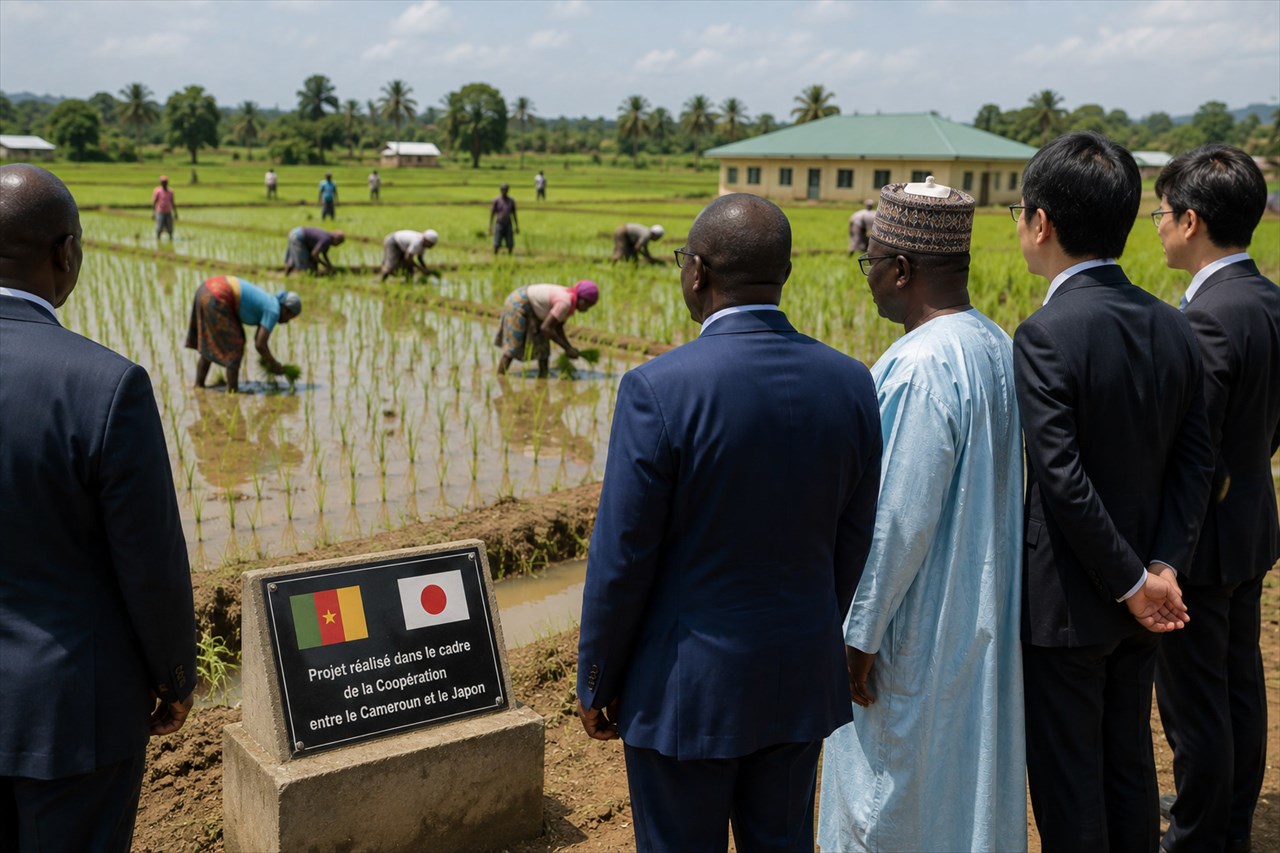

Japan’s decade-long commitment to Cameroon’s development
Over the past two decades, Japan has injected more than 646 million USD into Cameroon’s economy through grants, low-interest loans, and technical expertise. This landmark figure was revealed during a high-level meeting in Yaoundé between Cameroon’s Minister of Economy, Planning, and Territorial Development, Alamine Ousmane Mey, and JICA Vice President Ando Naoki. The event marked the 20th anniversary of JICA’s operations and the Japanese Overseas Cooperation Volunteers (JOCV) program in the country.
Beyond loans: Japan’s multi-faceted development support
Japan’s contributions extend far beyond financial aid. The cooperation model integrates several forms of official development assistance (ODA), including outright grants for social infrastructure such as schools, health centers, and community facilities. Additionally, concessionary loans with favorable terms—low interest rates, extended repayment periods, and grace periods—have been deployed to finance critical projects.
The focus of these investments aligns with Cameroon’s pressing needs, particularly in transport and energy infrastructure. Equally significant is Japan’s technical cooperation, which encompasses expert deployments, capacity-building initiatives, technological transfers, and training programs. Since 2006, JICA’s presence has grown into a holistic partnership addressing both immediate development needs and long-term economic resilience.
Tangible impact across key sectors
JICA’s interventions have left a visible mark on Cameroon’s development landscape:
- Education: Over 120 schools and 1,500 classrooms built through grant funding, expanding access to quality learning nationwide.
- Transport: The Mintom-Lele road, co-financed with the African Development Bank, serves as a vital link in the Yaoundé-Brazzaville corridor, improving regional connectivity.
- Agriculture: Nearly 36,000 rice farmers have received training to boost food security.
- Business growth: Around 1,500 Cameroonian enterprises have been supported through the Kaizen methodology, a Japanese management philosophy aimed at operational efficiency.
- Human capital: Thousands of professionals across various fields have enhanced their skills through targeted capacity-building programs.
Future horizons: Expanding cooperation to climate and industry
The partnership is evolving to meet new challenges. Earlier in 2026, JICA launched a technical cooperation project focused on restoring savannah and forest landscapes through agroforestry. This initiative underscores Japan’s growing emphasis on climate resilience and sustainable natural resource management while maintaining its long-standing support for infrastructure and human capital development.
The strategic alignment with Cameroon’s National Development Strategy 2020–2030 (SND30) ensures that future collaborations will continue to target high-priority areas such as agriculture, fisheries, education, infrastructure, environment, and enterprise competitiveness.