
Kaliningrad faces rising isolation as NATO tightens grip
Once a formidable military bastion for Moscow in the heart of Europe, the Russian exclave of Kaliningrad now finds itself under unprecedented pressure. A tightening of controls by neighboring NATO countries has turned the once-impenetrable fortress into a strategically isolated outpost.
Europe’s frontier shifts as Kaliningrad’s connectivity crumbles
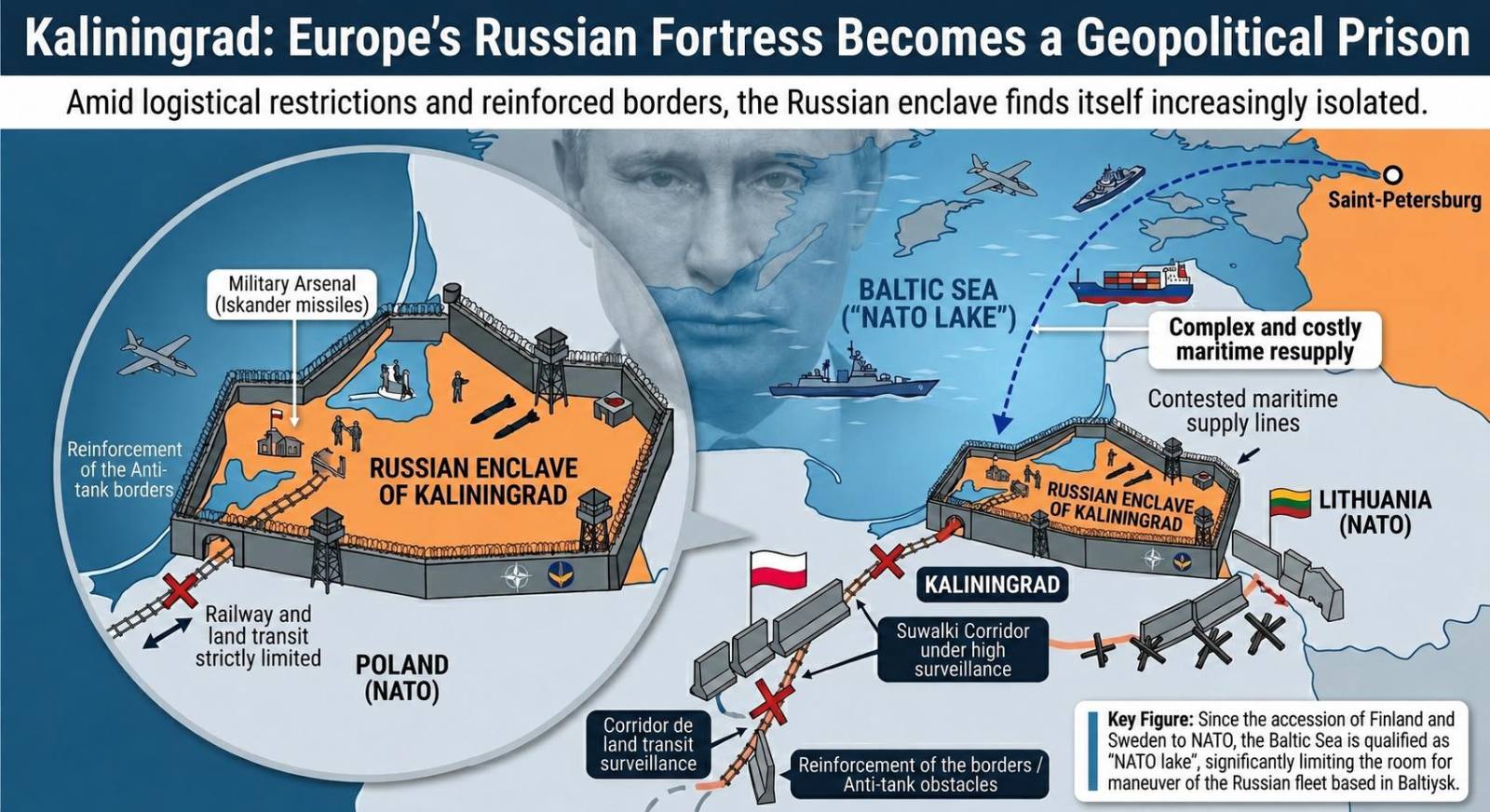
At the eastern edge of the European Union, a geopolitical transformation is unfolding. The heavily militarized Russian territory of Kaliningrad, wedged between Poland and Lithuania, is experiencing an unprecedented logistics crisis. Long regarded by the Kremlin as a critical projection point for military power—particularly with its Iskander missile systems—the enclave now resembles a besieged fortress, severed from the outside world.
The squeeze is not sudden but the result of a deliberate and escalating campaign. Poland, Lithuania, and Latvia have progressively tightened transit conditions, turning Kaliningrad’s geographic vulnerability into a powerful deterrent lever for NATO.
Railways, roads, and energy routes choked off
The blockade is most visible in the drastic reduction of transit options. Key infrastructure has been systematically throttled:
- Rail disruptions: The Suwałki corridor, the narrow land bridge connecting Kaliningrad to Belarus, is now under intense scrutiny. Rail freight transit, much of it inherited from the Soviet era, has been slashed to the bare minimum permitted under European sanctions.
- Energy cuts: Land-based fuel and energy supplies have plummeted. Moscow has been forced to reroute critical shipments via the Baltic Sea, a costly and logistically complex alternative to keep the enclave operational.
- Fortified borders: Physical barriers now dominate the landscape. Poland and Lithuania have erected anti-tank obstacles, barbed wire, and surveillance systems, effectively sealing off access to Kaliningrad by land.
A critical turning point came with the accession of Finland and Sweden to NATO. With the Baltic Sea now dubbed a “NATO lake”, Russia’s Baltic Fleet, based in Baltiysk, faces severe operational constraints.
Is Kaliningrad becoming a strategic liability for Moscow?
For President Vladimir Putin, the situation in Kaliningrad presents a growing strategic headache. While the enclave remains heavily armed, its ability to sustain prolonged military operations is increasingly questioned by defense analysts. Cut off from seamless overland supply lines to mainland Russia, its forces now rely almost entirely on maritime and aerial routes—both increasingly vulnerable to disruption.
Some military observers warn that what Moscow once viewed as its “sharpest blade” against the West may now be a liability. In the event of open conflict, Kaliningrad could be rapidly encircled and isolated by a unified and vigilant NATO alliance.
Diplomatic deadlock deepens
Russia has repeatedly condemned the transit restrictions as violations of international treaties, threatening retaliatory measures. Yet Poland, Lithuania, and Latvia—backed by their Western allies—frame the measures as essential to national security amid Russia’s aggressive posture in Ukraine.The question now is how far this logistical war of attrition can escalate before igniting a military confrontation in one of the most heavily militarized regions on Earth.