
What initially appeared as a routine government reshuffle has exposed a deep political rupture at the heart of Senegal’s leadership. The abrupt dismissal of Prime Minister Ousmane Sonko marks the unraveling of a historic alliance that once symbolized the hopes of an entire generation—one that redefined Senegalese politics after the 2000 democratic transition.
At its core, the Sonko-Faye partnership was built on an unspoken contract: the belief that their destinies were intertwined. The rallying cry « Diomaye moy Sonko » (“Diomaye is Sonko,” in Wolof) reverberated through Dakar, Ziguinchor, and Thiès, reflecting a grassroots movement that saw the two figures as inseparable. Yet, the foundation of their collaboration was shakier than it seemed.
From campaign slogan to political trap
The slogan that propelled Bassirou Diomaye Faye to victory in 2024 was never meant to be a long-term reality. After Ousmane Sonko was barred from running due to a defamation conviction, he handpicked his closest ally to lead the Pastef party. The campaign strategy relied on the illusion that voting for Faye equated to voting for Sonko—a gamble that paid off spectacularly, with Faye securing nearly 54% of the vote in the first round.
But once in power, the alliance began to fracture. While Sonko remained the ideological force behind the Pastef, Faye steadily asserted his authority as president. His focus on security and diplomacy contrasted with Sonko’s vocal advocacy for the party’s core promises, creating a growing rift between the two men.
A split foreseen by many
The dismissal of Sonko on Friday did not come as a surprise to observers in Dakar. Tensions had been simmering for months, with Faye publicly admonishing his prime minister in a televised interview in May: « As long as he remains Prime Minister, it is because he has my confidence. When that is no longer the case, there will be a new Prime Minister. »
Sonko, meanwhile, continued to wield influence as the uncontested leader of the Pastef, which held a parliamentary majority after the 2024 legislative elections. His rhetoric increasingly reflected the expectations of the party’s militant base, which viewed Faye as a temporary steward of Sonko’s political vision. By late 2025, the president had begun consolidating his own political movement, « Diomaye Président », sidelining Sonko’s loyalists in the process. Sonko’s camp responded with warnings that the government was straying from the Pastef’s original promises.
The April electoral reform, which potentially cleared the way for Sonko’s 2029 presidential bid, was seen by many as a preemptive move to challenge Faye’s authority. In Dakar’s political circles, the move was interpreted as the opening salvo of a presidential campaign.
Economic disputes fuel the fallout
The most contentious divide between the two leaders centered on Senegal’s economic management. Upon taking office, the new administration uncovered staggering levels of public debt, with accusations that the previous administration had concealed portions of it. The International Monetary Fund (IMF) suspended a $1.8 billion program, forcing the government into delicate negotiations with international lenders.
Within Faye’s inner circle, dissatisfaction grew over Sonko’s perceived rigidity in negotiations, particularly regarding budgetary reforms and energy subsidies. Conversely, Sonko’s allies accused the president of abandoning the Pastef’s sovereignist and social justice commitments. The Finance Minister, Cheikh Diba, reportedly warned the executive about the unsustainable cost of fuel subsidies amid soaring debt levels—now equivalent to 132% of GDP, according to the IMF. Disagreements over potential fuel price hikes paralyzed government operations.
The speech that sealed his fate
Just hours before his dismissal, Sonko delivered a combative address in parliament. His remarks on a controversial law criminalizing homosexuality—condemning it as a « Western diktat » and rejecting any moratorium—were met with applause from Pastef lawmakers. Yet, the speech also heightened concerns among Senegal’s Western partners, who were already wary of the government’s efforts to restore financial credibility with the IMF. For Faye, the moment became a turning point.
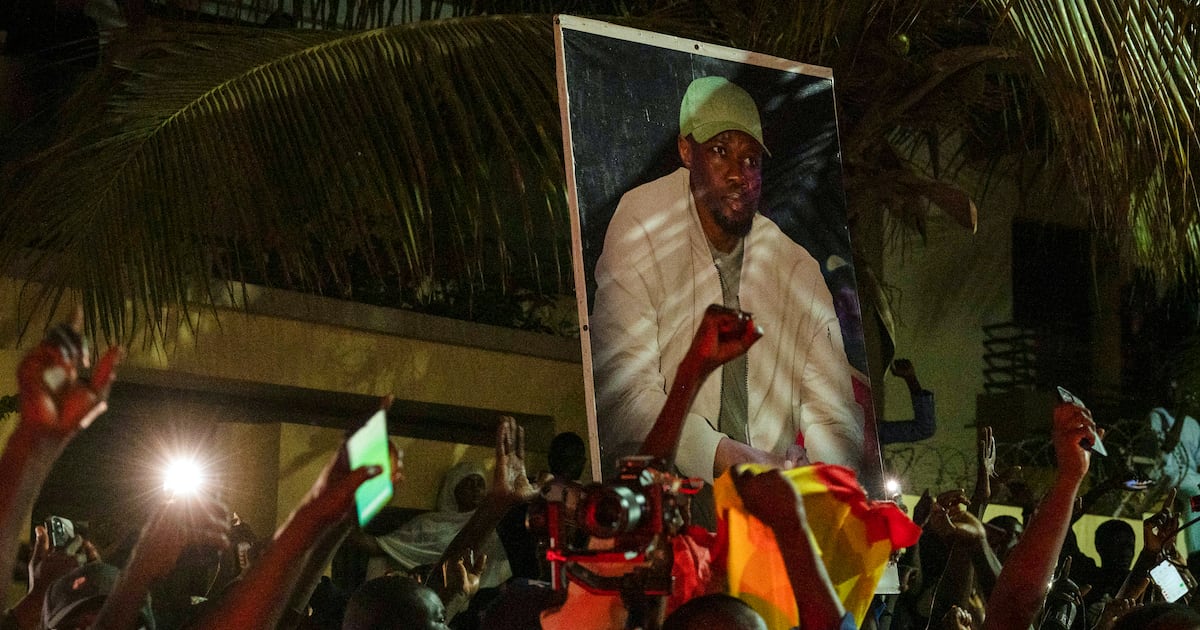
By Saturday morning, Dakar was electrified. Hundreds of Sonko’s supporters gathered outside his home in Keur Gorgui, chanting his name and denouncing what they saw as a betrayal. Social media erupted with reactions, from political analysts to public figures. Politologist Arthur Banga called Sonko’s dismissal « logical », while Franco-Spanish lawyer Juan Branco described it as « the greatest betrayal in Senegalese history. »
A nation watches with unease
Senegalese newspapers reflected the shock of the moment: « The fracture, » « Diomaye takes power, » « Farewell to the duo, » and « Power struggle at the summit » dominated the headlines. Foreign diplomats in Dakar now face an uncertain landscape, as the crisis extends far beyond personal ambitions. It threatens to dismantle the fragile equilibrium that enabled the 2024 democratic shift after years of turmoil under Macky Sall’s presidency, marked by deadly protests, mass arrests, and deep institutional distrust.
The impossible coexistence of two centers of power
The current crisis reveals a fundamental contradiction: Could Senegal’s government sustain two parallel centers of authority? Faye possessed constitutional legitimacy as president, while Sonko retained unmatched militant credibility, particularly among urban youth and the Pastef’s rank-and-file. For two years, the regime attempted to reconcile these forces—but Senegal’s political tradition, where authority is concentrated in the presidency, made this duality unsustainable.
In May 2026, Faye had cautioned that the government risked falling prey to « personal ambitions. » Weeks later, he reasserted his constitutional prerogative to appoint—and dismiss—his prime minister. On Friday evening, he exercised that power.
With Sonko likely to retain control of the Pastef and its parliamentary majority, Faye now holds the state apparatus and the presidency. The battle for 2029 has likely begun. Yet, for many Senegalese, the greater concern lies elsewhere: soaring youth unemployment, a rising cost of living, record debt, and the unfulfilled promises of the 2024 transition. As ambitions clash, the fear is that the hope born from that historic shift may dissipate in the fractures of power.
The president must now nominate a new prime minister, who will require parliamentary approval within three months of appointment.