

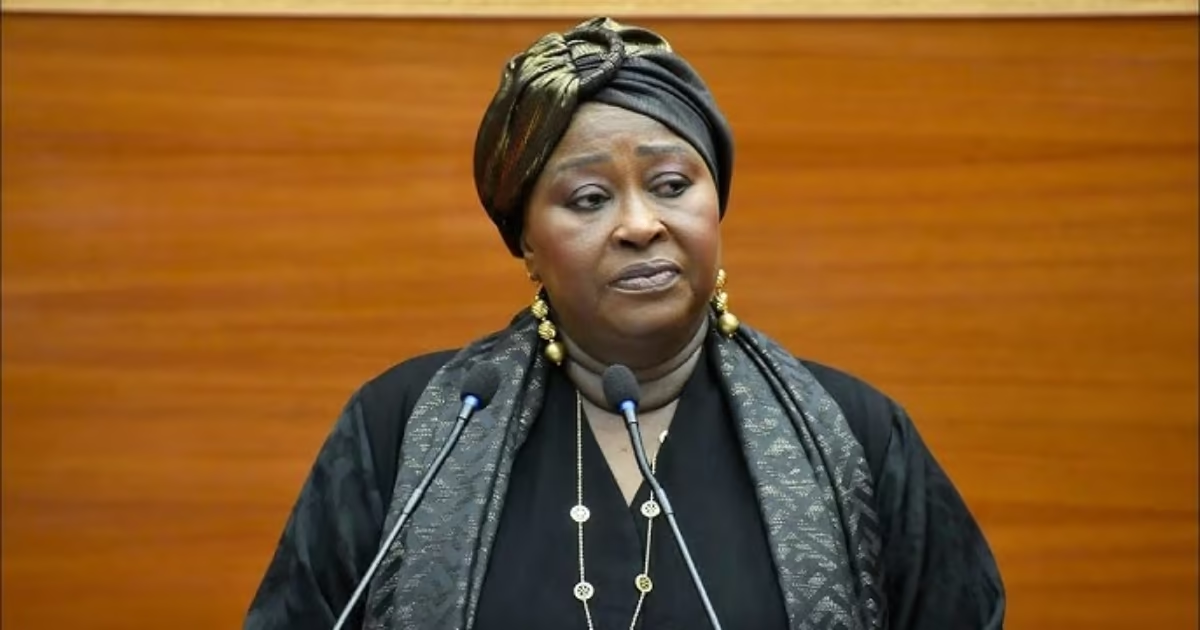
Maïmouna Dièye’s choice of words during a gathering in Khombole last Saturday has sent ripples through Senegal’s political and religious circles, after she invoked a sacred Islamic blessing in reference to opposition leader Ousmane Sonko.
In her speech, the Pastef activist referred to Sonko using the phrase « Seyidina Ousmane Sonko Salalahou Aleyhi Wa Salam »—a formula traditionally reserved for the Prophet Muhammad (peace and blessings be upon him) and, in some interpretations, other revered prophets. This linguistic choice immediately drew attention, as the invocation carries deep spiritual significance in Islam and is not meant for political figures, no matter their standing.
Understanding the controversy
The incident has ignited discussions about the blurring of lines between political admiration and religious reverence in Senegal, a country where faith plays a central role in public life. Islamic scholars have long cautioned against the sacralization of public figures, emphasizing the importance of distinguishing between respect for leaders and the sacred status accorded only to prophets.
The phrase Salalahou Aleyhi Wa Salam (peace and blessings be upon him), when applied to anyone other than the Prophet Muhammad, is considered a theological misstep. It implies a divine-like status that goes beyond political leadership, which likely explains why Ousmane Sonko reacted promptly to clarify his position.
Sonko’s response and the political implications
Ousmane Sonko quickly addressed the remarks, expressing gratitude for the support of his followers while firmly rejecting any attempt to elevate him to a spiritual plane. In doing so, he sought to prevent the controversy from being exploited by opponents in a political climate where religious sentiments run high. His response underscored the sensitivity surrounding religious language in Senegalese politics, where even unintended missteps can have significant consequences.
The episode highlights the delicate balance political figures must maintain when navigating a society deeply rooted in Islamic tradition, where words carry weight far beyond their literal meaning.