
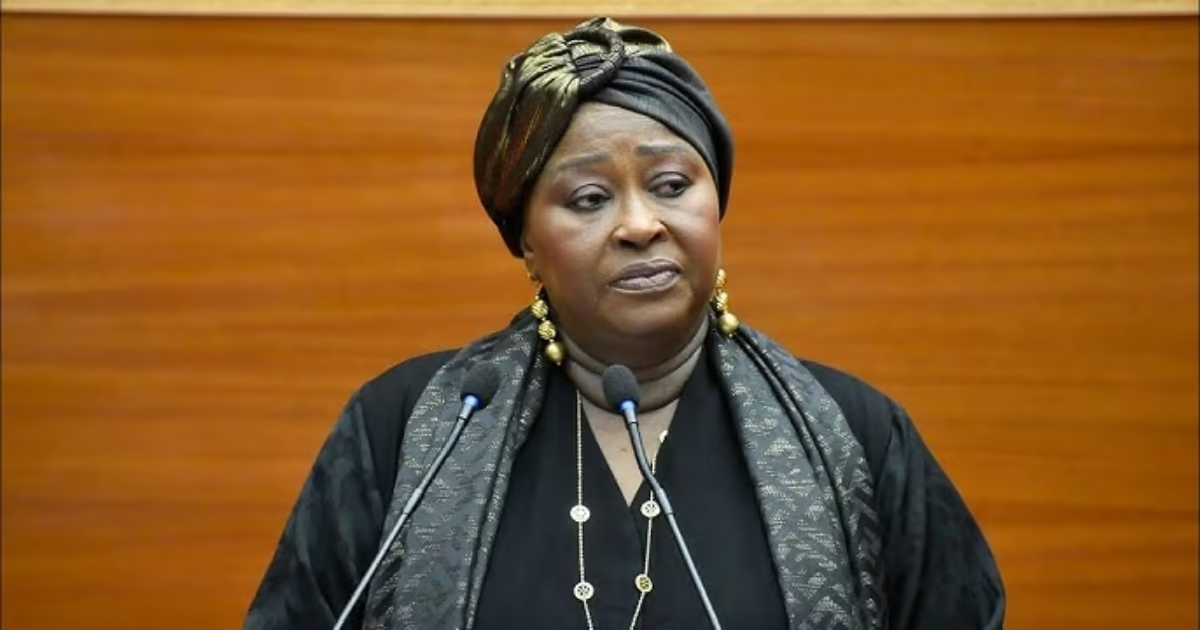
Maïmouna Dièye‘s choice of words during an event in Khombole has sparked a heated debate across Senegal, after she invoked a religious blessing typically reserved for prophets when addressing Ousmane Sonko.
When political discourse crosses religious boundaries
During a political gathering in Khombole, Maïmouna Dièye addressed Ousmane Sonko using a formula reserved exclusively for prophets in Islamic tradition. She declared, “in the presence of Seyidina Ousmane Sonko Salalahou Aleyhi Wa Salam,” a phrase that translates to a divine invocation of blessing.
This phrasing, typically used only for the Prophet Muhammad (peace and blessings upon him) and, in some traditions, other recognized prophets, carries deep spiritual significance in Islam. Associating such language with a political leader—no matter how influential—risks elevating that individual beyond their human status, a move that many find deeply problematic. The use of sacred language in a political context blurs the line between reverence for a leader and the veneration reserved for the divine, sparking immediate backlash.
Ousmane Sonko’s swift response
Ousmane Sonko quickly moved to clarify the situation, emphasizing that he does not—and would never—seek to occupy a spiritual role. In a public statement, he acknowledged the affection of his supporters but firmly stated that the invocation “Salalahou Aleyhi Wa Salam” belongs solely to the Prophet Muhammad, a status he has never claimed nor intends to claim.
His reaction highlights the sensitivity surrounding religious language in Senegalese politics. Political figures in the country are acutely aware of the risks associated with overstepping religious boundaries, especially when such language could be weaponized by opponents or misinterpreted by the public. By addressing the issue head-on, Sonko sought to prevent the controversy from escalating and to reaffirm the separation between political leadership and religious sanctity.
The broader implications of sacralizing political figures
This incident raises important questions about the tendency to sacralize political leaders in Senegal. While admiration and respect for public figures are natural, crossing the line into quasi-religious veneration can have serious consequences. Religious leaders in Senegal have long cautioned against this practice, stressing the need to maintain a clear distinction between the respect owed to leaders and the reverence reserved for the sacred.
Such boundary-crossing rhetoric not only risks alienating those who value strict religious adherence but also fuels perceptions of political manipulation. It can undermine public trust and distort the expectations placed on leaders, turning them into figures of unwarranted spiritual authority.