
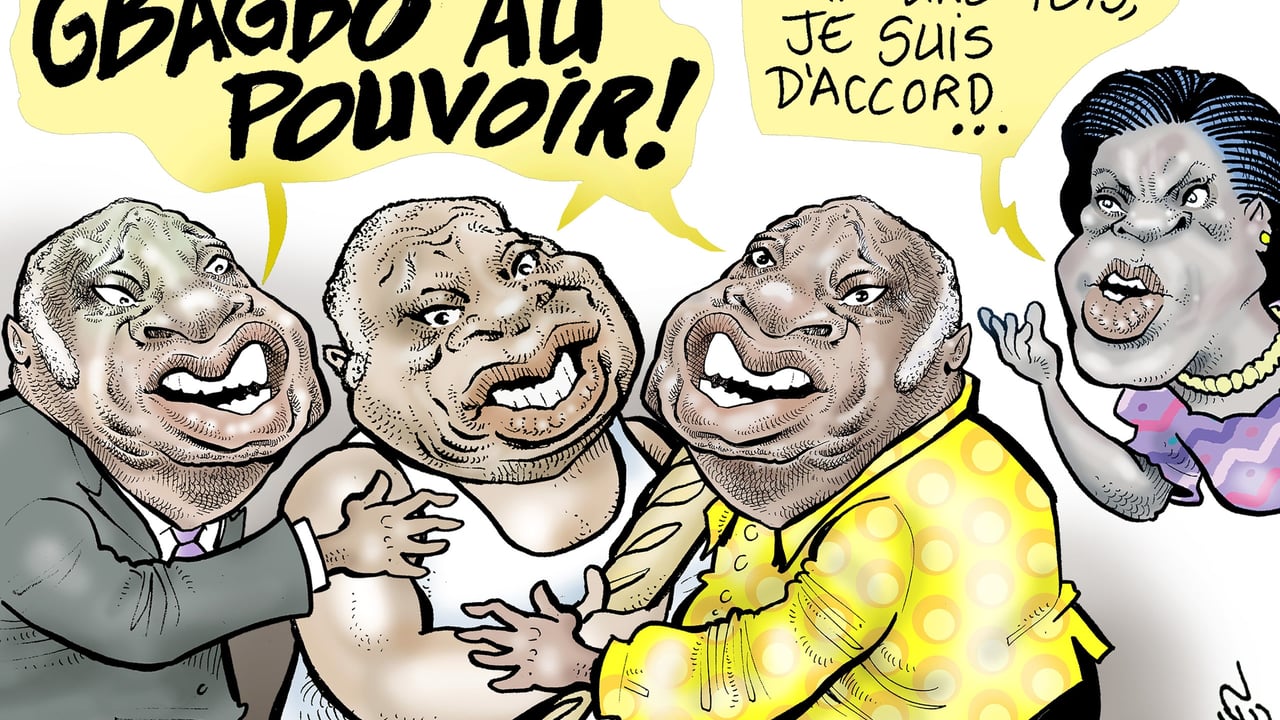
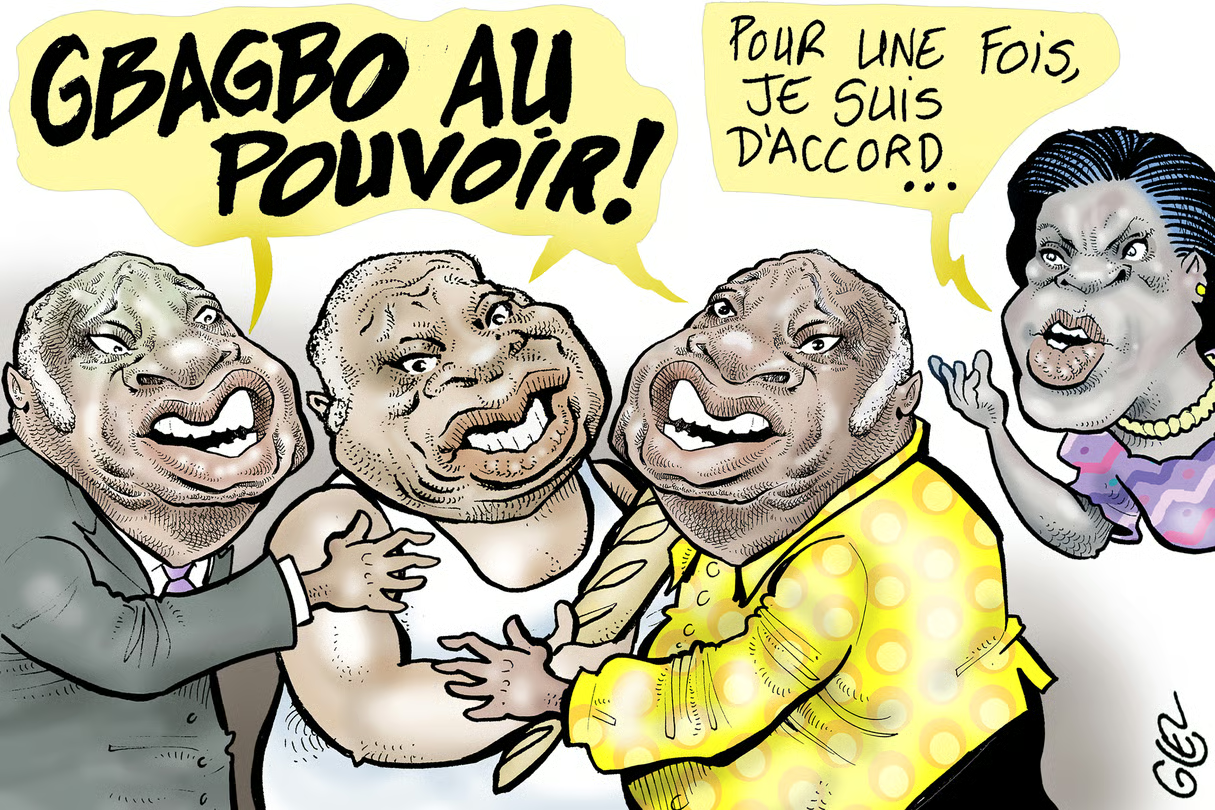
After years of political turbulence, the fate of Côte d’Ivoire’s oldest opposition party has taken a decisive turn. Despite initial hints at retiring from politics, Laurent Gbagbo, now in his eighth decade, has been reaffirmed as president of the Parti des Peuples Africains-Côte d’Ivoire (PPA-CI) during the party’s first ordinary congress. Held over two days at the Treichville Cultural Palace, the event marked a surprising reversal of his earlier statements about stepping back from the political stage.
The decision comes amid a backdrop of uncertainty. Gbagbo, once barred from running in the last presidential election due to a legal technicality involving his amnesty status, had previously signaled intentions to withdraw from active politics. However, his return to the helm suggests a different narrative. Analysts point to two key factors: the continued dominance of President Alassane Ouattara, whose extended tenure has kept him in power, and the underwhelming performance of the PPA-CI in recent elections. The party, notably absent from both the 2025 legislative and presidential races, faces a crisis of relevance.
Party unity overshadows internal divisions
The congress in Abidjan projected an image of unity, with Gbagbo’s re-election hailed as a show of overwhelming support from over 3,000 delegates. Yet beneath the surface lies a reality of deep fractures. The party has struggled to present a united front, particularly after the defiant candidacy of former PPA-CI executive vice-president Ahoua Don Mello in October’s presidential election. His independent run, though unsuccessful, highlighted growing dissent within the ranks.
A purge to silence dissent
In response, the party’s central committee took decisive action. Three prominent dissenters were expelled, while 62 others received suspensions ranging from three to eighteen months. Among those penalized were Lakota Mayor Prince Arthur Dalli, independent deputy Stéphane Kipré, and Professor Georges Armand Ouégnin. Their offense? Challenging the party’s leadership by advocating for internal reforms and opposing the boycott of recent elections.
This internal crackdown underscores a broader struggle within the PPA-CI. While Gbagbo’s re-election was celebrated as a triumph of party loyalty, it also signals a refusal to embrace change. His symbolic presence is expected to galvanize supporters, yet questions linger about the party’s future direction. Despite his stated intention to delegate daily management, the veteran leader’s influence remains undeniable—a pattern that has defined his political career for decades.
The congress concluded with a public address from Gbagbo, followed by a celebratory event in Songon, his hometown. For many, the festivities felt less like a celebration of renewal and more like a reassertion of the status quo. The message was clear: the PPA-CI, under Gbagbo’s leadership, is not ready to fade into obscurity.