
The Gulf of Guinea emerges as a new battleground in Franco-Russian rivalry
Lomé has quietly become the latest focal point of an intense geopolitical contest between France and Russia. The West African capital, long regarded as a steadfast but low-profile ally of Paris, now finds itself at the center of a high-stakes diplomatic struggle. As French influence wanes across the Sahel—following ruptures with Mali, Burkina Faso, and Niger—the former colonial power is doubling down on coastal West Africa. Meanwhile, Moscow, riding the wave of its growing clout in the Sahel, is making its move in Togo with a strategy honed through years of engagement in the region.
Paris’s belated diplomatic awakening
Alarmed by the erosion of its traditional alliances, France staged a high-profile comeback in Lomé in April 2026. The visit by the French foreign minister marked the first such journey in over two decades, signaling a renewed urgency in Paris’s efforts to reclaim its position in the Gulf of Guinea. Recognizing that moral appeals no longer suffice to retain regional partners, France has pivoted toward tangible investments aimed at reshaping its image among Togolese youth and elites.
Among the centerpieces of this renewed engagement are a state-of-the-art university hospital and a cutting-edge artificial intelligence research hub, both slated for Lomé. These projects are designed to position France as a forward-looking partner, offering solutions that resonate with the aspirations of a generation skeptical of Europe’s historical role on the continent.
Moscow’s strategic advance in security and infrastructure
However, on the most critical front—security—the Kremlin appears to have stolen a march. With jihadist activity intensifying in northern Togo, particularly in the Savanes region, Lomé has turned to Moscow for rapid, unencumbered solutions. In 2025, the two countries formalized a military cooperation agreement, paving the way for the deployment of the Africa Corps—the Russian state structure succeeding the Wagner Group. For Togolese authorities, the appeal lies in the promise of operational support and military hardware without the political strings often attached to Western assistance.
Russia’s ambitions extend far beyond military cooperation. The Kremlin has set its sights on Togo’s crown jewel: the deep-water port of Lomé, a logistical hub unrivaled in West Africa. Moscow aims to transform the port into a gateway for its influence across the Sahel, with ambitious infrastructure projects already under discussion. These include a railway and pipeline linking Lomé to Burkina Faso, creating a strategic corridor that would bind the Gulf of Guinea to the military regimes of the Sahel.
The Kremlin’s multi-pronged soft power offensive
Russia’s strategy in Togo is not confined to hard power. A concerted soft power campaign seeks to win hearts and minds across Togolese society:
- Education: A surge in scholarships for Togolese students to study in Russia.
- Culture: The establishment of Russian language centers and the organization of cultural events, including concerts in Lomé.
- Information warfare: The dissemination of sovereignist and anti-Western narratives, which resonate with segments of the population disillusioned by Western engagement.
Faure Gnassingbé’s balancing act
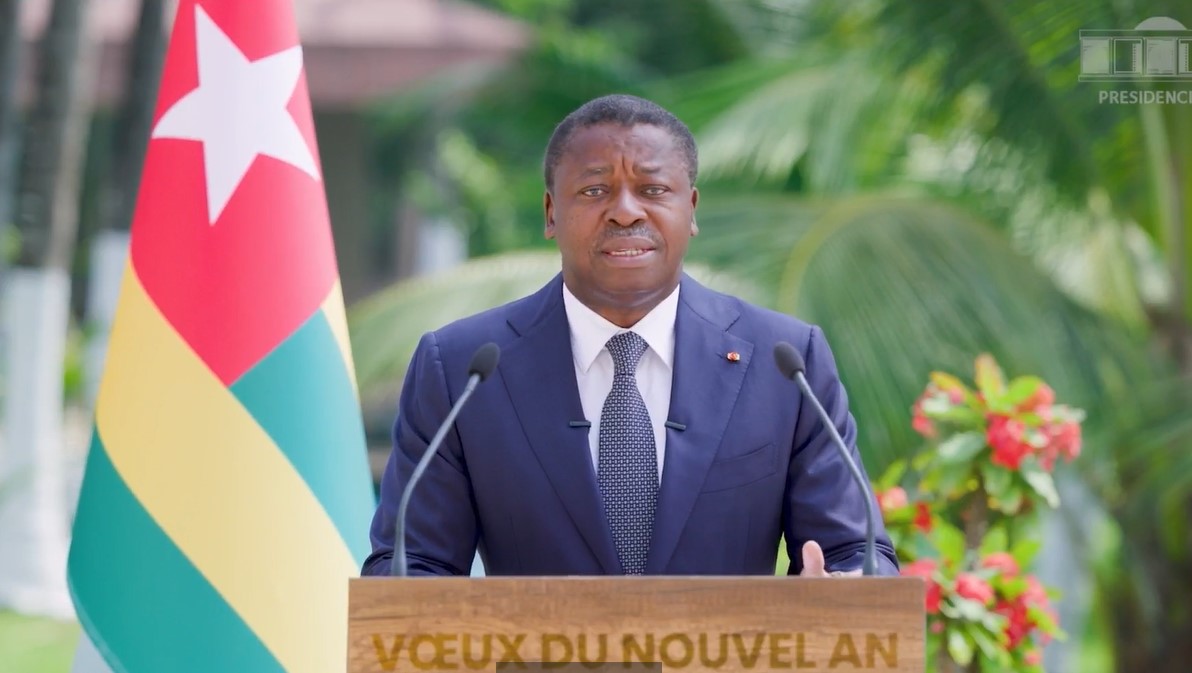
At the heart of this geopolitical chessboard sits Togolese President Faure Gnassingbé, whose political acumen is on full display. Rather than aligning with one side, he is leveraging the rivalry to extract maximum benefits for his country. While maintaining active participation in France-Africa summits to nurture ties with the West, he is also preparing for the upcoming Russia-Africa summit in October, a move analysts describe as a calculated balancing act.
« The risk of this strategy is that Togo’s national interests could be overshadowed by a larger confrontation it cannot control, » warns a regional political analyst. By positioning itself at the intersection of Moscow’s anti-colonial rhetoric and Paris’s developmental aid, Lomé has become a testing ground for Africa’s evolving power dynamics—a high-wire act whose long-term costs remain uncertain.