
66 Years of sovereignty: a celebration under siege
Tuesday, September 22, 2026, marked the 66th anniversary of Mali’s independence—a landmark overshadowed by an unprecedented security crisis. What should have been a moment of national pride has instead become a stark reminder of the widening gap between official rhetoric and ground realities. With terror attacks escalating and economic lifelines collapsing, the country faces a pivotal crossroads in its post-colonial journey.
Security vacuum: the widening void left by state failure
Officials in Bamako have hailed the ‘strengthening’ of Mali’s Armed Forces, yet the security landscape paints a far grimmer picture. The Islamic State in the Greater Sahara (JNIM) and separatist factions have intensified their campaigns, carving deep into central and northern regions. Recent assaults on Dioura and Sévaré’s military outposts underscore the fragility of state control, while key roads remain vulnerable to intermittent blockades, suffocating internal trade.
Reports of mass casualties among paramilitary units—particularly those aligned with the Africa Corps (successor to Wagner)—highlight the human cost of a military strategy that has failed to deliver stability. Over 350 fighters lost since early 2026, including during the devastating Tinzawatène offensive, reveal a war of attrition with no clear exit strategy.
Economic collapse: when sovereignty fails its people
The anniversary arrives as Mali’s economy spirals into freefall. Hyperinflation on staple goods—rice, cooking oil, sugar—and chronic power cuts by state utility EDM-SA have crippled small businesses and pushed households to the brink. The breakdown in relations with the Economic Community of West African States (ECOWAS) and diplomatic isolation have drained foreign currency reserves, exacerbating shortages and stifling recovery.
Local markets, once thriving, now resemble ghost corridors of empty stalls, while entrepreneurs struggle to import critical inputs. The promise of a ‘New Mali’ (Mali Kura) remains distant for most, as economic survival takes precedence over national pride.
From rhetoric to reality: the legitimacy crisis of the Transition
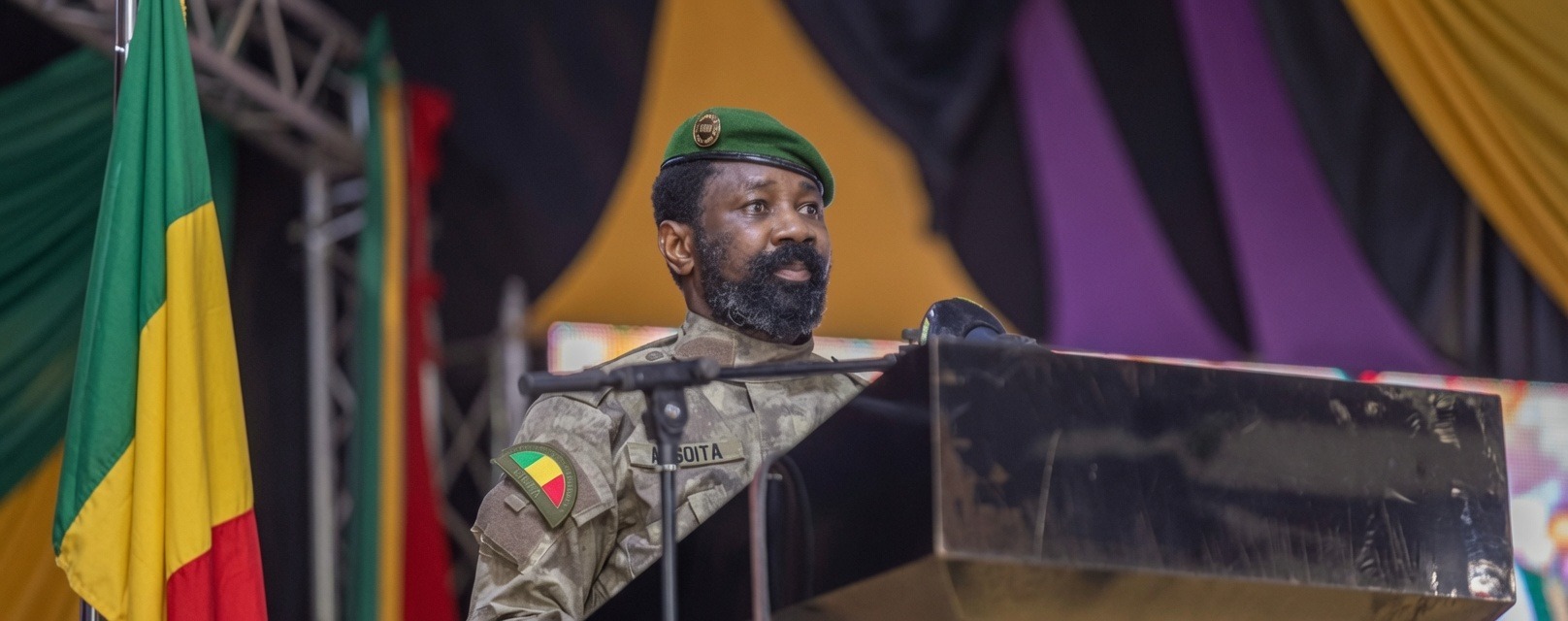
In his annual address, the transitional leader reaffirmed calls for unity and defense of sovereignty through the Alliance of Sahel States (AES). Yet skepticism runs deep. Many citizens question the credibility of a state that cannot guarantee basic safety or economic stability, let alone reclaim authority across its fractured territory. The anniversary serves as a sobering reminder: after 66 years, the true test of independence lies not in declarations, but in the tangible well-being of its people.