
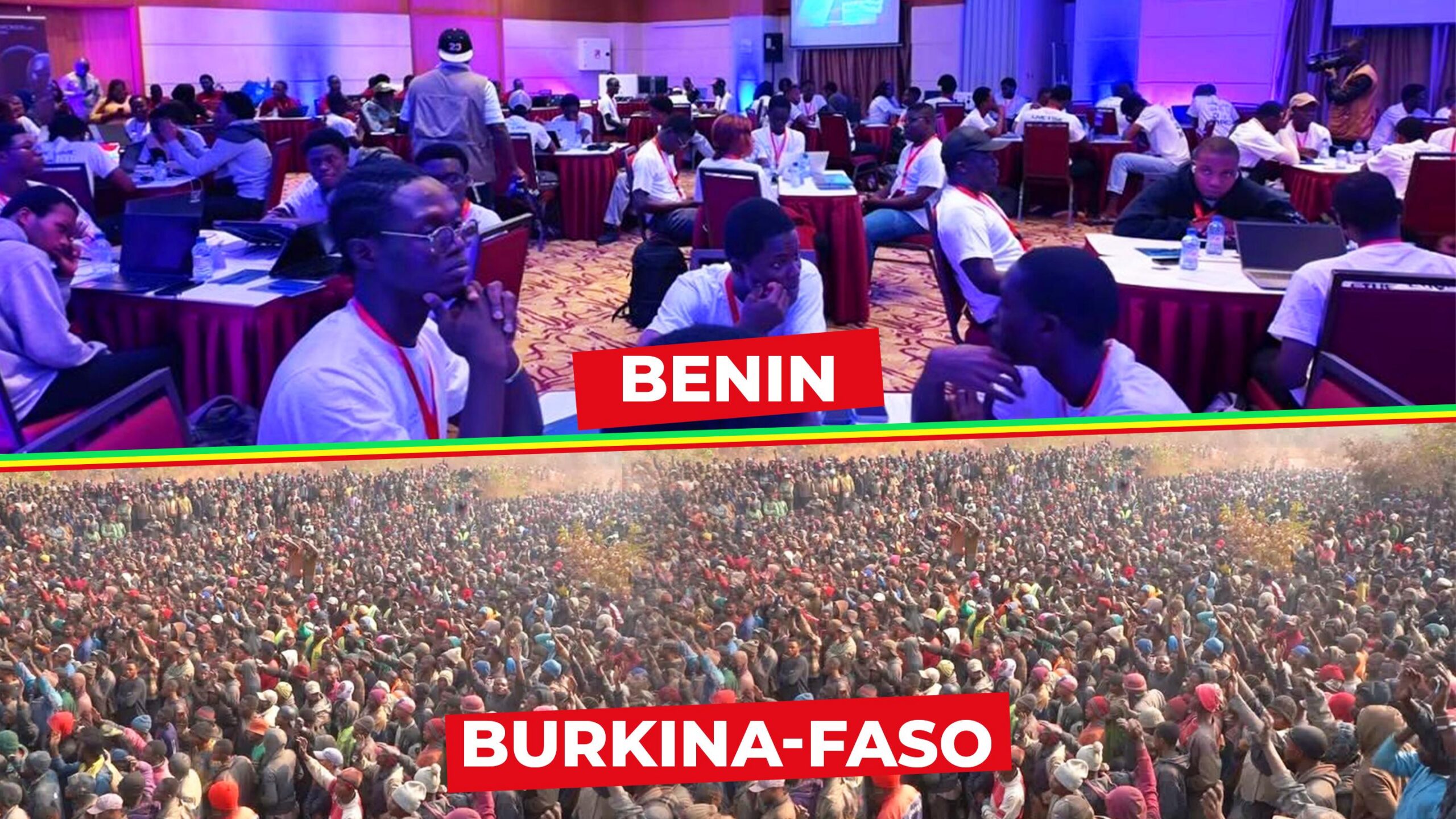
Across West Africa, two neighboring nations are charting fundamentally different paths to progress. While one invests in nurturing a future-ready workforce, the other grapples with immediate social and economic crises that demand urgent solutions. This stark contrast between the Republic of Benin and Burkina Faso raises a critical question: Are nations prioritizing long-term strategic investments or short-term political narratives?
Benin’s strategic gamble on digital talent
The Cyber Africa Forum (CAF), held on November 16–17, offered more than just a two-day spectacle of technological prowess. Behind the event lay months of meticulous preparation, designed not merely to showcase innovation but to systematically uncover and cultivate the next generation of digital leaders. This was no spontaneous gathering it was the culmination of a rigorous process that tested young minds, fostered collaboration, and identified top performers for future leadership in Africa’s digital economy.
The journey began over two months prior, with daily challenges issued to selected teams. Only the top 20 teams, after a month of intensive competition, earned the right to compete in the final round. This structured approach reflects a deeper philosophy: identifying raw talent, refining skills through real-world challenges, and creating pathways for high performers to contribute meaningfully to national development.
What unfolds at events like CAF is not just a competition it is the formation of an ecosystem. Through this process, Benin is building a foundation for technological sovereignty, recognizing that the future competitiveness of nations is no longer measured solely by military strength or political alliances, but by the quality of its human capital and innovative capacity.
Burkina Faso’s social crisis: a call for action beyond discourse
While Benin looks ahead, Burkina Faso faces a pressing humanitarian and economic emergency. Thousands of artisanal miners expelled from neighboring Guinea now find themselves stranded, stripped of their livelihoods and their means of survival. This is not a matter of political posturing or media narratives it is a crisis of employment, income, and human security.
The situation demands immediate answers: How many families are affected? What support systems are in place for their return and reintegration? Are there vocational training or economic diversification programs to help displaced workers rebuild their lives? These are not rhetorical questions they require concrete, verifiable solutions from public authorities.
Political arrests, patriotic rhetoric, and carefully curated media campaigns may dominate headlines, but they cannot replace jobs, ensure food security, or restore economic stability. True governance lies in anticipation, in recognizing the pulse of the people, and in deploying resources where they are needed most not where they generate the loudest applause.
Beyond the headlines: what kind of future are we building?
It would be misleading to suggest that Benin has no challenges or that Burkina Faso’s security situation is easily resolved. The realities of both countries differ vastly, and any comparison must acknowledge these differences. Yet, the diverging trajectories invite a fundamental inquiry: What kind of legacy are our leaders crafting today?
Development is not achieved through slogans. It is forged through education, innovation, job creation, and the translation of political vision into measurable action. The Cyber Africa Forum embodies a model worth scaling: a nation mobilizing its youth around technology, problem-solving, and long-term growth. Meanwhile, Burkina Faso’s displaced miners serve as a sobering reminder that no nation can thrive when a significant portion of its population is left without hope or opportunity.
The choice is clear. Africa’s future depends not on who captures the most attention in global headlines, but on who invests wisely in its people today. The time to act is not tomorrow it is now.
By Henri Nkeng — Journalist