
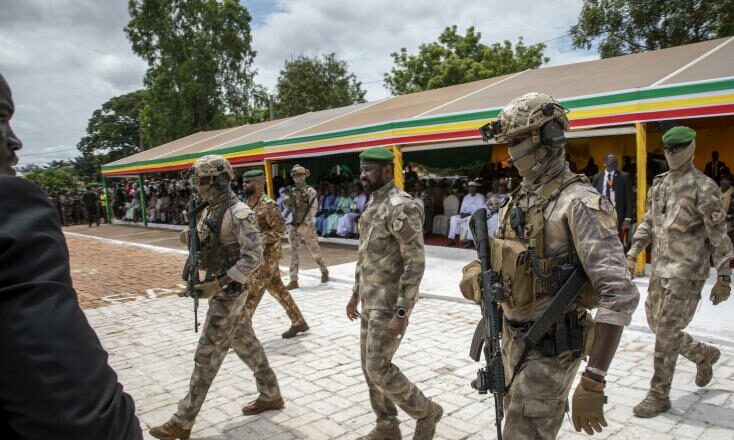
In response to coordinated attacks on 25 April 2026—claimed by the Jama’at Nusrat al-Islam wal Muslimin (JNIM) and the Azawad Liberation Front (FLA)—Mali has launched a sweeping overhaul of its military leadership. The assaults, which unfolded across multiple regions, resulted in the loss of General Sadio Camara, the former Defence Minister.
New leadership takes charge amid security challenges
A special edition of the Official Gazette published on 29 May outlined sweeping changes in key military positions across the Malian Armed Forces and the Alliance of Sahel States (AES) Unified Force. These adjustments reflect a strategic pivot to address escalating security threats and restore operational coherence.
Command reshuffle at the highest levels
Brigadier General Makan Alassane Diarra, previously Deputy Chief of Staff for Operations, has been appointed to lead the AES Unified Force, succeeding General Daouda Traoré. His deep involvement in eastern military campaigns played a decisive role in his selection. To fill his former role, Brigadier General Mamadou Massaoulé Samaké, a former strategy advisor, has been elevated to Deputy Chief of Staff. Meanwhile, Colonel-Major Yacouba Sanogo has been named Strategic Advisor to the General Staff.
Field commanders reassigned to critical zones
The restructuring extends to operational theatres. Colonel-Major Karim Traoré now commands the Eastern Theatre, Colonel-Major Didier Dembélé heads the Southern Theatre, and Colonel Issa Bagayoko oversees the Central Theatre. These shifts aim to sharpen tactical responses in high-risk regions.
Leadership shifts underscore commitment to security
Following the April offensive, Transition President Assimi Goïta assumed direct oversight of the Defence portfolio. Additionally, General Oumar Diarra has been appointed as a Deputy Minister with special responsibility for Defence—a move signalling intensified efforts to stabilise the security landscape.
The overhaul underscores Bamako’s resolve to bolster military readiness and strengthen coordination between national operations and those conducted under the AES framework. The restructuring reflects a broader strategy to regain momentum in the fight against insurgent groups operating across the Sahel.