

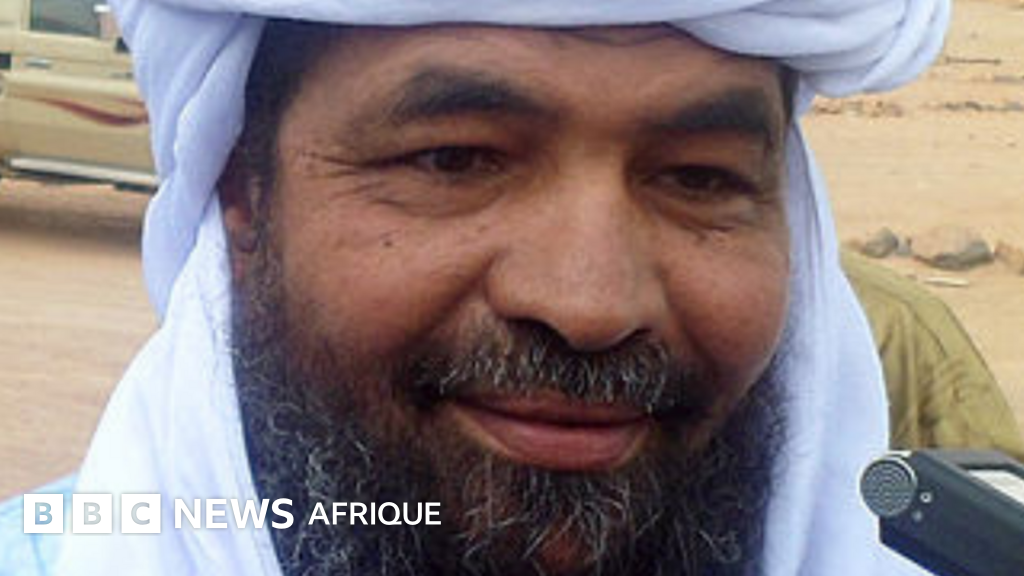
The Malian government has escalated its fight against terrorism by announcing substantial financial incentives for the capture of key figures linked to recent coordinated attacks. In a decisive move, authorities have placed a 2 billion West African CFA franc bounty on Iyad Ag Ghaly, the leader of the Jama’at Nusrat al-Islam wal-Muslimin (JNIM), along with several associates suspected of orchestrating violent acts within the country.
This announcement, made through a statement from the Ministry of Security and Civil Protection led by General Daoud Aly Mouhammedine, follows closely on the heels of the April 25 attacks in Kidal and Kati. These coordinated assaults, attributed to members of the JNIM and separatists from the Front de Libération de l’Azawad (FLA), resulted in the tragic loss of Defense Minister Sadio Camara’s life. The government’s response underscores its commitment to dismantling terrorist networks and restoring stability.
What the Malian authorities have declared
The Ministry of Security and Civil Protection has called on the public to collaborate with security forces in tracking down seven individuals deemed threats to national security. The rewards vary based on the perceived danger posed by each figure, reflecting the gravity of their alleged crimes.
The highest reward, 2 billion West African CFA francs, is offered for the capture of Iyad Ag Ghaly, the JNIM’s emir and a prominent jihadist leader. Other significant bounties include:
- 1.5 billion West African CFA francs each for Amadou Koufa, leader of the Macina Katiba, and Abdoulaye Mohamed, also known as Habib, a key figure within the same faction.
- 1 billion West African CFA francs for Algabas Ag Intallah, a political and military leader of the Front de Libération de l’Azawad (FLA).
- 500 million West African CFA francs each for three other FLA commanders: Ghita, Bilal Chérif, and Abderrahmane Al Banna.
Who is Iyad Ag Ghaly?
Born in 1958 in Boghassa, in the Kidal region of northern Mali, Iyad Ag Ghaly has been a central figure in the Sahel’s jihadist landscape for decades. His journey began in the 1970s when he traveled to Libya, joining the ranks of Colonel Muammar Gaddafi’s forces—a common path for many Tuareg fighters of his generation, who engaged in conflicts in Lebanon and Chad.
Upon returning to Mali in the early 1990s, Ag Ghaly founded the Popular Movement for the Liberation of Azawad (MPLA) and spearheaded a Tuareg rebellion against the Malian state. His shifting alliances led him to establish the Popular Movement of Azawad (MPA), which he led before signing a peace agreement with the government in 1992.
Over time, Ag Ghaly’s focus shifted toward Islamism and jihadism. By 2007, he had aligned himself with the Salafist Group for Preaching and Combat (GSPC), an Al-Qaeda affiliate that later evolved into Al-Qaeda in the Islamic Maghreb (AQIM). In 2012, he founded Ansar Dine, a Salafist-jihadist group that merged with AQIM, and in 2017, he took command of the Group for the Support of Islam and Muslims (JNIM). This coalition unites several Malian jihadist factions under the banner of Al-Qaeda, solidifying his influence across the Sahel.
Experts from the Timbuktu Institute describe Ag Ghaly as “the most wanted man in the Sahel” and “the greatest threat to the Malian government.” His tactics have evolved beyond direct military confrontation. Instead, he employs a strategy of economic strangulation, targeting critical infrastructure such as roads, power lines, and supply chains to cripple the capital, Bamako. The goal, according to analysts, is to destabilize the regime from within by making daily life unbearable for civilians, rather than seizing control of the state himself.
The International Criminal Court (ICC) has issued an arrest warrant for Ag Ghaly, accusing him of crimes against humanity and war crimes committed between 2012 and 2013. His JNIM group remains one of the most active and destabilizing forces in the Sahel, operating across Mali, Niger, and Burkina Faso—countries that form the Alliance of Sahel States (AES).