
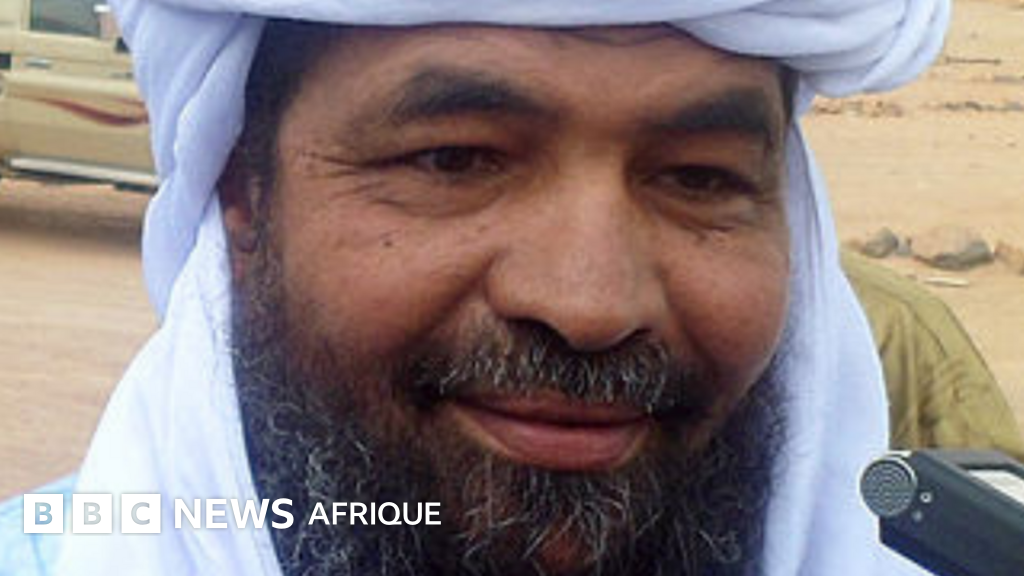
The Malian government has escalated its fight against terrorism by placing a 2 billion FCFA bounty on Iyad Ag Ghaly, the notorious leader of the Jama’at Nusrat al-Islam wal-Muslimin (JNIM), along with several of his associates. This unprecedented move follows coordinated attacks in Kidal and Kati in late April, which resulted in the death of Defense Minister Sadio Camara and exposed the growing threat posed by extremist groups in the region.
In a televised announcement, the Ministry of Security and Civil Protection, led by General Daoud Aly Mouhammedine, called on citizens to assist security forces in tracking down seven high-profile targets who are considered grave threats to national stability. The government’s strategy includes financial incentives for credible information leading to the capture or elimination of these individuals, signaling a more aggressive approach to countering insurgency.
Key figures and their bounties
The list of wanted individuals reflects the diversity of groups operating in Mali, from jihadist factions to separatist movements. The rewards range from 500 million to 2 billion FCFA, depending on the level of threat each figure poses:
- Iyad Ag Ghaly (JNIM leader): 2 billion FCFA
- Amadou Koufa (Macina Katiba leader): 1.5 billion FCFA
- Abdoulaye Mohamed (Habib) (Macina Katiba): 1.5 billion FCFA
- Algabas Ag Intallah (Front de Libération de l’Azawad political-military figure): 1 billion FCFA
- Ghita, Bilal Chérif, and Abderrahmane Al Banna (Front de Libération de l’Azawad leaders): 500 million FCFA each
Escalation after deadly attacks
The announcement comes just weeks after a coordinated assault on April 25, where jihadists from JNIM and separatists from the Front de Libération de l’Azawad (FLA) launched simultaneous strikes on Kidal and Kati. The attack left Defense Minister Sadio Camara dead and underscored the urgent need for Mali to address the dual threats of terrorism and separatism. The government’s response—offering bounties—reflects its determination to dismantle these networks and restore security.
Who is Iyad Ag Ghaly?
Born in 1958 in Boghassa, northern Mali, Iyad Ag Ghaly is a seasoned warlord whose influence spans decades. His journey began in the 1970s when he joined Libyan forces under Colonel Mouammar Kadhafi, fighting in conflicts across the Sahel. Upon returning to Mali in the early 1990s, he led the Mouvement Populaire de Libération de l’Azawad (MPLA), triggering a Tuareg rebellion before later signing a peace accord with the Malian state in 1992.
Ghaly’s ideological shift toward extremism became evident in the 2000s, as he aligned with Al-Qaïda in the Islamic Maghreb (AQMI), a move that cemented his reputation as a key figure in regional jihadist networks. In 2012, he founded Ansar Dine, merging it with AQMI to fight for the imposition of Sharia law in Mali. By 2017, he consolidated his power by establishing and leading Jama’at Nusrat al-Islam wal-Muslimin (JNIM), a coalition of Malian jihadist groups under AQMI’s umbrella.
Analysts describe Ghaly as “the most wanted man in the Sahel”, accusing him of orchestrating a campaign of economic strangulation to destabilize Mali. His strategy involves blocking key supply routes, sabotaging infrastructure like power lines, and disrupting commerce to cripple the economy. The Timbuktu Institute warns that his ultimate goal is political—not to govern Mali directly but to undermine the current regime in Bamako.
The International Criminal Court (ICC) has issued an international arrest warrant for Ghaly, holding him accountable for crimes against humanity and war crimes committed between 2012 and 2013. As the leader of JNIM, one of the most active jihadist groups in the Sahel, his actions continue to destabilize Mali, Niger, and Burkina Faso, collectively known as the Alliance of Sahel States (AES).
Government’s urgent response
Mali’s decision to offer bounties marks a significant shift in its counter-terrorism strategy. By targeting both jihadist and separatist leaders, the government aims to disrupt their operations and send a clear message: collaboration with extremist groups will not go unpunished. The move also highlights the growing urgency of addressing security threats that extend beyond traditional military confrontation, now infiltrating the economic and social fabric of the country.