

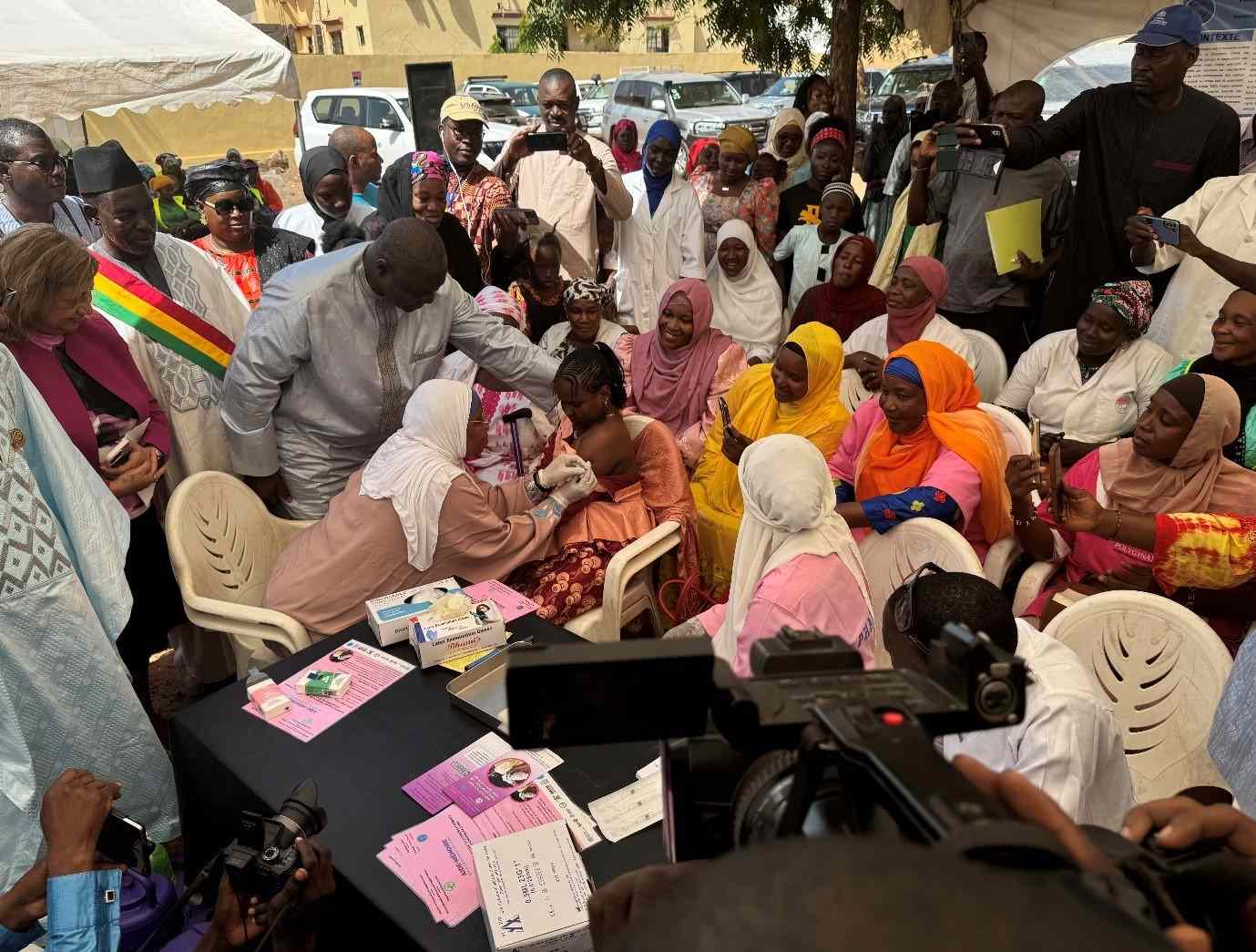
In a landmark move for public health, the government of Mali officially incorporated the human papillomavirus (HPV) vaccine into its national routine immunization schedule this November. During a high-level event in Bamako, health officials and international partners, including Gavi, celebrated this initiative as a vital shield for the nation’s women against the threat of cervical cancer.
Cervical cancer remains a devastating reality for many families in Mali. Fatoumata, a 38-year-old survivor, is one of the many women who have faced this ordeal.
“I originally had a fibroid and delayed seeking medical care. It was only when I experienced heavy bleeding that I underwent surgery. Afterward, I noticed unusual, odorless, and colorless discharge. A follow-up with my gynecologist confirmed the worst: I had cervical cancer. The financial burden was immense, costing between 5 and 6 million CFA francs, with the surgery alone reaching two million,” she shared.
Through this program, Mali aims to immunize over 320,000 young girls annually, potentially slashing cervical cancer rates by 90% and saving more than 3,600 lives every year.
Fatoumata’s experience highlights the common hurdles of late diagnosis and the prohibitive costs of oncology care in Mali, where high-quality medical services are often out of reach for the average citizen.
The heavy toll of cervical cancer in Mali
Driven by persistent HPV infections, cervical cancer has become a critical public health priority in Mali. It ranks as the second most prevalent cancer among Malian women between the ages of 15 and 44. Because the disease is frequently identified in its advanced stages, it continues to claim thousands of lives across the country annually.
Beyond medical challenges, deep-seated cultural taboos often prevent women from discussing their symptoms. In some communities, the illness is wrongly attributed to curses or supernatural interference, which further delays life-saving interventions. “Cervical cancer is sometimes misinterpreted as a spell cast by a relative or a former partner,” noted a reproductive health advocate.
A turning point: making the HPV vaccine accessible
Mali’s decision to provide the HPV vaccine through routine health services marks a significant shift. At the campaign launch in Bamako, Dr. Ibrahima Diarra, who leads the National Immunization Center, emphasized the vaccine’s power: “A single dose can offer a 10-year-old girl over a decade of protection against the viruses responsible for 70% of cervical cancer cases.” This vaccine is now provided free of charge to young girls, supported by Gavi and state funding.
By reaching over 320,000 girls each year, the government expects to prevent thousands of future deaths and drastically reduce the national cancer burden.
Advancing health equity in the Sahel
This vaccination effort is a major step toward health justice. Cervical cancer disproportionately affects women in lower-income regions; in 2022, 90% of the 348,000 global deaths occurred in these countries. By offering the vaccine for free, Mali is ensuring that every girl, whether in a bustling city or a remote village, has the right to protection.
Dr. Diarra explained the strategy of targeting 10-year-olds: “We focus on this age group to ensure they are vaccinated before any potential exposure to the virus, which maximizes the vaccine’s effectiveness.” This aligns with World Health Organization (WHO) guidelines that prioritize young adolescents.
Mali stands out as a pioneer in the Sahel, becoming the first Gavi-supported nation in a fragile or conflict-affected setting to introduce the HPV vaccine.
Preventative care also offers economic relief. While a private dose can cost 150,000 FCFA, the new public program removes this barrier. Mali’s leadership serves as a model for the region and contributes to Gavi’s global mission to vaccinate 86 million girls in lower-income countries by 2025.
Confronting misinformation
The rollout faces the challenge of false information. Rumors regarding the vaccine’s impact on fertility are common, but health authorities are working hard to debunk them. “It is vital to understand that this vaccine is safe and has no negative effect on reproductive health,” Dr. Diarra stated. The Minister of Health, Colonel Assa Badiallo Touré, also reaffirmed the vaccine’s safety during the launch.
The introduction of the HPV vaccine is a triumph for Malian women. By prioritizing prevention and equity, Mali is breaking the cycle of a deadly disease and securing a healthier future for the next generation.