

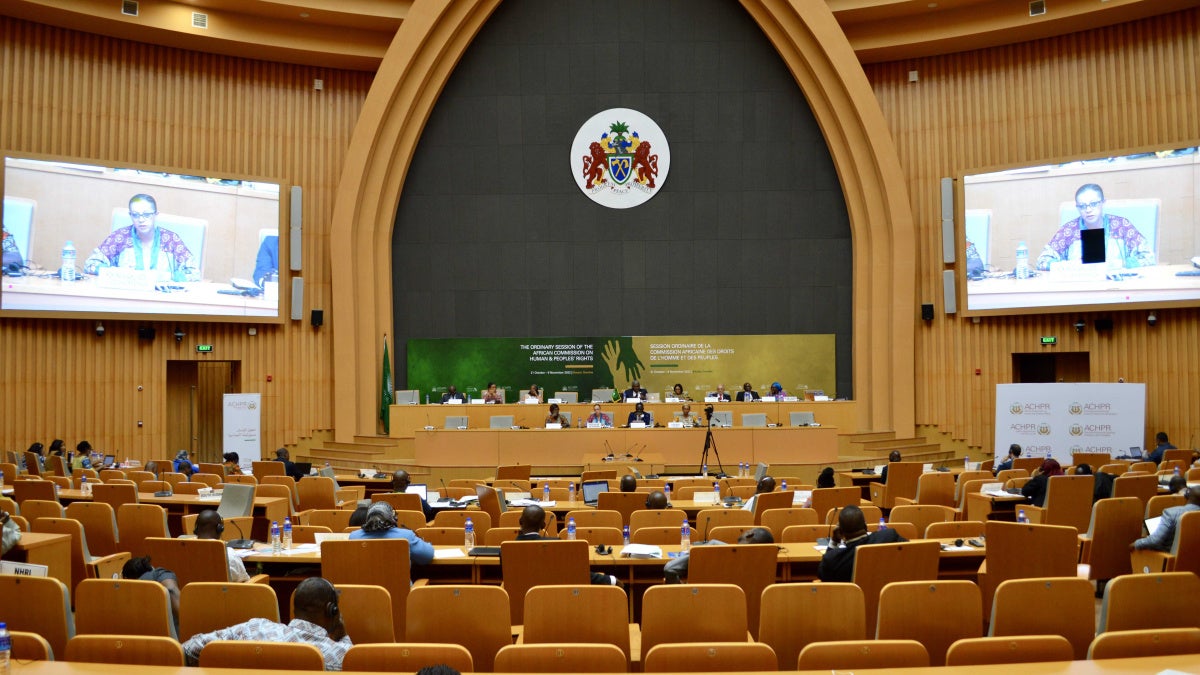
The African Commission on Human and Peoples’ Rights (ACHPR) must prioritize the critical situation in Burkina Faso during its upcoming review scheduled for October 23, 2024. Human Rights Watch has emphasized that the Burkinabè administration needs to take immediate action to shield civilians caught in armed conflict, restore freedom for journalists and activists, and hold human rights violators accountable.
Through the State Reporting Procedure, a mechanism of the African Union, member states are evaluated on their adherence to the African Charter on Human and Peoples’ Rights. This process requires nations to submit periodic updates on legislative and practical measures taken to protect fundamental rights. However, the May 2023 report submitted by Burkina Faso, which spans the years 2015 to 2021, largely overlooks several pressing issues. These include widespread atrocities by state security forces and Islamist insurgents, severe limitations on civil liberties, and a pervasive culture of impunity.
“The upcoming ACHPR review of Burkina Faso is a vital moment to challenge the authorities on their human rights record,” noted Allan Ngari, Africa advocacy director at Human Rights Watch. “The Commission must insist that the government prioritizes civilian safety during combat operations and strictly follows international humanitarian standards.”
Since 2016, Burkina Faso has been battling an insurgency involving groups linked to Al-Qaeda, such as the Group for the Support of Islam and Muslims (GSIM), and the Islamic State in the Greater Sahara (ISGS). The nation has also endured two military coups since 2022, further complicating the security landscape.
In its official submission, the government of Burkina Faso outlined efforts to combat violent extremism, including the establishment of specialized units for investigating terrorism and the deployment of provosts to oversee military discipline. The report claims that security personnel undergo training in human rights and that those responsible for degrading treatment are held responsible for their actions.
Despite these claims, Human Rights Watch has documented extreme abuses by state forces during counter-insurgency efforts, including acts that qualify as crimes against humanity. There are numerous reports of soldiers extrajudicially killing or forcibly disappearing hundreds of civilians suspected of aiding Islamist militants.
Simultaneously, Islamist armed groups have unleashed a wave of terror against the population, engaging in summary executions, sexual violence, and kidnappings. Many communities across Burkina Faso remain under siege by these groups.
The ACHPR has previously raised alarms, such as following the massacre in Karma village in Yatenga province, where dozens of civilians were killed. In late 2023, the Commission’s working group on extrajudicial killings also issued an urgent appeal regarding an attack in Zaongo, located in Namentenga province, demanding a thorough investigation.
While the primary duty to provide justice lies with the government of Burkina Faso, there has been minimal progress in prosecuting those responsible for major crimes committed since the conflict began in 2016. The state’s report offers no concrete data on investigations or judicial proceedings related to alleged military abuses during the period in question.
Furthermore, while the report highlights a 2017 law intended to protect human rights defenders, the reality on the ground has been one of increasing repression. Since the 2022 coup, the ruling junta has targeted critics, opposition figures, and members of the press.
Human Rights Watch has detailed how the government uses illegal conscription as a tool to punish dissenters. Additionally, dozens of individuals who have spoken out against the administration have been abducted or subjected to enforced disappearance.
Concerns were echoed by the ACHPR in late 2023 regarding the kidnapping of activist Daouda Diallo and the ongoing harassment of human rights defenders. More recently, the Commission condemned the disappearance of three Burkinabè journalists, calling for transparency regarding their status. To date, authorities have not disclosed their whereabouts.
Given that the ACHPR has not conducted a mission to Burkina Faso in several years, the Commission should seek an official visit to assess the human rights climate firsthand and produce a detailed public report.
“It is imperative that the African Commission on Human and Peoples’ Rights facilitates a deep dialogue regarding the abuses committed by both state forces and Islamist groups,” Allan Ngari concluded. “They must recommend specific protections for activists and journalists so they can operate in Burkina Faso without the threat of retaliation.”