
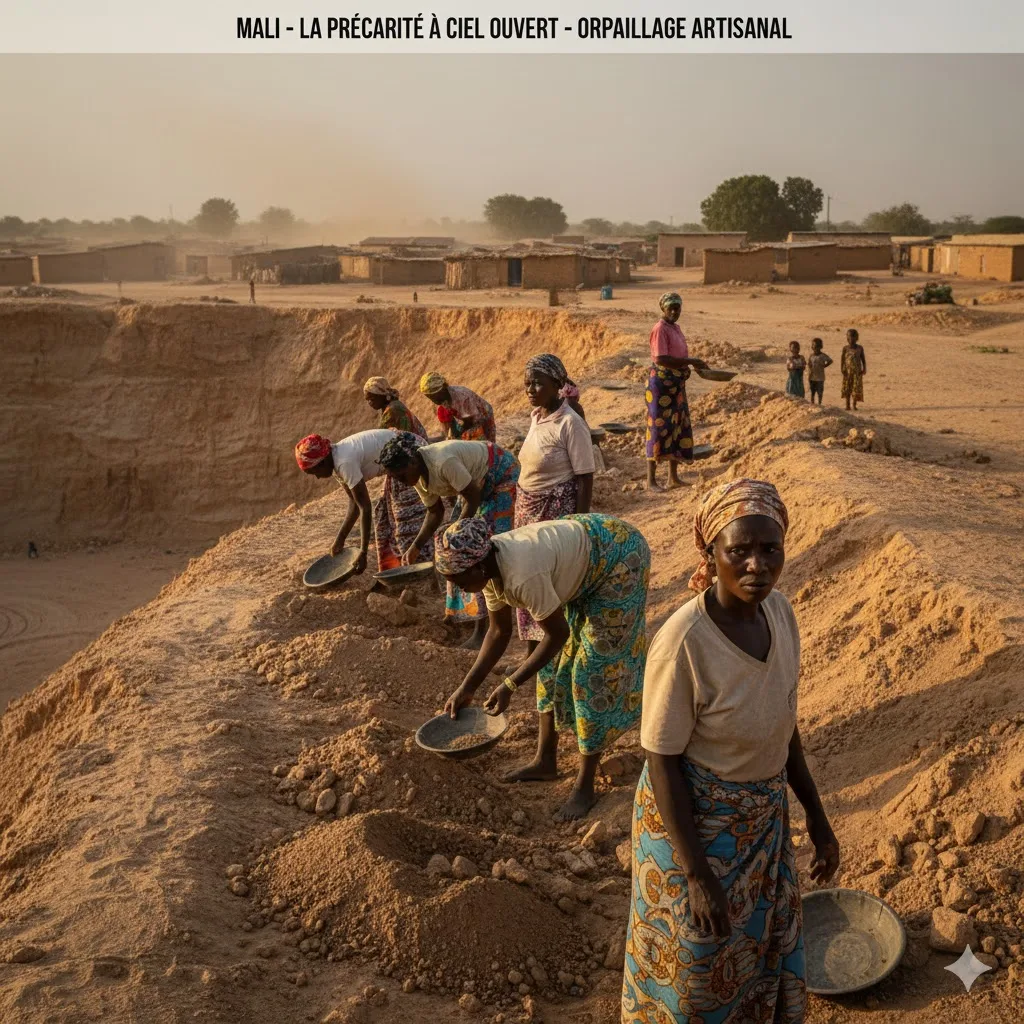
The tragic collapse that struck Kéniéty in the Kéniéba district on January 9, 2026, claimed six women’s lives, buried under tons of rubble. Behind this heartbreaking event lies an even grimmer reality: the relentless poverty that drives mothers to gamble with death daily just to survive.
Mothers risking everything for a meal
Women’s presence in Mali’s unstable artisanal mining sites isn’t a matter of choice—it’s a desperate survival tactic. Overwhelmed by the need to feed their children and meet basic household needs, they endure unimaginable working conditions. In the Kayes region, it’s common to see women laboring over 12 hours under scorching sun for mere grams of gold.
Desperation pushes them into the most dangerous mining zones. Excluded by male miners from lucrative tunnels, they’re forced into abandoned pits or crumbling old mines. These “leftover” areas, deemed too hazardous by others, become their open-air graves when walls collapse under erosion’s relentless pressure.
An endless cycle of extreme vulnerability
The threats extend far beyond sudden collapses. Economic fragility exposes these women to a toxic mix of health risks and social dangers. Handling mercury without protection leads to irreversible illnesses, while their vulnerable status makes them easy targets for gender-based violence and exploitation on-site.
The tragedy in Kéniéty, where six women—including two married—perished while scraping walls of an old Chinese mine, perfectly illustrates this vicious cycle. Despite prompt rescue efforts, the earth’s weight proved stronger than hope.
Breaking the poverty-mining cycle
For residents of Dialafara, post-mining management has become a matter of public safety. Abandoned mines left by departing companies create death traps for the poorest. Systematic site backfilling is now a critical demand to prevent women from entering these hazardous voids.
Beyond infrastructure safety, economic empowerment remains the key challenge. The transitional authorities must strengthen support services to guide these women toward sustainable income sources. Without real alternatives to gold trading, poverty will keep feeding the earth’s insatiable appetite for Malian victims.