
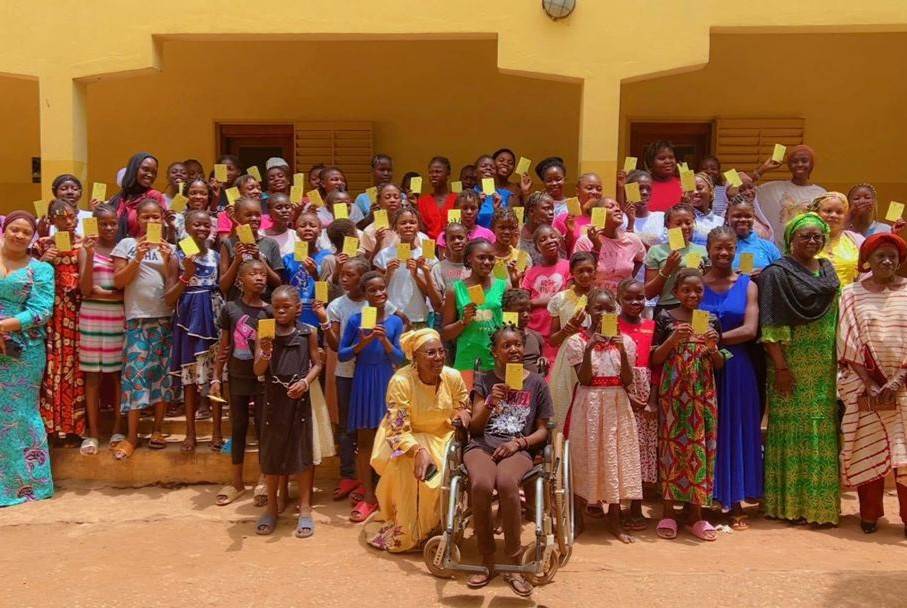
Twelve months following the debut of the human papillomavirus (HPV) vaccine, Mali is seeing a significant shift in public health participation. Across the capital and its outlying districts, an increasing number of 10-year-old girls are being immunized against cervical cancer. While obstacles like logistical hurdles and persistent misinformation remain, medical professionals, community groups, and local families are celebrating this as a major victory for women’s wellness.
During a recent information session in the Korofina neighborhood of Bamako, women and young girls gathered at the local civil registry office. Amin Dem, a midwife leading the talk, reflected on the journey. "At the start, we faced heavy resistance. Fear was common among both the children and their parents. However, through consistent community outreach, the atmosphere has shifted," she noted. She emphasized that the most common worry is the false belief that the vaccine causes infertility—a myth that is best debunked by explaining the facts in local languages.
Significant strides in preventative care
Launched in November 2024, the HPV immunization program represents a transformative moment for Mali. Utilizing a single-dose strategy for full protection, the initiative reached over 145,000 girls aged 10 between January and September 2025. While the majority—roughly 113,000—were reached through schools, approximately 32,400 girls who do not attend school were also vaccinated. Officials admit that more work is required to ensure this latter group, which is often more vulnerable, is not overlooked.
Dr. Ibrahima Téguété, a specialist at the Point G University Hospital, believes this progress aligns Mali with the WHO’s 90-70-90 objectives: 90% vaccination coverage for girls, 70% screening for women, and 90% treatment access for those with lesions. "This rollout is a source of great pride. It finally allows us to focus on primary prevention," he said. However, he remains realistic about infrastructure gaps, noting that reaching the final treatment goal will be difficult with only one radiotherapy unit in the country.
The power of community partnership
While public health centers lead the charge, civil society is equally vital. In Bamako, the NGO Solidaris223 has been active in every district. "Mothers are now proactively asking us where they can take their daughters for the shot," shared Amina Dicko, the organization’s president.
At the Centre Djiguiya, a dedicated vaccination day saw 70 resident girls receive their doses without any adverse effects. The center’s director, Mme Togo Mariam Sidibé, confirmed the success of the event. Personal tragedies are also driving the change; Fannata Dicko, a mother in Bamako, chose to vaccinate her daughter after losing her mother-in-law to cervical cancer this year. "I witnessed the immense pain this disease causes. I want to ensure my daughter never has to face that suffering," she explained.
Tackling rumors and logistical barriers
Despite the successes, misinformation regarding fertility continues to circulate. Dr. Téguété is firm in dismissing these claims as entirely baseless. Education remains the best tool against these rumors. Furthermore, reaching remote areas like Mopti and Gao presents physical challenges, as road travel is often restricted. To overcome this, some vaccine supplies are transported by air to regional hubs.
The vaccine is provided free of charge to all 10-year-old girls, thanks to the partnership between the Malian government and Gavi, which helps reduce costs. This ensures that even the most disadvantaged families have access. Experts believe that if this momentum is maintained, the country can eventually cover all girls between the ages of 9 and 14.
Looking toward a brighter future
Prevention efforts have a history in the region. The Weekend 70 program, active from 2016 to 2022, successfully boosted screening rates in Bamako from 15% to over 70%. Today, the support of religious leaders has been instrumental in building trust among families. While Bamako’s success is a promising sign, the goal is to replicate this across all of Mali.
As Amin Dem observed, the public is moving from questioning the relevance of cancer prevention to actively seeking answers. For health advocates in Mali, the HPV vaccine is the cornerstone of a new era in women’s health. As Dr. Téguété concluded: "Saving one girl through vaccination is equivalent to saving a woman’s life in the future."