
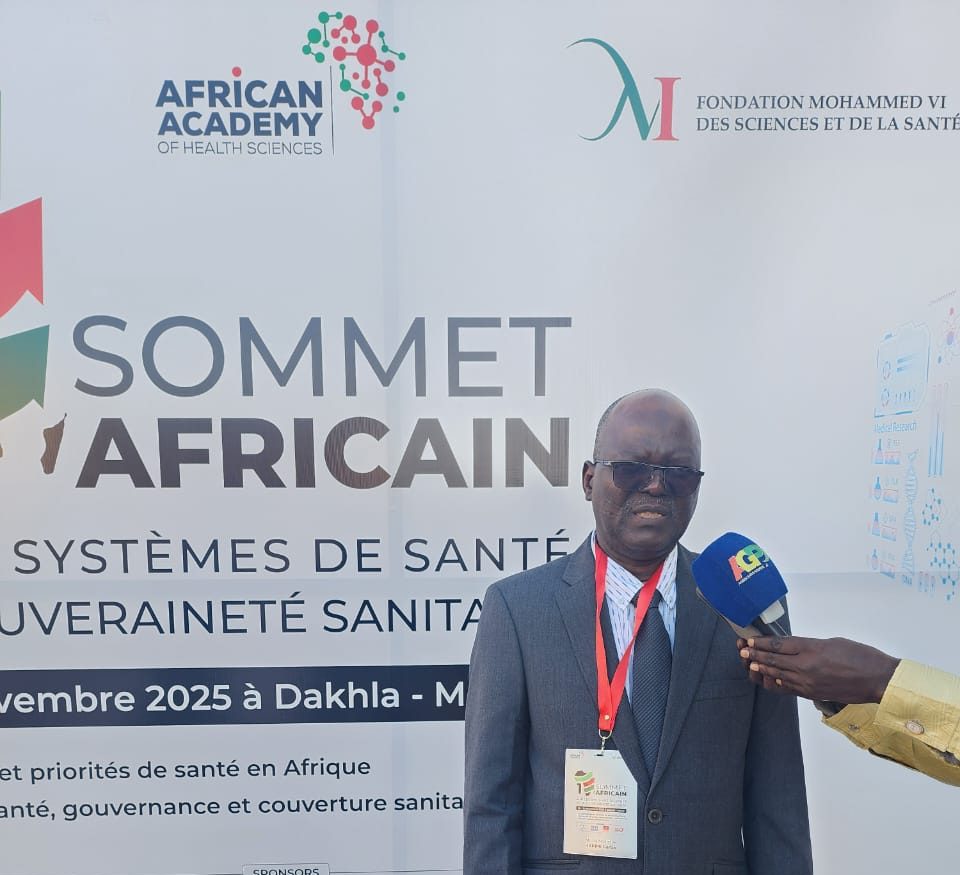
Colonel Major Garba Hakimi, Niger’s Minister of Public Health and Hygiene, declared on Saturday, November 29, in Dakhla, Morocco, that Niger is actively pursuing health sovereignty. This statement was made to the ANP following his participation in the inaugural African Summit on Health Systems and Health Sovereignty, a two-day event held in the Moroccan province.
The pursuit of health autonomy is a core strategic objective for Niger’s highest authorities, including General Abdourahmane Tiani, President of the Republic and Head of State, as well as the Prime Minister and Minister of Economy and Finance. These leaders are dedicating significant efforts and resources to strengthen the nation’s health sector.
Substantial progress has been made in this endeavor, with numerous healthcare infrastructures being developed across the country in recent years. This includes the construction of new hospitals and integrated health centers, which are designed to significantly enhance foundational medical services at the community level. Minister Hakimi emphasized that a resilient healthcare system cannot be established without adequate basic infrastructure capable of delivering primary care effectively.
As part of this strategic drive, Niger is also investing heavily in acquiring state-of-the-art medical equipment nationwide. This commitment aims to empower technicians and physicians to provide precise diagnoses and ensure comprehensive treatment for various illnesses. Beyond equipment, a crucial element is the development of human capital. The Minister highlighted ongoing specialization and continuous training programs for healthcare professionals, recognizing that advanced tools require skilled personnel to operate them effectively.
To further bolster its healthcare initiatives, the Nigerien government is providing substantial budgetary allocations to the health sector. Additionally, measures such as free medical care for certain vulnerable populations and a 50% reduction in treatment costs at public health facilities have been implemented, as documented by the Minister of Public Health and Hygiene.
He underscored that the provision of free services for specific procedures, such as childbirth and care for children under five, coupled with widespread infrastructure development, significantly improves access to healthcare for all citizens. This progressive approach is designed to propel Niger towards achieving universal health coverage, a goal championed by various authorities. The Minister expressed confidence that Niger is on the right trajectory to realize this ambition.
Reflecting on the outcomes of the Dakhla summit, Minister Hakimi noted that African experts spent 48 hours meticulously reviewing the continent’s health systems. While acknowledging certain advancements, they also identified numerous persistent challenges, including the inherent vulnerabilities within African healthcare networks, issues of governance, and significant financing gaps.
For the Nigerien official, the critical focus extends beyond mere identification of obstacles; it lies in formulating effective strategies to build healthcare systems that are robust, resilient, and ultimately more efficient in achieving the overarching goal of health sovereignty. He stressed that these conditions are fundamental for genuine progress towards this vital objective.
The Minister further elaborated, “This summit marked a notable triumph, as it allowed us to observe and acknowledge the vision of His Majesty the King of Morocco – a vision for a health-sovereign Africa. In alignment with this vision, we participated this morning (Saturday, November 29) in the inauguration of the headquarters of the African Academy of Health Sciences.”
He highlighted Morocco’s extensive commitment to this endeavor, citing “the construction of university hospitals concurrently with universities and other healthcare training facilities, including a comprehensive complex in Dakhla that we visited.” Colonel Major Garba Hakimi observed, “You understand that human resources are paramount for health sovereignty; a solid, robust, and high-performing health system is unattainable without quality human resources.” He concluded, “I believe this perspective from His Majesty the King should resonate across the continent’s leadership for Africa to truly advance.”
The Minister of Public Health and Hygiene also referenced past initiatives by heads of state advocating for the dedication of a minimum of 15% of national budgets to the health sector. This funding is crucial for acquiring essential equipment, developing sufficient human resources, and constructing a strong healthcare framework necessary for progressing towards the desired health sovereignty. He firmly stated, “We should not depend on assistance from others, whether from the West or partners, to achieve sovereignty. It is achievable; it simply requires concerted efforts.”
He then noted a growing awareness among countries regarding the need for innovative financing mechanisms, in addition to traditional budgetary allocations, to cultivate a truly robust health system.
The Minister expressed optimism regarding the Dakhla declaration’s roadmap, which is structured around five key pillars: Epidemiology; Human Capital/Training; Research and Innovation; Financing/Governance; and Infrastructure and Equitable Access. He conveyed, “I believe that by diligently working on these five axes, we can indeed attain this much-sought-after health sovereignty. It is entirely feasible. The essential step is for us to recommit to the task.”
The first African Summit on Health Systems and Health Sovereignty, held from November 28 to 29, 2025, in Dakhla, convened approximately 200 African experts to deliberate on health sovereignty, a project strongly supported by the King of Morocco.