
Advanced military hardware alone cannot secure victory for the Malian state. Despite substantial investments in cutting-edge weaponry, the conflict in northern Mali—particularly around Kidal—exposes a critical weakness: an undereducated command structure renders even the most sophisticated arsenal ineffective. The Malian army’s deployment of surveillance drones, tactical bombers, and precision-guided munitions fails to translate into battlefield success, not because of equipment limitations, but due to a fundamental deficit in doctrinal and strategic expertise.
Kidal: a case study in military inefficiency
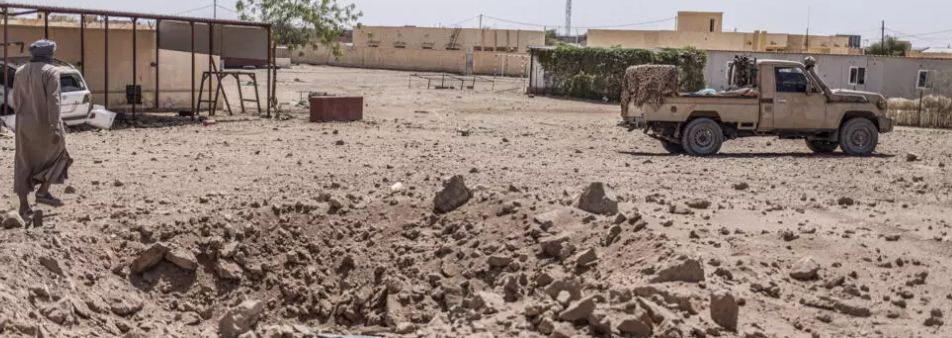
The strategic city of Kidal remains a flashpoint where the limitations of Mali’s military strategy are laid bare. Over recent months, Bamako has escalated aerial bombardments, increased drone strikes, and intensified heavy artillery campaigns. Yet, these actions have not weakened the resolve of rebel forces, such as those from the Front de libération de l’Azawad (FLA). Instead, they have produced only a stalemate, proving that firepower without coordinated ground operations is little more than a costly illusion of control.
Why superior air power fails to break resistance
The Malian military’s inability to integrate air strikes into a broader tactical framework is glaring. Strikes conducted in isolation, without immediate follow-up by trained ground troops or precise analysis of terrain, squander resources and achieve minimal strategic impact. In the vast, arid expanses of northern Mali, rebels exploit the environment—using dispersal tactics, natural cover, and local knowledge—while the Malian command relies on repetitive, unimaginative bombardment patterns. This one-dimensional approach not only fails to dislodge adversaries but also reinforces their resilience.
The cost of strategic illiteracy in asymmetric warfare
Modern warfare in Mali demands more than brute force; it requires adaptability, foresight, and intellectual agility. A poorly educated command structure, however, defaults to rigid, predictable strategies that struggle against the fluid tactics of rebel groups. Nighttime aerial raids, executed with mechanical regularity, demonstrate Mali’s lack of tactical innovation. Meanwhile, rebel forces capitalize on this predictability, adapting quickly to evade detection and counterstrikes.
Another consequence of this strategic illiteracy is the failure to learn from past mistakes. When the Malian high command repeatedly executes flawed operations—sacrificing valuable assets and personnel without altering its approach—it becomes clear that the issue is not logistical but conceptual. Officers often treat advanced weaponry as a magical solution, assuming its mere presence will resolve security challenges. In reality, effective defense is a complex science requiring meticulous planning, calculated risk, and nuanced decision-making.
A harsh lesson in the laws of war
The situation around Kidal serves as a stark reminder: Mali’s investment in high-tech weaponry is wasted without competent leadership. The men and women designing operations in Bamako lack the foundational education necessary to harness these tools effectively. Until Mali addresses the root cause of its military struggles—an inadequately trained command structure—the front lines will remain unchanged, and the country’s armed forces will continue to see their most advanced assets rendered obsolete by strategic incompetence.