
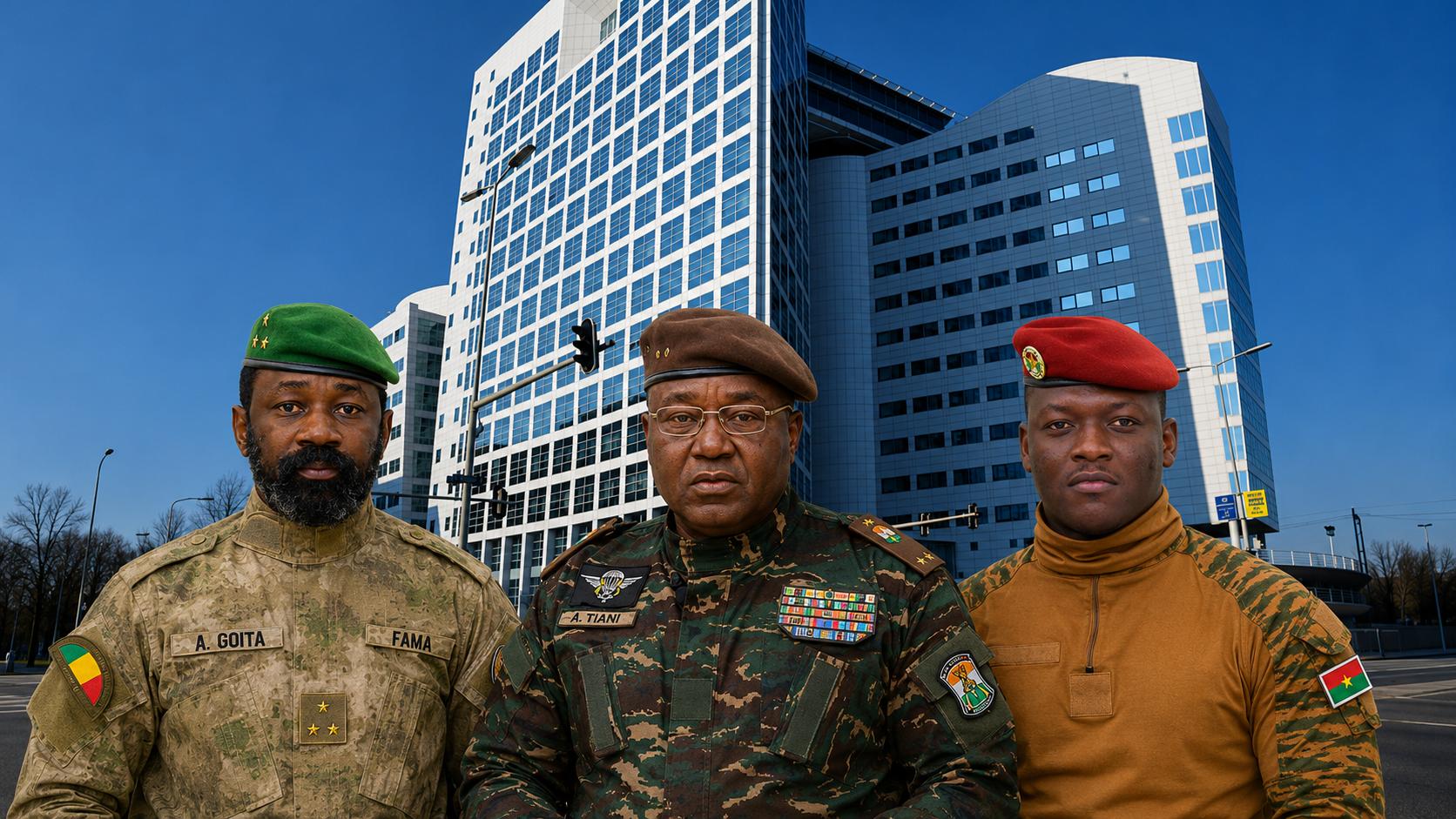
The Alliance of Sahel States (AES) has taken a decisive step by joining Niger in formally exiting the International Criminal Court (ICC). The military regimes of Mali and Burkina Faso have now completed their departure from the Rome Statute, the foundational treaty of the ICC, sending a clear message about their commitment to avoiding international accountability.
a strategic retreat from global justice
At first glance, the juntas cite national sovereignty as their reason for leaving, portraying the ICC as a politicized institution controlled by Western powers. Yet beneath this nationalist rhetoric lies a far more calculated move: shielding their leaders from prosecution for grave human rights violations. The timing of these withdrawals—coming in quick succession—suggests a coordinated effort to neutralize the court’s oversight in the region.
The ICC was established to address situations where local judicial systems fail or refuse to prosecute war crimes, crimes against humanity, and genocide. By withdrawing, the military leaders of Mali, Burkina Faso, and Niger are effectively seeking legal immunity, ensuring that neither they nor their forces will face international scrutiny for alleged atrocities.
the illusion of sovereignty and the cost to civilians
Pro-government narratives claim the ICC targets only African nations, but this argument rings hollow today. The court has expanded its reach to conflicts in Ukraine and the Middle East, proving its global mandate. The real driving force behind these withdrawals is fear—fear of prosecution for crimes committed against their own people.
History shows that authoritarian regimes often withdraw from international bodies when their grip on power weakens or when accountability looms. This pattern was seen in Burundi in 2017, where the regime faced accusations of mass violence. The Sahel juntas are now replicating the same playbook: suppressing dissent, restricting press freedom, and severing ties with international observers to operate unchecked.
The most devastating consequence of this withdrawal is borne by the civilian populations of the Sahel. Trapped between terrorism and state-sponsored violence, these communities lose their last recourse for justice. While the ICC retains jurisdiction over crimes committed before the withdrawals, the message sent is chilling: the door to impunity is now wide open for future abuses.
a dangerous gamble for regional stability
Impunity has never ensured the longevity of a dictatorship. Instead, it deepens grievances, fuels cycles of violence, and delays inevitable reckoning. The Sahel’s military regimes may believe they are securing their futures by evading the ICC, but they are merely sowing the seeds of greater instability. The international community’s response will determine whether this retreat into authoritarianism will be met with resistance—or whether the cycle of unchecked power will continue unchallenged.