
- Security
- Central African news
Russian Wagner mercenaries flee Am-Dafock as Central African rebels launch decisive offensive
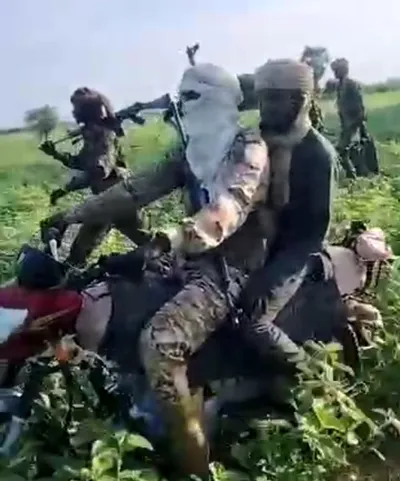
In a stunning reversal of fortunes, Russian mercenaries from the Wagner Group have been forced into a chaotic retreat from the strategic town of Am-Dafock in the Central African Republic. The sudden collapse of their positions follows a relentless rebel offensive that has caught the heavily armed contractors off guard, marking one of their most significant setbacks since their initial deployment in the region.
The collapse of Wagner’s presence in Am-Dafock underscores the growing unpredictability of the security landscape in the Central African Republic, where rebel factions have demonstrated newfound coordination and firepower. Local observers report that the mercenaries, known for their brutal efficiency in earlier engagements, were overwhelmed by the sheer scale and speed of the rebel assault, which began in the early hours of July 2.
Rebel forces seize key territory as Wagner struggles to hold ground
The rebel coalition, which has long operated in the shadows, has now emerged as a formidable fighting force, deploying heavy weaponry and employing tactics that have caught Wagner’s fighters off balance. Residents in Am-Dafock describe scenes of panic as mercenary units, once perceived as invincible, scrambled to evacuate the area, leaving behind equipment and supplies in their haste.
Military analysts suggest that the rebels’ success stems from a combination of strategic planning and internal fractures within Wagner’s ranks. Reports indicate that low morale and logistical challenges have plagued the mercenary group, which has struggled to maintain cohesion under sustained pressure. The loss of Am-Dafock represents a critical blow to Wagner’s operational credibility in the region, where they had positioned themselves as a stabilizing force—albeit a controversial one.
Implications for the Central African Republic’s fragile stability
The sudden power shift in Am-Dafock raises urgent questions about the future of the Central African Republic’s already fragile security situation. The Central African government, which has relied heavily on Wagner’s support in recent years, now faces a daunting challenge in regaining control of the lost territory. The retreat of the mercenaries has left a power vacuum that rebel factions are racing to fill, further destabilizing the region.
International observers are closely monitoring the developments, with concerns growing over the potential for a prolonged conflict that could draw in neighboring countries. The Central African Republic’s porous borders make it particularly vulnerable to spillover effects, particularly as rebel groups gain ground and access to new resources.
As the dust settles on the chaotic retreat from Am-Dafock, one thing is clear: the Central African Republic’s security crisis is far from over. The collapse of Wagner’s positions has not only reshaped the balance of power but also signaled a dangerous new phase in a conflict that has already claimed countless lives.